 Follow Us on Google News


 Follow Us on Google Discover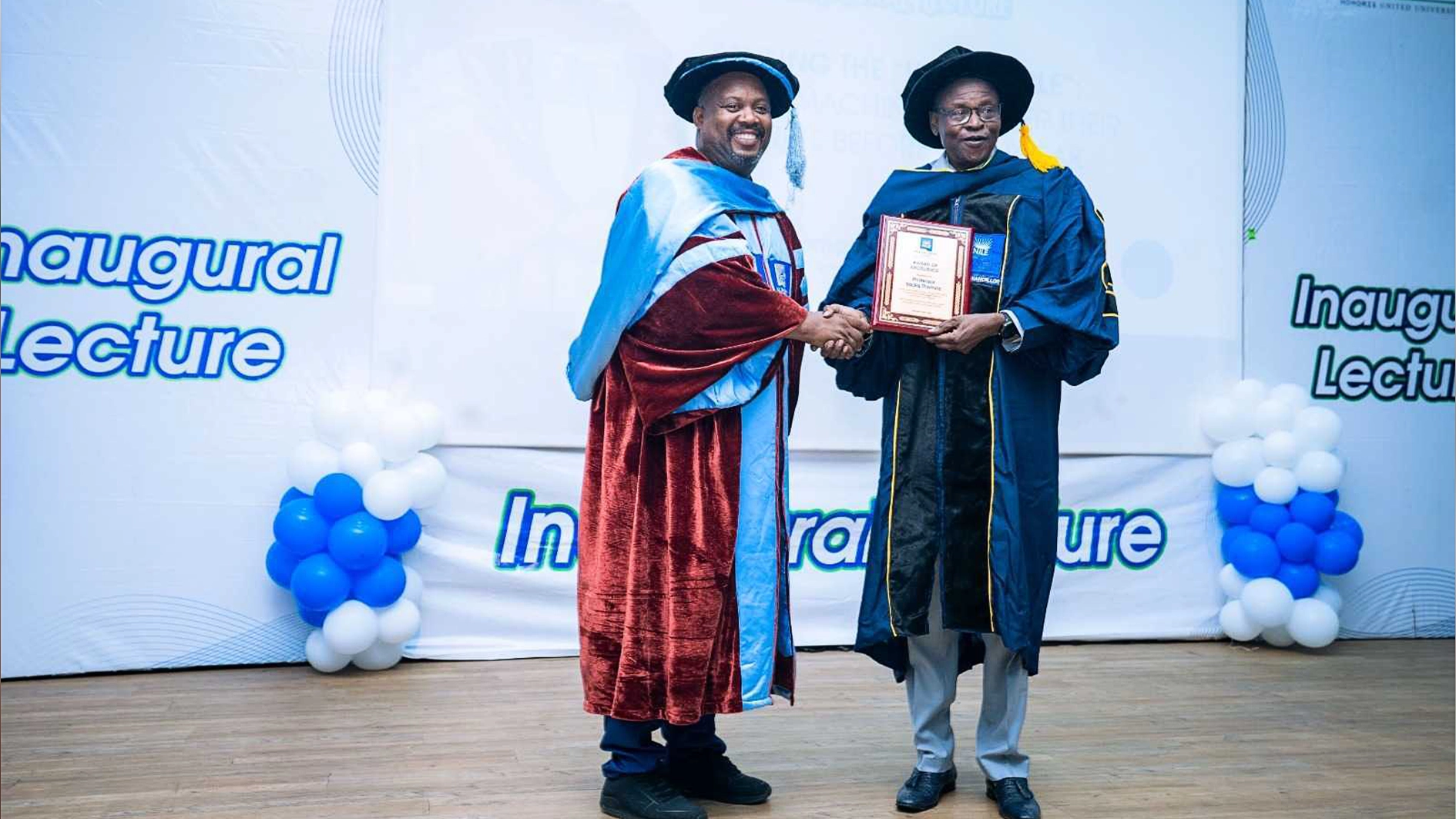
The potential of smart sensors, artificial intelligence and advanced non-destructive testing technologies to detect infrastructure and equipment failures before they occur was a major focus of the eighth inaugural lecture at Nile University of Nigeria.
Professor Sadiq Thomas, Professor of Computer Engineering at the university, explored the emerging capabilities of intelligent machines in his lecture titled, “Sensing the ‘insensible’: How machines whisper their secrets before they break.”
Professor Thomas explained that machines can increasingly detect subtle signs of stress, deterioration and impending failure long before such problems become visible to humans.
He said the technology could help Nigeria move from reactive maintenance, where intervention only occurs after equipment or infrastructure fails, to predictive maintenance driven by real-time data and intelligent systems.
“This framework should mandate the integration of non-destructive testing (NDT) technologies and real-time sensor networks into maintenance schedules, shifting from reactive to predictive maintenance paradigms,” he said.
Professor Thomas said such an approach could be applied across critical sectors, including transportation, aviation, energy and industrial infrastructure, enabling early warnings to translate into timely maintenance interventions.

He also called for greater investment in indigenous research and development, arguing that Nigeria has the intellectual capacity to develop sophisticated sensing and autonomous technologies suited to its own challenges.
“Our work on EMAT modelling, UAV swarm coordination and wearable gesture recognition demonstrates that Nigeria has the intellectual capacity to develop cutting-edge engineering solutions,” he said.
The inaugural lecturer advocated the establishment of a dedicated national research fund for autonomous systems and NDT technologies to accelerate innovation, strengthen local expertise and reduce dependence on foreign technology.
He also highlighted the potential of autonomous technologies, including unmanned aerial vehicle (UAV) swarms, ground-based delivery robots and specialised sensor arrays, to support accident investigations and other operations in environments that may pose risks to human personnel.
According to him, the use of such technologies could enable investigators to obtain more accurate information while reducing exposure to secondary hazards.
“This will enable faster, safer and more accurate accident site assessments while protecting human investigators from secondary hazards,” Professor Thomas said.
He further challenged Nigerian universities and training institutions to intensify human-capital development in non-destructive testing, autonomous systems, machine learning and sensor engineering.
Prof. Thomas said undergraduate projects in areas such as wearable gesture recognition and autonomous delivery robots had demonstrated the capacity of Nigerian students to produce world-class research when provided with appropriate mentorship, infrastructure and resources.
He, however, stressed that the deployment of increasingly autonomous systems must be accompanied by appropriate ethical and regulatory safeguards, particularly around algorithmic accountability, cyber-physical security and the responsible use of surveillance technologies.
In his address of welcome, the Vice-Chancellor of the University, Prof. Dilli Dogo, said the institution was investing heavily in research and innovation, particularly in engineering, medicine and human services, to equip students with the skills required to contribute to Nigeria’s future economy.
Prof. Dogo said Nile University was already using advanced investigative tools and equipment, including ultrasound devices and scanners, to detect machine stress, strain and wear at an early stage before they develop into major breakdowns.
He added that the university’s state-of-the-art fabrication laboratory could model and produce components required to replace faulty parts, while plans were underway to establish mini-factories for recycling plastic waste into finished products.
He said the university was determined to ensure that students were not merely certified but equipped with practical skills, mentorship and innovative capacity to contribute meaningfully to the economy.
“If we don’t know, we cannot cope,” Professor Dogo said, stressing that knowledge would remain a critical driver of the economy as Nigeria enters an era increasingly shaped by artificial intelligence.

