
 Get Guardian on Google
The federal government may have good intentions in its decision on thefuel discount, aiming to ease the economic pain many Nigerians are currently experiencing. There is no doubt that the high cost of fuel has triggered runaway inflation across most goods and services, including transport costs, thus grossly reducing the spending power of the average Nigerian. Indeed, multidimensional poverty is increasing across the land. But the scepticism of labour unions regarding the adequacy of that measure should be understandable. This is because the government measure appears to raise more questions than answers. Nevertheless, the issue is symptomatic of the changing face of economic policy in Nigeria.
Since fuel subsidy was removed in May 2023, the state of the Nigerian economy has not been the same, and the working class and members of the informal sector have been the worst hit in the unfolding drama, continuing to struggle to eke out a living for their families daily under an unfriendly and excruciating economic environment. Just when it appeared that the country was achieving a reasonable level of stability, the U.S.-and Israel-instigated war in Iran destabilised the international oil market, further raising fuel prices consistently for about 10 months. In these circumstances, the labour unions must rise to protect workers.
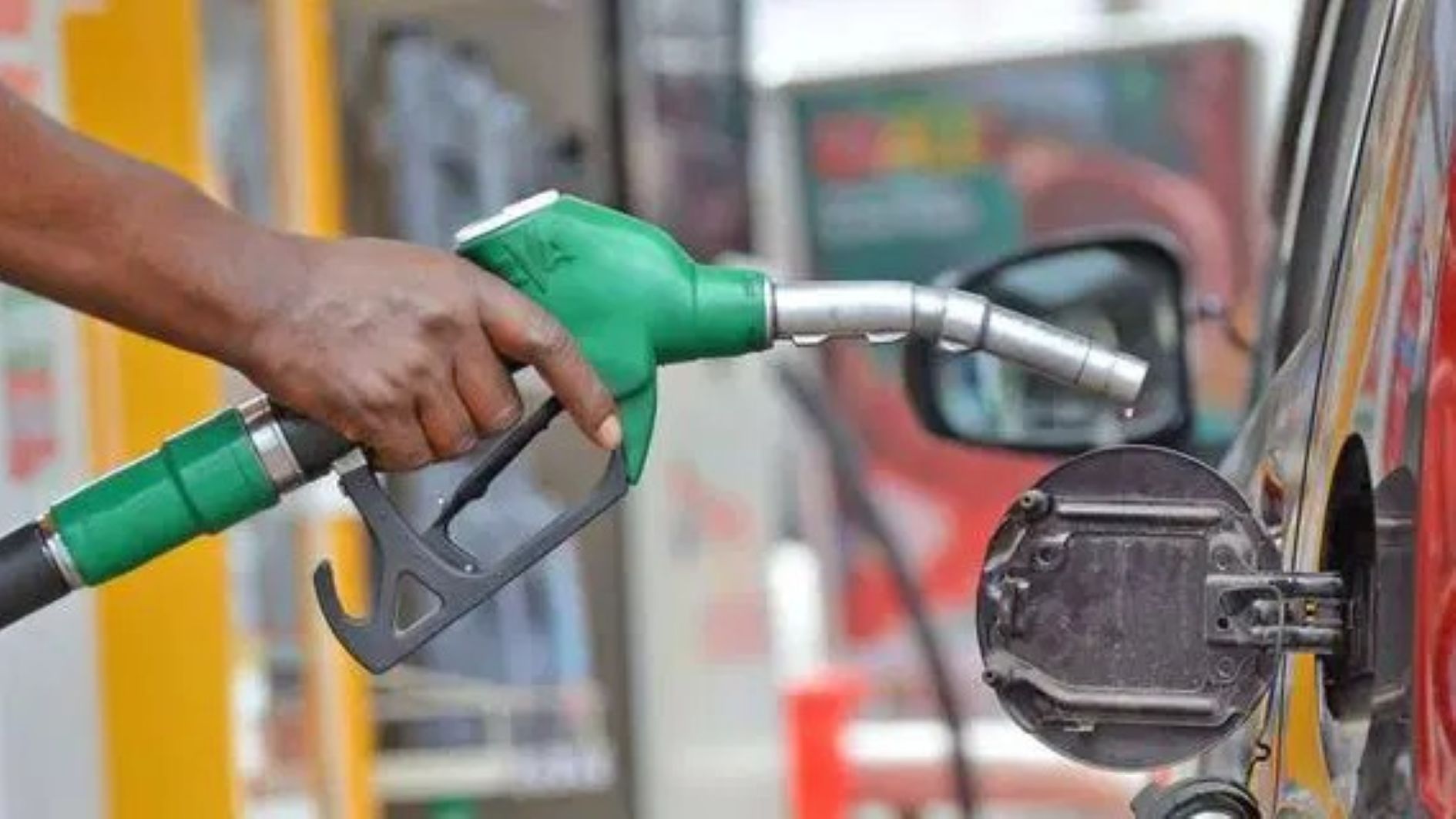
The concern of the Tinubu administration in seeking ways of cushioning the pains of the ordinary man in all this has led it to come up with the fuel discount to ameliorate the effects of the fuel subsidy removal on the people. Under the arrangement, the administration’s fuel price relief initiative through the Nigerian National Petroleum Company Limited (NNPCL), a 30-day petrol discount initiative, provides for a N66 per-litre reduction in the pump price of premium motor spirit. Labour’s basic objection is the scheme’s 30-day limit and whether the N66 per-litre reduction adequately relieves the masses. This is against the background that the average pump price of premium motor spirit, or fuel, as it is commonly called, is about N1,370 across the country, with more being paid in some remote parts of the country.
Deducting N66 from N1,370 for every litre of fuel makes little or no difference in ameliorating the pains of the ordinary man. Moreover, implementing such a scheme is fraught with complications that may not guarantee that this discount initiative will reach the nooks and crannies of the country or provide much-needed relief.
In addition, many are wondering whether the provision of about 70 million litres of NNPCL fuel supply per month, which is higher than the estimated national petrol consumption of 50 million litres per day, will not encourage siphoning of funds which could be used for corrupt purposes instead of providing relief to Nigerians. Nigerians are understandably wary of the government shifting from the perennial use of “rice and noodles and spaghetti” as economic palliatives to that of fuel discounts. Over the past two years, government palliatives have either not reached the ordinary man or helped him.
Short-term measures by the government to stem economic adversity are important, but the country needs a well-functioning economy that would assure a reasonable quality of life for any hardworking citizen to take care of himself and members of his family. While the government points to the necessity of the Tinubu reforms, given the huge sleaze previously associated with fuel subsidy, and the drain it constituted on public resources, the reforms have nevertheless been painful. Moreover, many Nigerians are not seeing them as translating into prosperity as the government promised.

There is undeniable growth of the macroeconomic indicators, but there is so far little to suggest that prosperity will necessarily follow if adequate steps are not taken subsequently. Nigerians need to see these steps, if the government is indeed taking them. Measures supporting the reforms should be strengthened; the government should be seen to reduce the cost of governance drastically and plug leakages in the system such that the engines of economic growth are strengthened. If there is stability in the macroeconomic indicators operating side-by-side with poor and dilapidated infrastructure, relative insecurity, high cost of doing business and high cost of transportation of goods across the country, the transmission of the effects or benefits of the reforms to the grassroots becomes suspect. There will thus be very little trickle-down effect and the benefits of the reforms will remain only at the top, thus constituting mere decorations. These are part of the concerns of the people that have led to some great measure of scepticism across the country.
The pump price of premium motor spirit can still go down, lower than the current N1370, for many reasons. First, Nigeria is an oil-exporting country and is thus expected to earn extra income from the crisis at the Strait of Hormuz in Iran. Indeed, it has earned more from the crisis. Many oil-exporting countries across the world have been able to absorb some of the price shocks of the Iran and United States/Israel conflict on their citizens. Some of the benefits of that gain should have been transferred to the ordinary man.
Second, the conduct of government affairs needs to be done with frugality. When government officials, especially political office holders, live large and display a great degree of opulence, it sends a wrong signal to the ordinary man, especially the Labour Unions, that there is a lot of money in the system and that they have to fight for their own share of the booty. Moreover, the income structure of the country has, over the years, become increasingly skewed such that the poor are getting poorer and the rich are getting richer. This is more so with the national minimum wage still at N70,000 per month and, worse still, with some states still paying less. Government needs to address these issues. The 30-day petrol discount initiative, which provides for a N66 per-litre reduction in the pump price of premium motor spirit, is inadequate to address, even temporarily, the economic hardship afflicting Nigerians.