 Follow Us on Google News


 Follow Us on Google Discover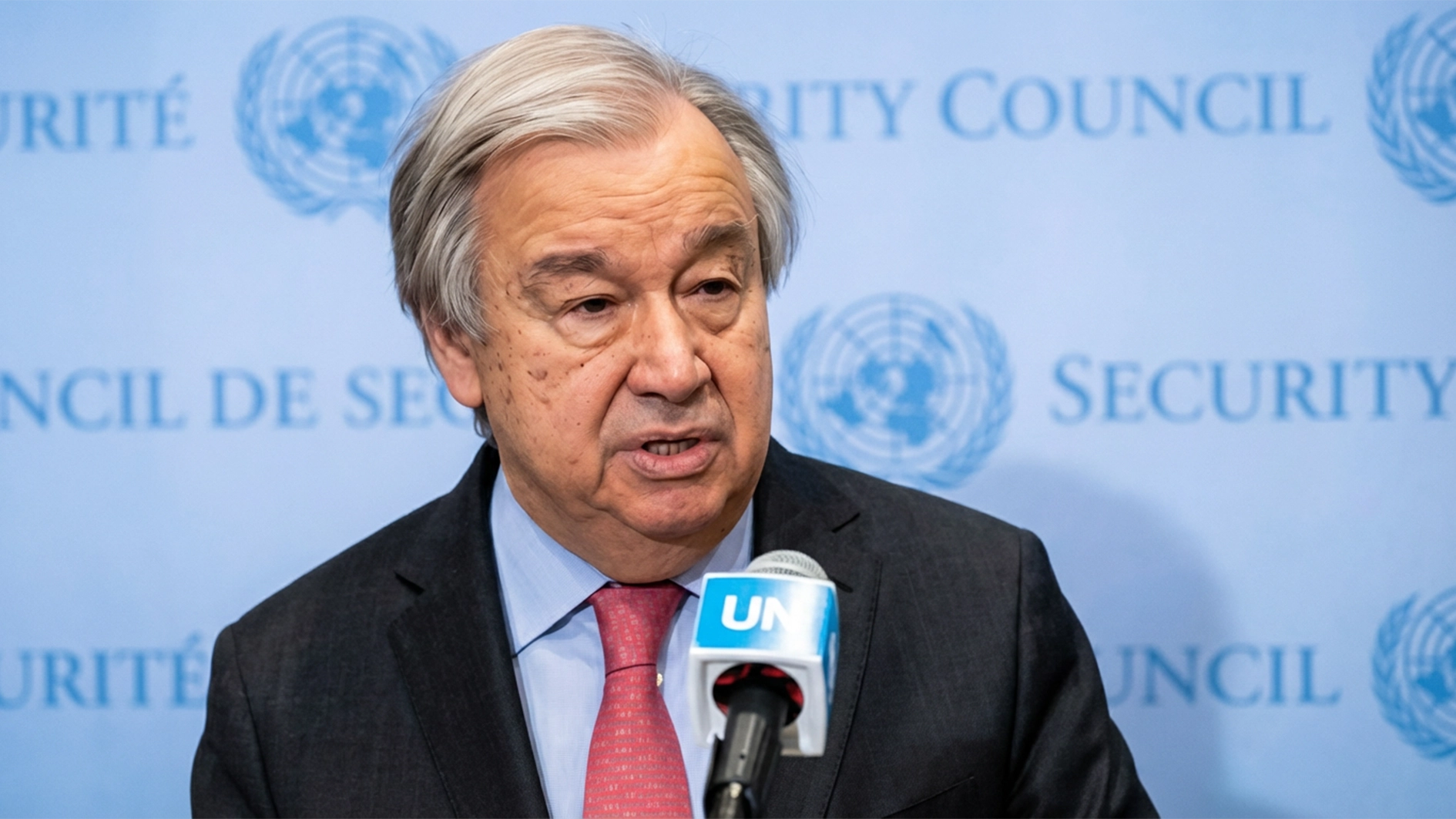
As the world marked International Clean Energy Day, the United Nations Secretary-General, António Guterres, offered a blunt assessment of the global energy transition, insisting that the shift is underway, though not moving fast enough.
His warning that the world is heading for a temporary overshoot beyond 1.5 degrees Celsius underscores a growing acceptance within climate diplomacy that the immediate challenge is no longer perfection, but containment, making the breach “as small, as short and as safe as possible” through a just and orderly transition away from fossil fuels.
At the centre of this transition are renewables, which Guterres described as the “engine” of change. The numbers support the claim. In 2024, wind, solar and other renewables generated more electricity globally than coal for the first time, and in most markets they are now the cheapest source of new power.
Beyond emissions, renewables promise energy security, insulation from geopolitical shocks and lower long-term costs, benefits that have become more visible amid recent global energy disruptions.
Yet, the celebratory narrative masks deep structural fractures. Despite record global renewable installations, more than 2.1 billion people still rely on firewood and charcoal for cooking, exposing households to deadly indoor air pollution while accelerating deforestation and climate change.
Nowhere is the gap between clean energy ambition and lived reality wider than in sub-Saharan Africa, where unreliable electricity continues to constrain economic opportunity, healthcare delivery and education.

This disconnect is not merely about access to power; it is increasingly about access to economic value. A joint report by the International Renewable Energy Agency (IRENA) and the International Labour Organisation (ILO) shows that global renewable energy employment rose modestly by 2.3 per cent in 2024 to 16.6 million jobs.
But Africa remains largely sidelined from this jobs dividend. Despite vast renewable resources and rapidly growing energy demand, the continent accounts for only a marginal share of global clean energy employment.
The imbalance is stark. China alone generated 7.3 million renewable energy jobs, 44 per cent of the global total, driven by its dominance in manufacturing solar panels, wind turbines and other equipment. Africa, by contrast, remains primarily an importer of renewable technologies, limiting its participation in higher-value segments of the supply chain where most jobs are created. Even in solar photovoltaics, the world’s largest renewable employer, 75 per cent of jobs are concentrated in Asia.
This structural asymmetry exposes a central contradiction of the global energy transition. While clean energy deployment is expanding in Africa, particularly through off-grid solar and mini-grids, the industrial and employment benefits are accruing elsewhere.
Without deliberate policy intervention, the transition risks reproducing old extractive patterns, this time centred on clean technologies rather than fossil fuels. Guterres acknowledged these constraints, pointing to lagging grid infrastructure and high capital costs that continue to shut many developing countries out of the transition.
The call to triple global renewable capacity by 2030 is ambitious, but capacity alone is not enough. Without transmission networks, storage systems and modernised grids, new renewable generation cannot be fully utilised. Utilities, he argued, must upgrade, expand and digitise grids to keep power systems stable as renewables grow.
Finance remains the decisive bottleneck. While renewables may be cheap to operate, the cost of capital in developing economies makes projects expensive and risky.
Guterres’ appeal for multilateral development banks to reduce risk and unlock private investment reflects a growing recognition that market forces alone will not deliver an equitable transition.
Without concessional finance and risk-sharing instruments, countries with the greatest renewable potential will remain the least able to exploit it.
Nigeria sits squarely within these global tensions. As the country marks World Clean Energy Day, experts caution against reducing clean energy and net zero to slogans detached from local realities.
An energy economist, Prof. Wumi Iledare, argued that clean energy in Nigeria must be understood as a gradual, balanced transition rather than an abrupt shift. Nigeria’s emissions profile is driven largely by transportation and diesel-based power generation, a consequence of chronic grid failures and widespread reliance on generators.
In this context, net zero does not mean shutting down oil and gas overnight. Rather, it implies progressively reducing emissions, improving efficiency across the energy value chain and offsetting what remains over time.
For a country still struggling to provide reliable electricity to its population, an ideologically rigid transition could undermine economic growth and social stability.
The systems underpinning clean energy are therefore as important as generation itself. On International Clean Energy Day, the UN Economic Commission for Europe (UNECE) called for greater policy focus on materials, cross-border energy systems and integrated planning.
As demand for renewable technologies grows, access to critical minerals is emerging as a major pressure point. UNECE’s tools, the UN Framework Classification and the UN Resource Management System, aim to ensure that resource extraction benefits producing countries and communities, rather than global markets alone.
Clean energy planning is also becoming increasingly cross-sectoral. Renewable projects compete for land, affect biodiversity and intersect with water and food systems. Poorly managed, these trade-offs can generate social resistance and environmental harm. UNECE’s emphasis on full-system cost approaches reflects a shift away from narrow project economics towards a broader assessment of resilience, grid needs and long-term impacts.
Ultimately, the clean energy transition is no longer just a technological challenge; it is a political and economic one. Guterres’s insistence on justice, protecting workers and communities, supporting education and industrial development, speaks to a growing awareness that transitions fail when people are left behind.

