 Follow Us on Google News


 Follow Us on Google Discover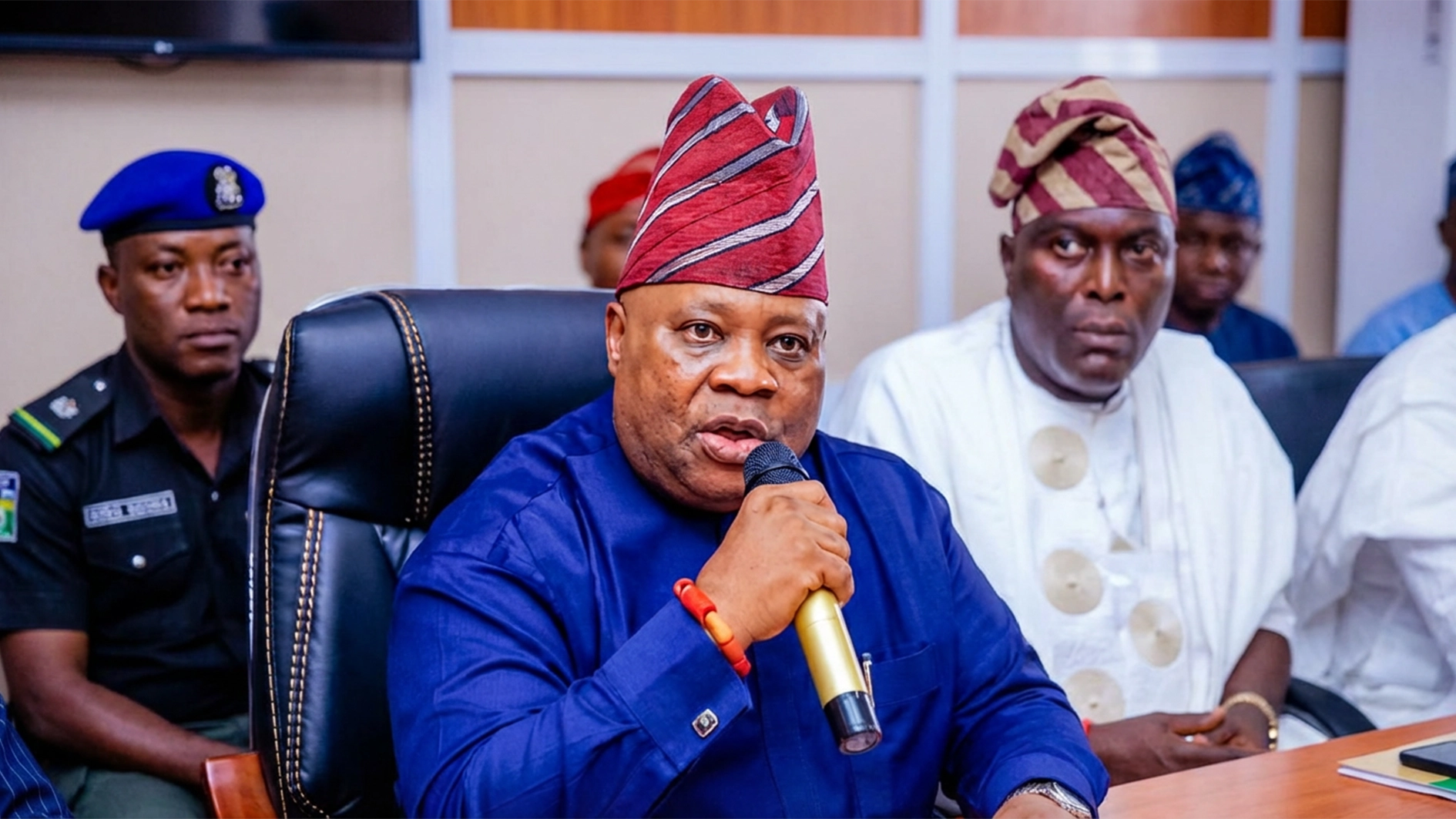
• INEC: ‘Attack on PVC collection centre will not derail election’
• Govt declares today public holiday, 37.5% of PVCs collected
• Election can’t be rigged or stolen, Adeleke declares
• Desperate APC actors behind violence in Osun, Commissioner alleges
As the August 15 governorship poll in Osun State draws near, fears that the off-cycle election may be challenged by violence have been heightened after the latest attack on officials of the Independent National Electoral Commission (INEC) in the Odo-Otin LGA of the state, in a string of violent clashes that have left residents dead in recent weeks.
Confirming the incident yesterday, the Police Public Relations Officer of the Osun State Police Command, Abiodun Ojelabi, disclosed that the gunmen made away with three packs of Permanent Voter Cards (PVCs) after the attack, while INEC officials were distributing PVCs.
While noting that the assailants fired several shots in the air to scare away the electoral officials to flee before carting away the packs of voter cards, Ojelabi asserted that the State Commissioner of Police, Ibrahim Gotan, condemned the attack and ordered a comprehensive investigation to identify, track down and prosecute the culprits.
Meanwhile, INEC said it was awaiting a police report on the attack to decide on the next course of action, including whether the stolen PVCs will be reprinted ahead of the August 15 governorship election.
INEC’s National Commissioner and Chairman of the Information and Voter Education Committee, Mohammed Haruna, in an interview with The Guardian, said: “We are actually waiting for the police report. The thing happened yesterday (Sunday), and we are waiting for the police to submit the report.”

Haruna explained that the implications of the incident for the forthcoming governorship election would be evaluated based on how early the police submit their report, noting that the election is just days away.
Also, speaking on the incident, the Chief Press Secretary to the INEC Chairman, Adedayo Oketola, said preliminary investigation showed that some Bimodal Voter Accreditation System (BVAS) devices were also stolen during the incident.
Stressing that the number of stolen devices was insignificant to disrupt or compromise the election, Oketola declared: “The BVAS cannot affect the election in any way, and of course, the commission will replace the stolen BVAS, and every other plan will go ahead.”
He, however, said the latest attack would not deter the commission from conducting a free, fair and credible governorship election in Osun.
“As a commission, we trust that the police will be diligent in their investigation, track those suspects, get them arrested and ensure they face the wrath of the law. We also trust that they’ll be able to recover our devices, including the BVAS that were reportedly carted away,” he added.
“INEC cannot be distracted. We will conduct a free and fair election in Osun. That incident cannot distract us. The election will go on as planned, and we expect it to be free, fair and credible at the end of the day,” he said.
Oketola also stated that a total of 4,427 BVAS devices had been configured for the governorship election, including 664 backup units, which could handle any incidents before and during the election. He also said that INEC had established 97 Super Registration Area Centres (Super RACs) and 105 Registration Area Centres across all the local government areas in the state, which would be fully activated the night before the election day.
“Whatever was carted away will be replaced. Out of the 4,427 BVAS, we have 664 prepared as backups. There is no way whatever happened can disrupt our plans for the election,” he assured.
The chief press secretary described the theft of PVCs as an exercise in futility, given the strict biometric verification required by BVAS technology. “Nobody can use another person’s PVC to vote in an election in Nigeria again.
The era of ghost voters is gone. With BVAS, you must tender your PVC and undergo biometric authentication. The technology has been tightened in such a manner that nobody can use another person’s identity to vote any longer in Nigeria.”
Security fears mount ahead of Osun governorship election
DESPITE assurances from INEC, the Nigeria Police Force and other security agencies that adequate measures are in place, political violence, rising tensions among rival groups, the lingering transport union crisis, and growing distrust between political actors and security institutions have heightened anxiety across the state.
Observers say that the election is more than a contest for the governorship, especially being the last off-cycle governorship poll before the 2027 general elections; it is seen as a major test of Nigeria’s electoral security framework and the ability of state institutions to guarantee peaceful and credible elections.
The outcome is expected to reflect President Bola Tinubu’s influence in the South-West, the growing opposition profile of former governor and ADC National Secretary Ogbeni Rauf Aregbesola, and the electoral strength of Governor Ademola Adeleke, who is seeking re-election with the advantages of incumbency and the popularity of the Adeleke political family.
While competitive elections should strengthen democracy, Osun’s history of intense rivalry and election-related violence has renewed fears that tensions could escalate if not properly managed.
Many residents had hoped that the recent visit of the Inspector-General of Police would ease concerns. During the visit, he met with Governor Adeleke, senior police officers, and other stakeholders, reiterating the security agencies’ commitment to neutrality and professionalism. However, subsequent developments have done little to calm fears.
Security agencies have continued to arrest suspected political thugs and cult members allegedly linked to violent activities, recovering firearms and ammunition in several operations. The arrests have reinforced concerns about the proliferation of illicit weapons and the possibility of violence if tensions worsen.
Lawyer and security consultant, Dr Charles Omole, warned that the risks extend beyond election day, noting that weapons introduced into political conflicts often remain in circulation long after campaigns end, contributing to criminality and insecurity.
Omole argued that the high political stakes are fueling tensions. According to him, the APC is determined to reclaim the state ahead of the 2027 elections, while Governor Adeleke is equally committed to retaining power. He said that perceptions of bias within the security architecture and the search by political actors for alternative forms of protection have further complicated the situation.
He added that political thuggery remains a recurring feature in the state, with organised groups often mobilised through local political networks and transport unions to intimidate opponents and influence voting.
The security debate has been further complicated by public disagreements between the state government and sections of the security establishment. In recent weeks, allegations and counter-allegations between Governor Adeleke and the police hierarchy have dominated political discourse. While the police claim that some individuals wanted over political violence enjoy protection within government circles, the governor has repeatedly denied the allegations.
Before the intervention of the police leadership, Adeleke and several allies openly questioned the neutrality of the state Commissioner of Police, accusing him of partisanship and demanding his removal. Although police authorities defended their operational decisions, the dispute exposed a fragile relationship between the government and the agencies tasked with securing the election.
Another major flashpoint is the prolonged crisis within the National Union of Road Transport Workers (NURTW). What be
gan as a struggle for control of motor parks has evolved into a broader political contest, with rival factions accusing one another of violence.
Because transport unions play strategic roles during elections, analysts believe the dispute could affect election logistics and public safety. Recent clashes in Osogbo, Ilesa and other communities have heightened public concern.
The crisis escalated when a faction reportedly loyal to Kazeem Adewale, popularly known as Asiri Eniba, took control of the union’s state secretariat. In response, the Adeleke administration convened an emergency State Security Council meeting, suspended NURTW activities in motor parks and halted levy collection pending the restoration of order. Security agencies were also directed to arrest violators.
The APC criticised the move as executive overreach, arguing that the government lacked constitutional authority to interfere in the affairs of a registered association, further highlighting the deep political divisions surrounding the security debate.
Meanwhile, security personnel have become more visible across major towns, including Osogbo, Ede and Ilesa. While many residents welcome the deployment as a deterrent, others fear excessive militarisation could discourage voter participation.
Retired DSS director Akin Adeyi argued that elections are best secured through intelligence gathering, early intervention and impartial law enforcement rather than overwhelming displays of force. He also warned that the proliferation of illicit firearms remains a national security challenge requiring stronger border controls, intelligence-led policing and sustained arms recovery efforts.
Similarly, sociologist and former INEC Electoral Reform Committee chairman, Prof. Lai Olurode, urged political actors to avoid inflammatory rhetoric that could provoke supporters. He maintained that security agencies have the capacity to contain violence if they remain professional, impartial and proactive.
Responding to concerns about illegal arms, Osun Police Public Relations Officer Abiodun Ojelabi said the command had intensified efforts to dismantle criminal networks, recover weapons and strengthen intelligence gathering. He disclosed that investigations had uncovered attempts by some criminal groups to pool resources to procure ammunition and said surveillance had been increased across the state.
Ojelabi added that divisional police officers and area commanders had been directed to deepen community engagement and remain vigilant before, during and after the election. He assured residents that the police would work with other security agencies to protect voters, electoral officials and election materials.
Security concerns also extend to INEC personnel and logistics, which could become vulnerable if violence escalates. However, when contacted, the commission declined to discuss specific measures being taken to protect staff and sensitive materials. Director of Voter Education and Publicity Victoria Etta-Messi described election violence as primarily a security matter and declined further comment.
In the interim, INEC says that 37.5 per cent of Permanent Voter Cards (PVCs) available for collection in the state have been collected by eligible voters so far ahead of the August 15 governorship election.
The Resident Electoral Commissioner (REC) in Osun State, Oluwatoyin Babalola, disclosed during the Osun Citizens’ Town Hall Meeting in Osogbo that 192,702 PVCs have so far been collected, representing 37.5 per cent of the cards available for distribution.
Babalola urged eligible voters who have yet to collect their PVCs to take advantage of the ongoing exercise, stressing the importance of collecting their cards ahead of the election.
INEC commenced the distribution of PVCs across the 332 Registration Areas in the state on July 22, with the exercise scheduled to continue until July 28.
Adeleke declares today public holiday, says Osun election can’t be rigged
Osun State governor, Ademola Adeleke, yesterday approved that all categories of public servants in Osun State should be off duty today (Tuesday) to collect their Permanent Voter Cards (PVCs).
In a statement, the governor’s spokesman, Olawale Rasheed, explained that the affected categories of workers also include local government staff and tertiary institutions.
He said that the Head of Service (HoS), Ayanleye Aina, conveyed the message in a circular, explaining that the work-free day approval was intended to enable public servants to perform their civic obligations during the forthcoming gubernatorial and future elections in the State.
Speaking further, Adeleke declared that the August 15 election cannot be rigged or manipulated, insisting that the people’s votes will determine the outcome. Speaking at the party’s campaign rally in Oke Ila, Ifedayo Local Government Area, Adeleke said no individual or group could subvert the will of Osun voters.
Reacting to reports that some politicians had vowed to manipulate the election, the governor dismissed the claims, maintaining that the state’s electorate would protect their votes. “I heard some politicians vowing to steal the votes. Where and how? Osun votes are untouchable. This is Osun State, the heart of the Yoruba nation. Nobody can rig us out here,” he said.
“We are going round the state. The people are trooping out. The people’s votes will be defended. Their will on August 15 will become a reality. We are getting the votes; they are chasing motor parks. We are winning the people; they are shooting at the people. Osun people are not scared. All these attacks and war mongering only hardened our people. Osun people are not cowards. They will vote and defend their votes. We are reaching across towns; they are holed up at their state secretariat.”
MEANWHILE, Commissioner of Information in Osun, Kolapo Alimi, has alleged that the violence in the state is being perpetrated by “desperate actors” who want the return of the All Progressives Congress (APC) to take over power in the state.
Speaking during an interview on Channels Television on Monday, Alimi alleged that the APC had deployed several tactics to bring down the Adeleke-led government. The commissioner said the crisis in motor parks is another tactic to cripple the Osun state government.
“The situation in Osun is quite unfortunate. It is a case of a desperate set of people who are using every means possible, I mean the APC, to stage a comeback to power in Osun,” Alimi said.
“We are all living witnesses to the issue of LGAs they created in February last year. We are still on it. They are holding on to Osun’s resources to bring down the government. The government refuses to collapse. They moved on to the issue of Accord’s deregistration. They failed along that line, too.”
Alimi said the perpetrators also intend to hijack the control of motor parks in the state for their own benefit.
The commissioner accused the Osun police command of being compromised, adding that the police failed to arrest suspects despite multiple reports from the state government. Alimi claimed that the police refused to arrest thugs who attacked the Mayfair motor park in Ile-Ife, Osun.
“On the issue of motor parks, they just woke up one day, they claimed they have to be in charge of motor parks,” he said.

