 Follow Us on Google News
 Follow Us on Google Discover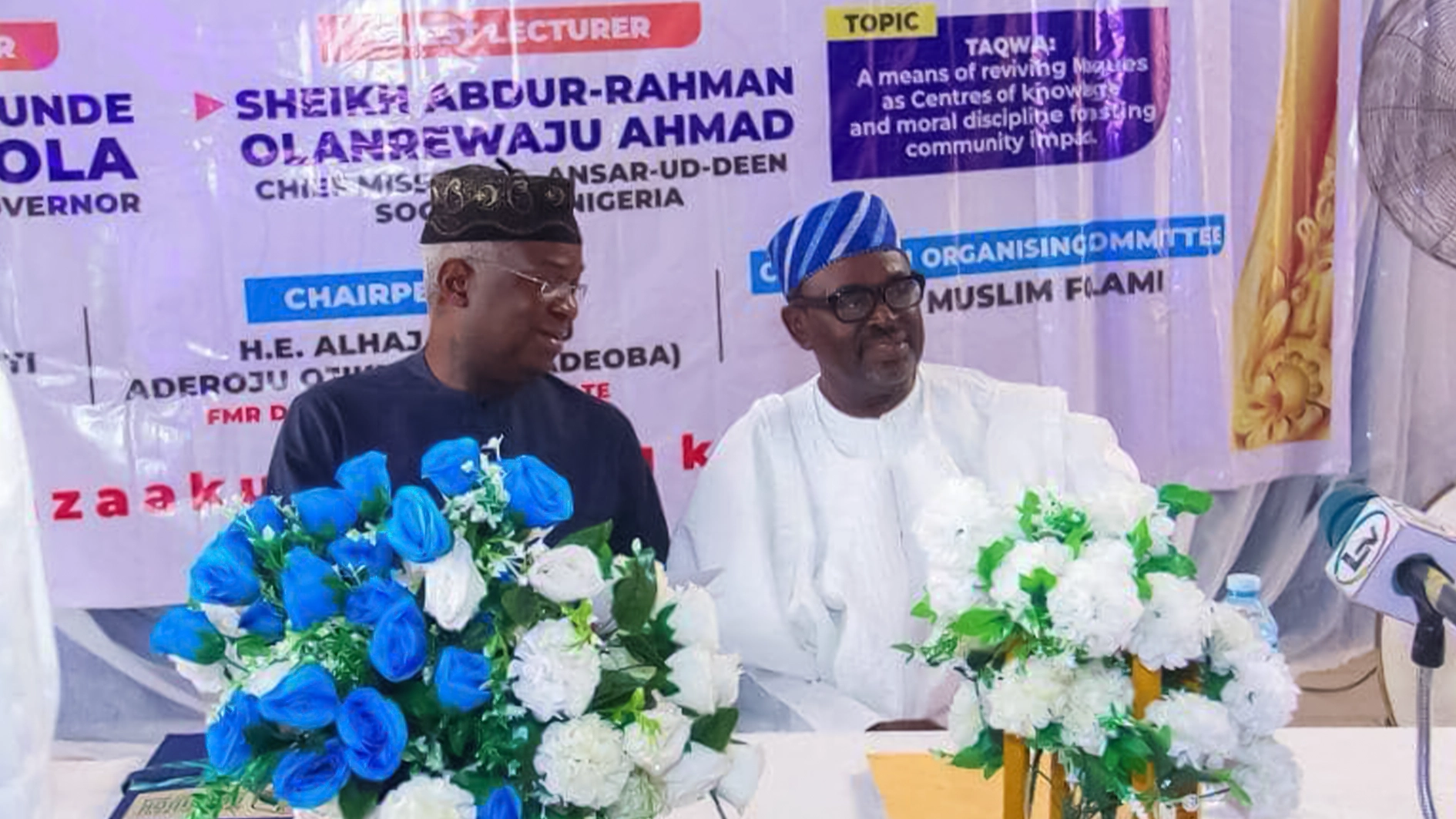
The President of Jama-at-ul Islamiyya of Nigeria, Engr. Hashim Oyekan, has called on Nigerian leaders and citizens to move beyond political rhetoric and adopt actionable, justice-driven solutions to overcome the country’s persistent security and socio-political challenges.
Speaking during his welcome address at the 12th Triennial National Conference of the organization in Magodo, Lagos, Oyekan emphasized that national stability remains unattainable without moral discipline, institutional integrity and a collective commitment to righteousness.
“Nigeria continues to navigate complex socio-political dynamics and security challenges that test the resilience of our people,” Oyekan declared before an assembly of Islamic scholars, community leaders and statesmen.
“Stability cannot be achieved through rhetoric alone; it demands actionable solutions, unyielding justice, and a collective commitment from both leadership and the citizenry.”
Addressing the gathering themed “Nigeria’s Political Adventure, Insecurity, and the Need for a More Practical Approach to Stability,” the president noted that religious bodies cannot remain indifferent to the plight of the nation. He urged the Muslim Ummah to restore mosques across the federation to their historic roles as dynamic centers for intellectual development, character building and social reform, rather than viewing them strictly as spaces for ritual worship.
Highlighting the role of functional education in long-term national development, Oyekan officially launched the Jamaat’s Centenary School Project. The initiative is designed to mobilize support for expanding the organization’s group of schools, delivering modern academic instruction anchored in moral and Islamic principles.

“Education remains the most powerful tool for social transformation and moral elevation,” Oyekan stated, making a passionate appeal to donors and stakeholders. “Our goal is to provide accessible, high-quality modern education heavily grounded in Islamic values, ensuring that the next generation is equipped to lead with both competence and conscience.”
The keynote speaker, former Lagos State Governor Babatunde Raji Fashola (SAN) called for a fundamental reset in Nigeria’s civic discipline, asserting that deploying more security personnel alone will not resolve the nation’s escalating insecurity without a collective commitment to law, order and institutional integrity.
Fashola argued that lasting peace is impossible as long as citizens make excuses for lawlessness based on political, ethnic or religious ties.
“Can we come to an agreement and say to any people that we want to be a country of law and order? And that nobody should be above the law?” Fashola asked the assembly. “What kind of values are we living by? We must begin to reset our own minds.”
Fashola identified youth unemployment and substance abuse as key catalysts of violent crime, urging targeted public investment over neglect. Referencing civic engagement initiatives like the National Youth Sports Festival, he noted: “If we leave these people doing nothing, 400,000 of them, they can’t do it. Youth development must form part of Nigeria’s broader strategy alongside policing and justice reform.”
Delivering the guest lecture on behalf of Sheikh Abdur-Rahman Ahmad, Sheikh Abdul Rahman Sulaiman Adangba framed social decay as a crisis stemming from broken family structures and weak social institutions.
He called for mosques to be restored as functional hubs for intellectual growth, governance and community development rather than mere places of worship.

