 Follow Us on Google News
 Follow Us on Google Discover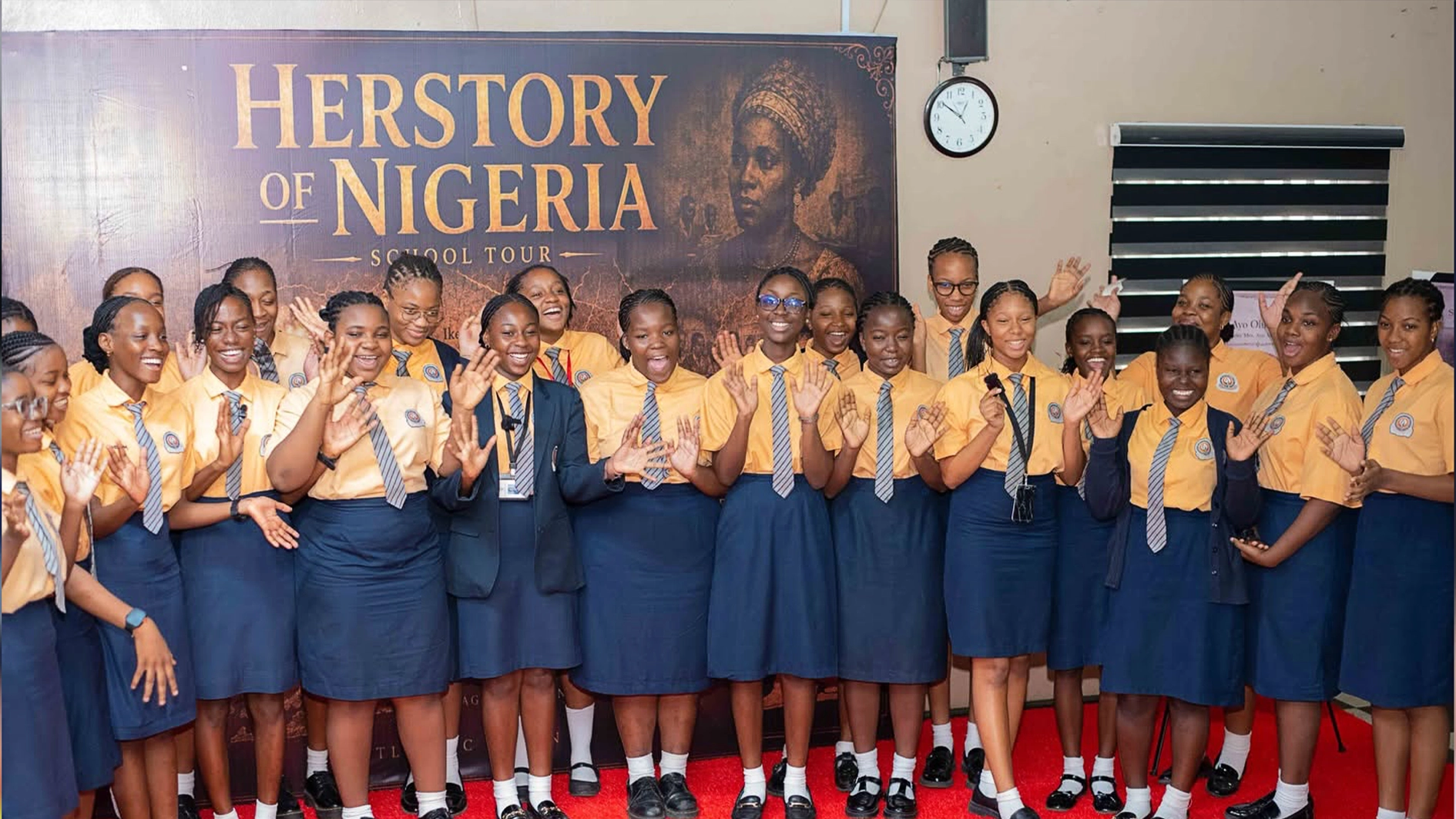
The second leg of the HerStory of Nigeria School Tour held at Vivian Fowler Memorial College for Girls in Lagos, deepening an ongoing effort by ASIRI Magazine to restore the largely undocumented contributions of Nigerian women to mainstream educational consciousness.
The initiative, which combines in-school engagements with a developing digital archival platform, is designed to introduce secondary school students to female figures whose roles in Nigeria’s political, social and cultural development have received limited attention in standard curricula.
Founder of ASIRI Magazine and curator of the project, Dr. Oludamola Adebowale, said the initiative emerged from what he identified as a persistent gap in the documentation of women’s history in Nigeria, particularly for the period spanning the nineteenth and early twentieth centuries.
He explained that the programme operates through two complementary channels — a structured in-school engagement series and an online archival platform being developed to house photographs, documents, oral histories and biographies of Nigerian women. The repository, he said, is intended to serve scholars, educators and the general public as a central research resource.
“The very core of Nigerian history is because of these women that did amazing exploits in the 1800s and in the 1900s. So the history is not really out there as it should be. This is more like a wake-up call to preserve, archive and document this history,” he said.
Adebowale said schools visited as part of the tour have since gone on to establish history clubs and invite mentors for ongoing engagements, which he described as the initiative’s most visible measure of impact. He added that the target for the current cycle is ten schools in Lagos, with plans to scale nationally in subsequent editions.
He noted that the programme is currently self-funded, with contributions from personal resources and a limited network of partners, which he described as a labour of love in the absence of full-scale sponsorship.
Director of Vivian Fowler Memorial College for Girls, Olufunke Keila Fowler-Amba, who received the delegation, described the tour as timely and significant, noting that access to women’s history had shaped her own understanding of global events and civic realities.
“If we knew more about the history of Nigeria and the women especially who paved the way for us, I think we would understand that Nigerian women are mighty,” she said.
Fowler-Amba drew from personal encounters with several pioneering Nigerian women among them Mrs. Folake Solanke, SAN; Lady Oyinkan Abayomi; and Lady Kofoworola Ademola — to illustrate the depth of female leadership that has gone largely unrecognised in national memory. She described Lady Ademola as the first black African woman to earn a degree from Oxford University, who on her return to Nigeria devoted her life to building schools for girls.
She also paid tribute to a Vivian Fowler alumna, Farida Ademola-Seriki, who had studied law but pursued music and became the first Nigerian woman to win a Grammy Award in Australia.
Reflecting on the legacy of the school’s founder, her mother, Chief Dr. Leila Fowler, she said the decision by the late educationist and lawyer to run for the Vice Presidency of the Nigerian Bar Association in the 1970s — at a time when she was the only female practitioner was not driven by personal ambition alone.
“She said, ‘I’m not going to win, but I’m doing this so that the women coming behind me will realise that there’s nothing they cannot do,'” Fowler-Amba recalled.
The school announced a financial donation to support the continuation of the tour, expressing hope that the programme would extend beyond Lagos to other parts of the country.
Also speaking at the tour, Dr. Emmanuel Ojibo, Chief Executive Officer of Achieving Greatness Limited, said he joined the initiative as a partner after learning of its impact on young people. His organisation, which began as a business education radio programme on Eko FM before expanding into media and property, has focused on equipping individuals to surmount challenges.
“If I can touch a life, if I can help somebody just one person who is trying to give up — just make them hang in there a little bit longer — that’s just what I’m born to do,” he said.
The HerStory of Nigeria project is positioned as both an archival initiative and an advocacy platform, with its flagship thematic focus on women, power and protest in Lagos between 1910 and 1950 — a period during which women functioned as traders, market organisers, political activists, educators and writers, in roles that have received limited acknowledgment in the historical record.

