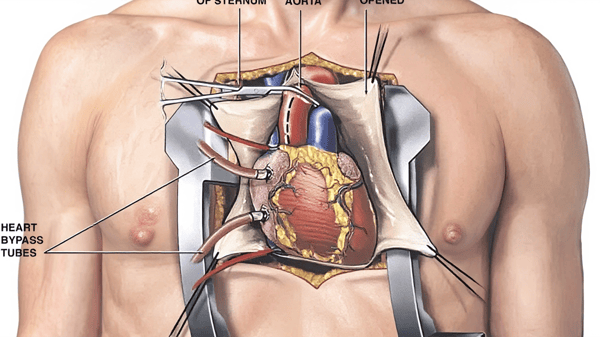
In a major boost to Africa’s capacity for complex cardiac and cancer care, the African Medical Centre of Excellence (AMCE) has completed its first open-heart surgery, a complex triple coronary artery bypass grafting (CABG) and delivered West Africa’s first Stereotactic Body Radiation Therapy (SBRT) for lung cancer.
The milestones mark a significant step in reducing reliance on overseas medical treatment and strengthening patient-centred cancer and cardiovascular care within the region. They also advance AMCE’s long-term goal of reversing outbound medical tourism and stemming brain drain by providing world-class infrastructure, technology, and training environments for highly skilled African specialists.
The centre disclosed that it is preparing patients for additional complex procedures, including valve repairs and replacements. By expanding its cardiovascular and specialised services, AMCE said it aims to curb medical tourism by addressing the estimated $610 billion Africans spend yearly seeking healthcare abroad, while also creating high-quality career opportunities that retain medical professionals on the continent.
Speaking with journalists in Abuja, the Chief Medical Officer of the centre, Dr Aisha Umar, said AMCE plans to establish medical and nursing schools for undergraduate training as part of efforts to address healthcare workforce shortages in Nigeria and across Africa.
Umar revealed that the centre has commenced internship programmes in nursing and plans to extend them to other disciplines, including pharmacy, medical laboratory science, physiotherapy, radiology, and pharmacy.
She added that AMCE is working with postgraduate medical colleges to begin postgraduate training in its areas of specialisation, such as oncology, cardiovascular services, haematology, radiology, and clinical laboratory sciences.
She said continuous training is essential for certification and licensure of healthcare professionals. “We will be organising in-house professional development programmes across different fields to support re-accreditation and licensure. We are also engaging the medical colleges on clinical attachments for already qualified professionals to gain hands-on experience,” she explained.
Also speaking, AMCE’s Chief Executive Officer, Brian Deaver, described the completion of the first open-heart surgery and West Africa’s first SBRT treatment as a defining moment for the centre and healthcare delivery on the continent. “These milestones reflect the exceptional skill and dedication of our multidisciplinary teams, who have worked tirelessly to ensure patients can access the most advanced cancer and cardiac care right here in Africa,” he said.
Deaver noted that building on recent outpatient and inpatient milestones, AMCE’s clinical teams have rapidly expanded the hospital’s capacity to deliver high-acuity care in cardiovascular medicine and oncology.
“In its first six months of operations, the hospital has performed more than 10 successful cardiac interventions, including coronary angiographies, permanent pacemaker insertions, and percutaneous coronary interventions (PCI),” he said. “The successful completion of its first CABG now places AMCE among the few centres in Africa offering a fully integrated cardiac care pathway from advanced diagnostics and interventional cardiology to complex open-heart surgery within one facility.”
Commenting on the achievements, the Managing Director of Export Development at Afreximbank, Mrs Oluranti Doherty, said the milestones demonstrate the transformative impact of the bank’s investment in medical infrastructure.
“These achievements show what is possible when we build capacity locally, reduce dependence on outbound medical tourism, retain vital clinical expertise, and strengthen Africa’s broader health ecosystem,” she said, adding that AMCE is advancing a new era of health dignity for Africans.
Developed by the African Export-Import Bank (Afreximbank) in partnership with King’s College Hospital London, AMCE said the accomplishments reaffirm its commitment to redefining top-tier medical care in West Africa through the delivery of complex, life-saving treatments.