
 Get Guardian on Google
With approximately one in six laboratory-confirmed bacterial infections globally already resistant to antibiotics, Nigeria’s widespread culture of easy and largely unregulated access to medicines risks worsening a crisis that is making once-treatable infections increasingly difficult to cure, NKECHI ONYEDIKA-UGOEZE and IJEOMA NWANOSIKE report.
For many Nigerians, getting an antibiotic can be easier than seeing a doctor. A cough, fever, stomach upset or sore throat can send a patient not to a hospital or laboratory, but to the nearest drug shop, where a description of symptoms may be enough to secure a strip of tablets.
In many communities, the transaction is straightforward. The buyer names the ailment, the seller recommends a drug, the tablets are counted out, and money changes hands, often without a medical consultation, laboratory test or prescription.
Antibiotics are among the greatest breakthroughs in medical history, revolutionising the way patients with bacterial infections are treated and contributing to reduced mortality and morbidity from bacterial diseases.
For millions of people with infections once considered life-threatening, a simple course of antibiotics could turn a serious bacterial infection into a manageable health problem.
Unfortunately, bacteria are evolving, and some of the drugs used to treat them over the decades are becoming less effective due to the abuse and misuse of antibiotics, which are often unnecessarily prescribed for viral infections, against which they have no effect.
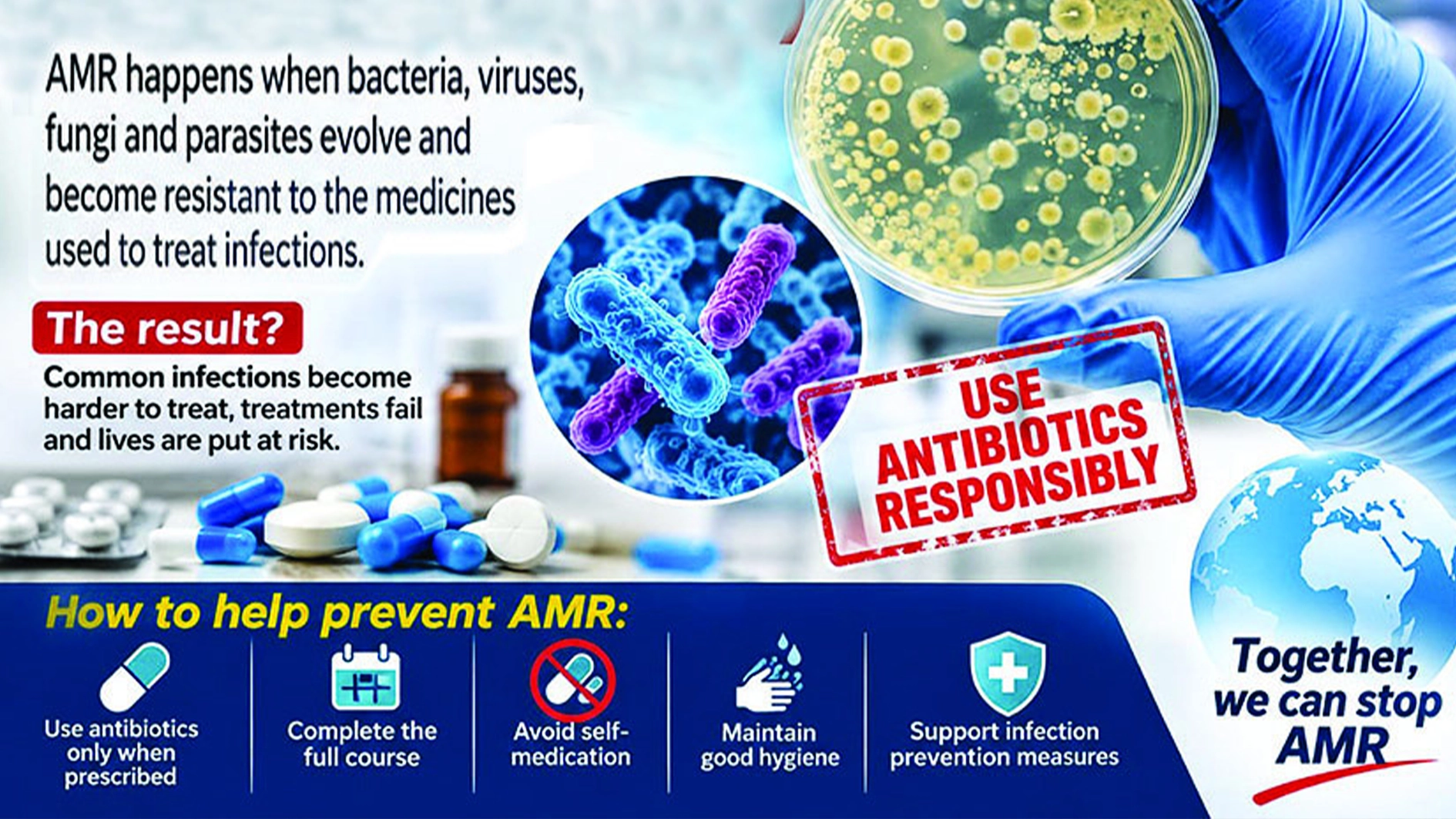
The phenomenon, known as antimicrobial resistance (AMR), is making infections harder and more expensive to treat, prolonging hospital stays and increasing the risk of severe illness, disability and death.
The World Health Organisation (WHO) reported that approximately one in six laboratory-confirmed bacterial infections worldwide were resistant to antibiotics in 2023. The agency also estimated that bacterial AMR was associated with more than 4.7 million deaths globally in 2021.
According to World Bank estimates, antimicrobial resistance could lead to a loss of around 3.8 per cent of global gross domestic product by 2050
A 2022 study by the Nigeria Centre for Disease Control and Prevention (NCDC) revealed that AMR contributes to over 250,000 excess hospital days annually, inflating health-care expenditure by billions of naira.
What appears to be a convenient response to illness is contributing to a much larger public health problem.
In a policy brief titled, ‘Safeguarding Nigeria’s health security – addressing antimicrobial resistance using the One Health approach’, the World Health Organisation (WHO) warned that antimicrobial resistance is a silent but escalating threat to public health in Nigeria, adding that since 1990, over 60,000 lives have been lost yearly, with children under five years bearing the greatest burden.
It noted that in 2021 alone, bacterial AMR was associated with more than 227,000 deaths nationwide and cautioned that drug-resistant infections, particularly from Staphylococcus Aureus, Acinetobacter Baumannii and Streptococcus Pneumoniae are becoming harder to treat.
The UN agency warned that without urgent and sustained action, AMR threatens to reverse decades of medical progress in Nigeria.
Experts said that the danger goes beyond taking the wrong drug for an individual illness. Repeated exposure to antibiotics when they are unnecessary, incorrectly selected or improperly taken creates conditions in which resistant organisms can emerge and spread, making infections increasingly difficult to treat.
Under Nigeria’s regulatory framework, antibiotics classified as Prescription-Only Medicines (POMs) are not supposed to be dispensed without a valid prescription. PPMVs also have a defined scope of practice and are not authorised to stock or sell prescription-only antibiotics outside the medicines permitted under their licences.
Yet in every part of the country, medicines such as Amoxicillin and Ciprofloxacin remain readily accessible without a prescription.
Studies indicate that nearly 70 per cent of Nigerians obtain antibiotics without a prescription, a practice that significantly contributes to antimicrobial resistance.
A study by Akpan et al. (2021) highlights high rates of inappropriate antibiotic recommendations for self-limiting viral and mild conditions by community pharmacists in Akwa Ibom State.
According to the study, 68 per cent of pharmacists recommended an antibiotic, even though the common cold is viral and does not require antibiotics; the top drug was azithromycin, recommended by 43 per cent of pharmacists.
For Acute Diarrhoea, 72 per cent recommended at least one antibiotic, with Metronidazole the most frequent choice at 82 per cent; the findings point to an urgent need for better antimicrobial stewardship and training to reduce the risk of resistance.
A Director at the National Veterinary Research Institute (NVRI), Vom, Plateau State, Dr Sati Ngulukun, told The Guardian that antimicrobial resistance is a serious global health threat affecting humans, animals and the environment, warning that the continued misuse and overuse of antibiotics could render essential medicines ineffective.
Ngulukun warned that Nigeria risks returning to an era when common infections could become deadly if urgent measures are not taken to curb antimicrobial resistance.
He emphasised that the consequences of AMR extend beyond deaths from untreatable infections, noting that it could also reduce productivity in humans and animals and impose a significant burden on societies.
Ngulukun identified the misuse, overuse, and underuse of antimicrobials as major drivers of resistance.
Beyond human medicine, Ngulukun identified agricultural practices, poor sanitation, inadequate access to clean water, poor hygiene and improper waste management as other factors contributing to the spread of resistant organisms.
He said the extensive use of antibiotics in livestock production was particularly concerning, especially where the drugs are used unnecessarily for purposes such as growth promotion.
Ngulukun also raised concerns about antibiotic resistance in the livestock sector, citing E. coli infections in poultry as an example.
Also, a June 2026 publication by Daniel Tizhe and others, based on a cross-sectional study using simulated patients in 315 PPMV shops across 10 local councils in Adamawa State, found widespread dispensing of antibiotics without prescriptions.
Of the 315 outlets visited, 78.4 per cent were PPMV-operated, while 45.4 per cent of vendors had more than 10 years of practice experience. Antibiotics were dispensed without prescription in 85.1 per cent of visits. Among these, 54.9 per cent were WHO “Watch” antibiotics, including Azithromycin, Ciprofloxacin, Vdefixime and Ceftriaxone, while 8.2 per cent were “reserve” antibiotics, including oral Colistin and Levofloxacin.
Experts said that a strategic approach, including mandatory health insurance schemes, prescription and dispensing policies, and enforcement of antimicrobial stewardship regulations by the Nigerian government, is necessary to improve ethical practice and address the irrational dispensing and use of antibiotics in Nigeria.
Ngulukun criticised the widespread availability of antibiotics without prescriptions in Nigeria, describing it as a major contributor to AMR.
He argued that antibiotics are prescription medicines and should ordinarily be obtained after consultation with qualified health professionals, but regretted that people can still walk into pharmacies and medicine shops to purchase antibiotics without a prescription.
Ngulukun further identified open drug markets as another area requiring urgent attention, while also expressing concern over fake or substandard medicines, noting that such products may contain less active pharmaceutical ingredient than indicated on their packaging.
Ngulukun called for stronger enforcement of existing laws regulating the sale and use of antimicrobials and urged authorities to ensure that prescription-only antibiotics are not freely sold without appropriate medical or veterinary prescriptions.
The Director-General of the National Agency for Food and Drug Administration and Control (NAFDAC), Prof. Mojisola Adeyeye, acknowledged that Nigeria does not yet have a strong culture of prescription medicine use, noting that medicines classified as prescription-only can still be found and sold in many places.
She said the problem also involved PPMVs, which sometimes sell medicines they are not authorised to dispense.
According to her, patent medicine dealers are expected to sell simple medicines that are unlikely to cause serious side effects rather than prescription-only medicines.
Adeyeye said NAFDAC was addressing antimicrobial resistance through a One Health approach, stressing that AMR was not limited to medicines used directly by humans. The approach, she explained, also covers veterinary medicines and agricultural chemicals.
According to her, NAFDAC’s veterinary medicine and applied products directorate trains farmers on the appropriate use of pesticides and advises on the need for a washout period after animals are given medicines before they are slaughtered.
She stressed that efforts to tackle AMR must therefore take into account medicines used in humans, veterinary medicines and substances people may consume through food.
Adeyeye also called for greater public awareness about the appropriate use of medicines and the dangers of misuse, acknowledging that changing Nigeria’s longstanding practice of buying and selling medicines outside regulated channels would take time.
In an interview with The Guardian, the Director-General of NCDC, Dr Jide Idris, said that AMR is one of the leading global public health threats, adding that global estimates indicate that resistant bacterial infections are associated with millions of deaths each year and impose high costs on health systems and national economies.
He stated that AMR is an increasing public health concern in Nigeria, adding that resistant infections often require longer hospital stays, more expensive medicines and more complex care, placing additional pressure on patients, healthcare facilities and the economy. AMR also contributes substantially to illness and death in the country.
Idris listed practices that increase the risk of AMR to include dispensing antibiotics without an appropriate prescription, selling incomplete treatment courses, recommending antibiotics for illnesses that do not require them, such as viral infections and encouraging self-medication, among others.
The NCDC boss, who described antimicrobial medicines as one of the greatest achievements of modern medicine, emphasised that preserving their effectiveness is a shared responsibility, as every unnecessary or inappropriate use increases the risk that these medicines may no longer work when they are most needed.
Idris explained that AMR is preventable, adding that responsible antibiotic use, good infection prevention practices, vaccination and improved access to quality healthcare are essential in slowing its spread.
The NCDC boss observed that Nigeria is working towards the global WHO target that at least 70 per cent of antibiotics used in human health should come from the WHO Access category.
Idris stated that, through the implementation of the National Action Plan on AMR, NCDC is working with healthcare facilities, community pharmacies, professional associations, and other stakeholders to strengthen antimicrobial use surveillance, prescribing audits, and antimicrobial stewardship programmes to promote more appropriate antibiotic use across the country.
He noted that the NCDC is working with the Pharmacy Council of Nigeria (PCN), NAFDAC and other stakeholders to promote responsible antimicrobial use through public awareness, antimicrobial stewardship, implementation of the National Action Plan on AMR and strengthening surveillance.
Idris insisted that antibiotics should only be obtained from authorised medicine outlets and used under the guidance of a qualified healthcare professional, adding that responsible antibiotic use helps preserve the effectiveness of these life-saving medicines.
Idris explained that Nigeria’s National Action Plan on Antimicrobial Resistance (2024-2028) provides the country’s roadmap for safeguarding the effectiveness of antimicrobial medicines through a whole-of-society, One Health approach.