 Follow Us on Google News
 Follow Us on Google Discover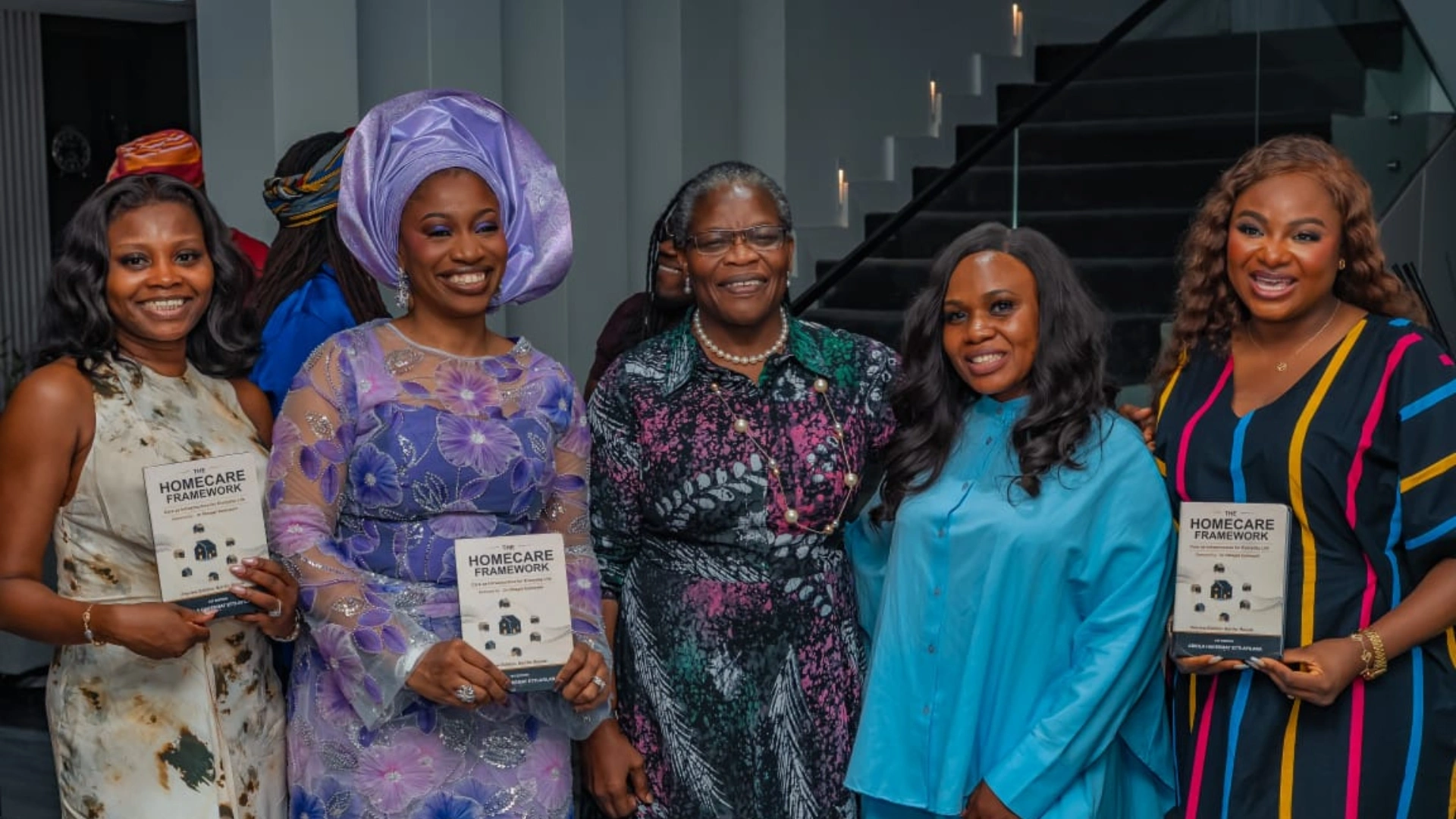
Nurse and health informaticist Abiola Ayilara has called for greater recognition and standardisation of home-based healthcare in Nigeria, arguing that the country must develop systems that better support patients and families after hospital discharge.
Ayilara made the call in Lagos while previewing her forthcoming book, The Homecare Framework, before healthcare professionals, technology experts, families and other stakeholders on July 26.
The book, now available for preorder, argues that homecare in Nigeria operates without standards, training requirements or policy recognition, leaving millions of vulnerable people in the hands of untrained family members and unvetted carers.
Ayilara also announced that The Care Conference, an initiative of her nonprofit The Purple Global Mission, will hold in Lagos on 18 and 19 November 2026, gathering clinicians, policymakers, innovators and families around the future of care.
A crisis that begins at the hospital gate
The problem the book confronts is familiar to almost every Nigerian family, and it is not an elderly story alone. Homecare serves stroke survivors, people recovering from surgery, people living with chronic illness or disability, children with complex needs, people with mental health conditions and those at the end of life.
A patient is discharged, and clinical responsibility passes to relatives with no training.

Preventable pressure sores, medication errors, falls and readmissions follow. The heaviest burden lands on women, who globally perform 76.2 per cent of all unpaid care hours, more than three times the share carried by men, according to the International Labour Organization.
There is currently no register of caregivers families must consult, no mandatory training standard and no supervision of the space where the country’s most vulnerable people spend their most fragile years.
The numbers behind the crisis
The need spans every age, not old age alone. The ILO counted 2.1 billion people needing care worldwide in 2015, including 1.9 billion children under 15, and the WHO estimates 1.3 billion people, one in six globally, live with significant disability.
In Nigeria, noncommunicable diseases account for an estimated 29 per cent of all deaths, with hypertension affecting an estimated 25 to 40 per cent of adults. Stroke ranks as the second leading cause of death among these conditions, and every survivor, at any age, eventually comes home.
The pressure is set to intensify. The World Health Organization projects the global population aged 60 and over will double to 2.1 billion by 2050, with two-thirds living in low- and middle-income countries.
Africa is ageing faster than any other region. Its population aged 60 and over is projected to nearly triple, from about 78 million in 2022 to about 215 million by 2050, according to World Bank analysis of UN data.
Nigeria already has the largest older population on the continent, projected to reach about 25.3 million people aged 60 and above by 2050. Yet researchers report the country has fewer than ten geriatricians, and its 2021 National Policy on Ageing remains unimplemented.
Most striking of all, Nigeria lacks comprehensive national data on caregiving. No one can say how many caregivers work in Nigerian homes, how they are trained, or what outcomes their patients experience.
“The hospital ends at its gate. Beyond that gate, Nigerian families are gambling with the people they love most, and it does not have to be this way.” (suggested pull quote, subject to your approval)
Two systems, one nurse
Ayilara brings twenty years of nursing to the argument. Trained in Nigeria, she travelled to the United Kingdom for further study and worked as a care personnel across NHS and homecare settings, supporting elderly people, people with learning disabilities and people living with mental health conditions.
She later returned home and founded a homecare business in Nigeria. The contrast between an organised system and an improvised one, she says, became the mission of her life.
As a health informaticist, she has also built technology that makes homecare seamless and coordinated for vulnerable people, connecting families, trained caregivers and clinicians around a single patient.
What the framework proposes
The Homecare Framework sets out what building care as infrastructure demands: trained and vetted caregivers, defined standards, coordinated systems, proper documentation and policy that recognises the home as a legitimate site of healthcare.
Attendees at the preview included professionals and families who shared their own caregiving experiences, underscoring the book’s central claim that this crisis touches every household.
What happens next
The book launches formally in September, with The Care Conference following in Lagos on 18 and 19 November 2026.
The Homecare Framework is available for preorder, and details of The Care Conference are at the conference page.

