 Follow Us on Google News


 Follow Us on Google Discover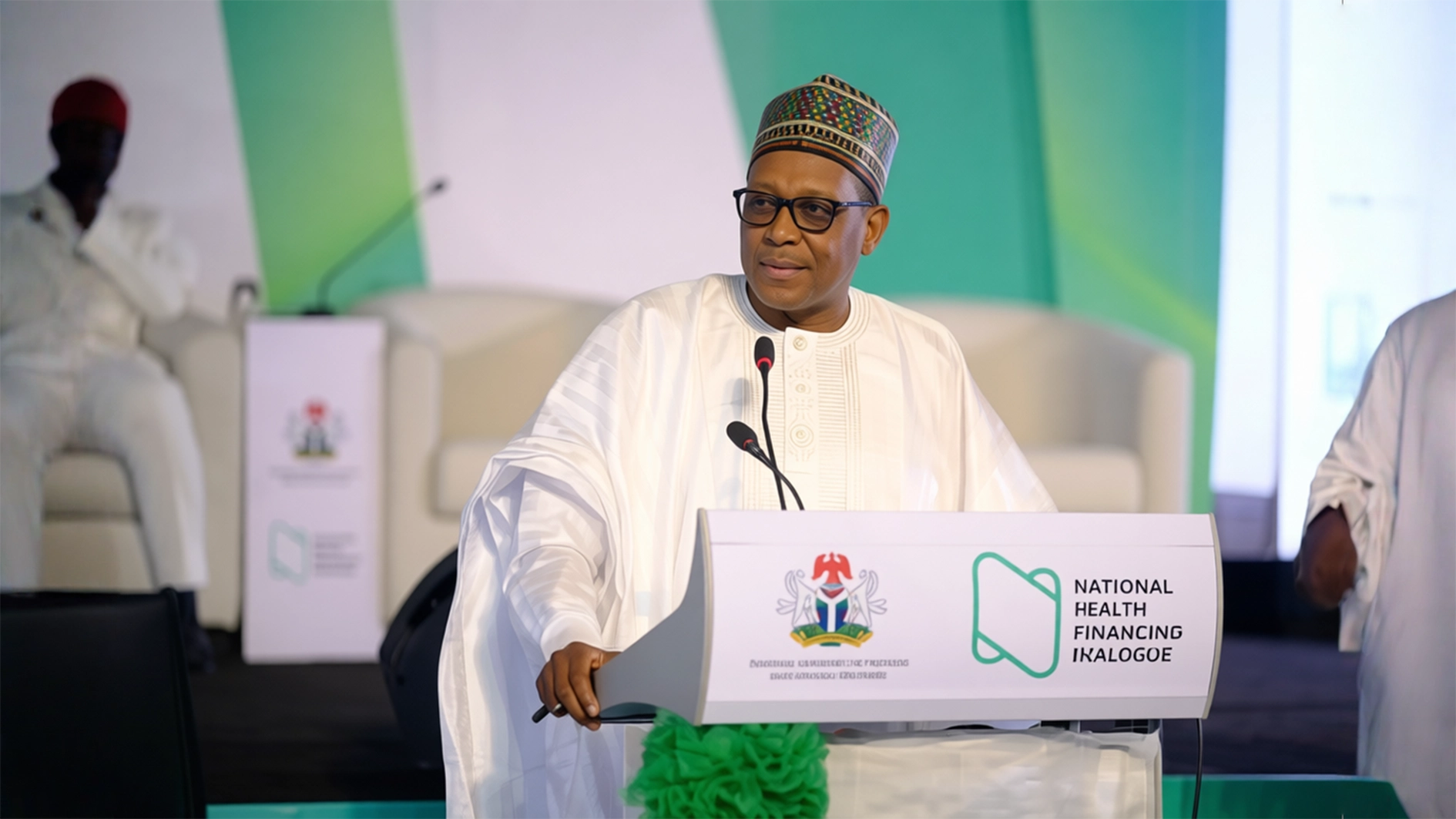
Global pharmaceutical company, Bayer, is to establish a reproductive health commodities manufacturing plant in Nigeria, with the facility currently under construction in Anambra State.
The plant is expected to manufacture family planning commodities locally, reducing Nigeria’s dependence on imported products, creating jobs and contributing to economic growth.
The Minister of Health and Social Welfare, Prof. Muhammad Pate, disclosed this in Abuja at the inauguration of the High-Level Inter-Ministerial Platform (IMP) on Family Planning, Health, Human Capital and Sustainable National Development.
Pate described the investment as evidence that President Bola Tinubu’s Executive Order on the pharmaceutical sector was beginning to attract significant investments in local pharmaceutical manufacturing, diagnostics and health technology.
According to him, Nigeria is gradually moving from dependence on imported health products towards building domestic capacity to manufacture essential commodities.
“Rather than depending entirely on imported products, Nigeria is now building the capacity to manufacture essential reproductive health commodities locally. This will create economic value, generate employment and strengthen the healthcare system,” he said.

The minister said the development was particularly significant as Nigeria seeks to harness its rapidly growing population as an engine of economic development rather than allowing population growth to become a burden on the economy.
Pate said Nigeria’s greatest resource was not its oil or mineral wealth but its people, stressing that investments in health, education, reproductive health and human capital were critical to unlocking the country’s demographic dividend.
He noted that Nigeria, with an estimated population of more than 230 million people and an annual population increase of between eight and 10 million, must deliberately invest in the wellbeing and productivity of its citizens.
“By 2050, Nigeria is projected to have between 450 and 500 million people, making it the third or fourth most populous country in the world. That population can either become our greatest asset or greatest liability, depending on the investments we make today,” he said.
The minister said the newly inaugurated inter-ministerial platform was designed to strengthen coordination among ministries, departments and agencies whose mandates are critical to improving health outcomes, human capital development and economic productivity.
He explained that the Ministry of Health and Social Welfare would coordinate health system priorities and improve access to quality healthcare, while the Ministry of Budget and Economic Planning would drive national development planning and human capital investments.
The Ministry of Finance, he added, would play a critical role in ensuring that investments in health and social sectors translated into increased economic productivity and poverty reduction.
Pate said the Ministries of Women Affairs, Education and Youth Development also had critical responsibilities, particularly in empowering women, improving educational outcomes, promoting reproductive health and equipping young Nigerians with the knowledge and life skills required to become productive citizens.
He highlighted the roles of the National Population Commission, National Primary Health Care Development Agency and National Orientation Agency in population planning, maternal and child health, public awareness and citizen engagement.
The minister also underscored the importance of reducing child mortality, noting that improved child survival could influence reproductive choices and contribute to healthier population growth.
According to him, when families are confident that their children will survive and thrive, they are better positioned to make informed decisions about the number and spacing of births.
Pate, however, stressed that the success of the inter-ministerial platform would depend on adequate funding, effective coordination and stronger collaboration across the three tiers of government.
While acknowledging improvements in budgetary allocations to the health sector, he urged the Ministry of Finance to ensure timely release of approved funds to ministries, departments and agencies responsible for implementing government programmes.
He also called on state and local councils to complement Federal Government efforts, noting that a significant proportion of public resources were managed at the sub-national level.
According to him, all 36 states have signed the Health Sector Renewal Investment Initiative Compact with the Federal Government, providing a framework for greater coordination of health investments.
He said the new inter-ministerial platform would further integrate the states through their commissioners and other relevant officials to ensure a coordinated national response.
The minister emphasised that achieving Nigeria’s development aspirations would require a “whole-of-government and whole-of-society” approach involving civil society organisations, the private sector, development partners, traditional rulers and religious leaders.
He said the platform must focus on measurable outcomes rather than becoming another forum for meetings and discussions.
“It is not just about conversations. It is about concrete actions, accountability and ensuring that investments in our people translate into better health, stronger families, increased productivity and national prosperity,” Pate said.
He expressed confidence that coordinated action across government institutions would accelerate progress in human capital development and support President Tinubu’s vision of a healthier and more prosperous Nigeria.
The minister also called on stakeholders to work together to build a productive population capable of driving economic growth and sustainable national development.
Also speaking, the Managing Director of FP2030 West and Central Africa Office, Dr Alain Damiba, described the initiative as a major step towards strengthening cross-sector collaboration to improve health outcomes and accelerate Nigeria’s socio-economic development.
Damiba commended the Federal Government for adopting a whole-of-government approach, noting that the new platform demonstrated that health and family planning were national development priorities and not issues that should be left to the health sector alone. “Health, including family planning, is a smart investment in human capital and Nigeria’s future,” Damiba said.
“When women and young people can make informed and voluntary decisions about their reproductive health, we do much more than improve health indicators; we expand opportunities for better lives.”
He said enabling families to plan the number and spacing of their children could allow greater investments in education, nutrition and healthcare, thereby strengthening Nigeria’s future workforce and improving the country’s capacity for sustainable economic growth.
Damiba said the inter-ministerial platform should serve as more than a coordinating mechanism, describing it as “a vehicle for shared purpose and shared accountability.”
According to him, the platform would enable ministries to align priorities, monitor progress, reduce duplication and jointly address challenges affecting Nigeria’s development.
He added that Nigeria’s leadership in adopting such an approach could provide a model for other African countries, given the country’s population size and strategic influence on the continent.

