 Follow Us on Google News


 Follow Us on Google Discover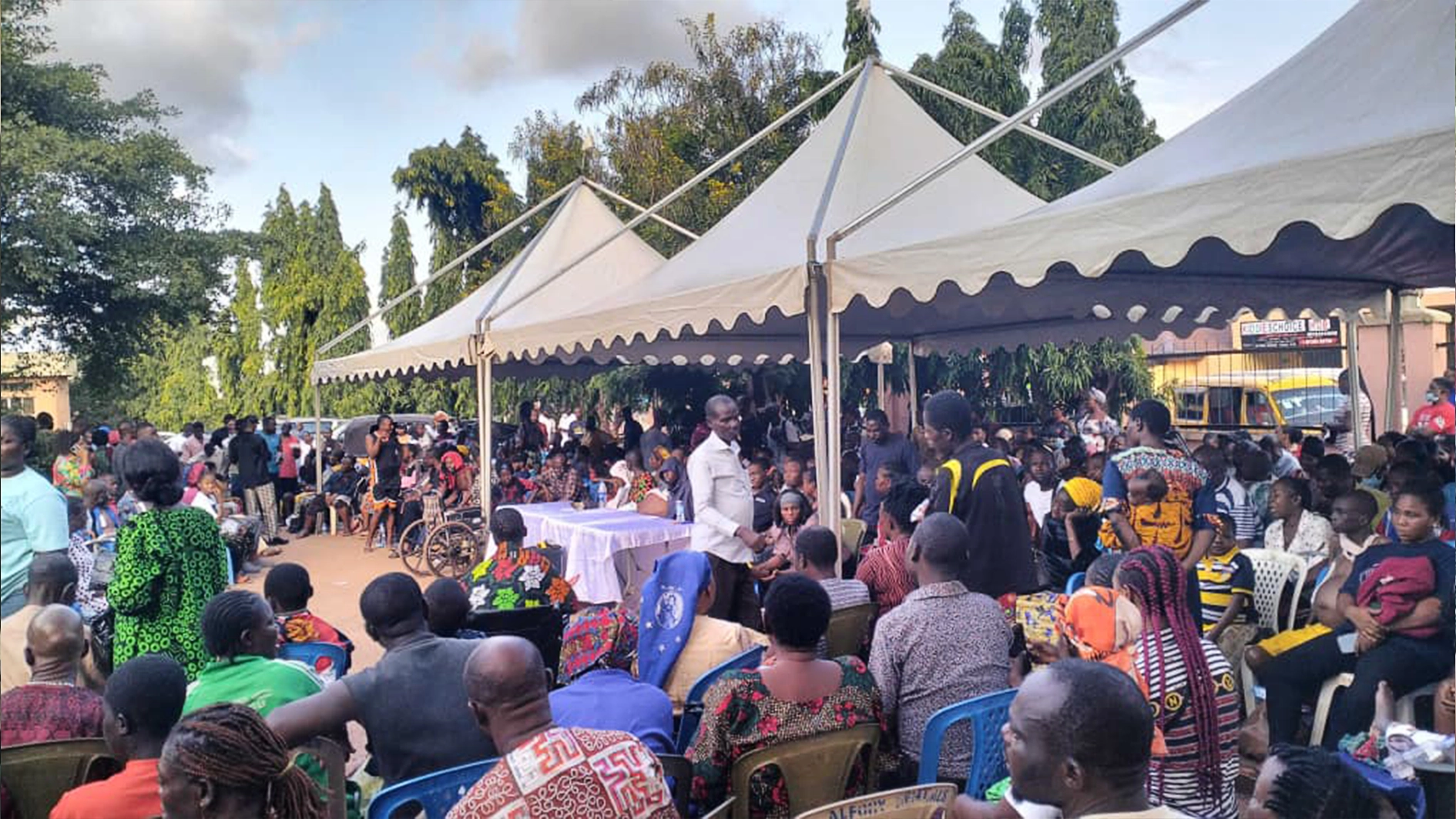
There are concerns over the fate of over 500 residents of the southeast region suffering various degrees of kidney-related diseases.
On Friday evening, the premises of the Enugu State University Teaching Hospital (ESUTH), Parklane, became the Mecca of a sort as the victims gathered with family members to seek financial support to continue treatment, particularly, dialysis and other care associated with chronic diseases.
The gathering followed an appeal by a Philanthropic, Emmanuel Onyeka Okoh (Okwulora), who had earlier through the social media, asked those with kidney related issues to come to the premises for support.
Three big canopies mounted in the hospital premises were filled to their brim with persons suffering from kidney diseases.
Among them were adults and children with either swollen stomachs or legs and faces. While some were mounted on wheelchairs and wheeled to the place, because they had difficulties walking, there were others who reeled in pains sitting in the canopies. Those who could not gain spaces in the canopies went under the trees that provided shelter in the compound, as they lamented their ordeal.
The Presidential Candidate of the National Democratic Congress (NDC) in the 2027 general elections, Mr Peter Obi, who made a surprise visit to the premises expressed shock with the number of persons that had been brought down by kidney disease gathered at the place.

Almost moved to tears, Obi had promised support for the victims, even as he commended Okwulora for the humanitarian initiatives to save lives.
“I didn’t know we have such number of people that have been knocked down by kidney problems. I am really touched by this development”, he stated.
Turning to the victims, he stated that it would be difficult for him to reach out to them one after the other, but promised to assist them through the platform provided by Okwulora.
A visibly disturbed Emmanuel Onyeka Okoh (Okwulora), told Obi that he had made personal sacrifices to combat kidney disease crisis in Igboland amid widespread apathy.
He stated that he invited victims to the premises to enable him share to them donations he raised from public spirited individuals, stressing however that there was much work to do.
“It is sad. Look at them. They are hopeless and helpless and some of them, if they don’t get dialysis, might not even see Sunday. So I’ve taken it upon myself. I’ve sold my house. I’ve sold my lands. I’ve sold everything valuable that I have. Because these people mean everything to me. It might interest you to know that I see dead bodies. I see dead people. So that is why I’m stretching beyond limit. This year alone, I think I’ve paid up to 15 million naira here in Park Lane to free patients. If you go down there, accident and emergency and all that, you see people, who have been here for six months and one year
“And in the process of waiting, many will die. So that is why I am giving everybody now money for dialysis. Money that can sustain them for at least two months or a month while I recover. Myself, I’m diabetic. I’m having organ problems as well as a result of diabetes. Last time, I almost amputated my leg. I did skin grafting. So I am close to what they are facing. That is why I’m sticking my neck in it”, he added
Okoh explained that the development had become a “pandemic”, stressing that his greatest worry was the number of children in the age bracket of 8 to 10 years that have been brought down by kidney problems.
“These children of 6 to 10 years have not taken alcohol before. They have not smoked before. Yet, their future is hanging and bleak due to this illness.
“Doctors said it’s Blood Pressure and Blood sugar. And some say that of children, what their parents took during pregnancy. I’m already tired. I’m already tired. I made a video here yesterday. I said a good person, a good footballer knows when to walk away”, he added
He appealed to southeast governors and well meaning Nigerians to come to the aid of the victims, explaining that building public infrastructure when those that could benefit from it are unhealthy would amount to nothing.
He continued; “One woman died yesterday. Another one died this morning. So I’ve tried to reach to government. None of them is interested. They’re only interested in building roads and gutters. I say, if all these people die, who will use the road and gutter you are constructing? The lives are dropping dead every day. That is why we are doing what we are doing. The most affected people in Igboland are Udi and Ezeagu. I’ve written, I’ve talked, calling on billionaires in Ezeagu, even their political classes, to come and intervene. But nobody’s interested. I’ve been doing it. Last year September, I was at the Michael Okpara Square. I tested over 3,500 people”
A Clinical Psychologist Dr Sydney Igwe, while reacting to the development, stressed that something urgent needs to check the rampant spread of the disease.
“Our governments must intervene in the provision of care. There is no way an average family can afford weekly dialysis because of the cost. Those requiring transplant must be assisted to do so, as well as post care. We must improve awareness on things that can cause these problems”, he stated.
He stated that there are several cases of kidney failures in the region.
Reacting, Chairman, Nigeria Medical Association (NMA), in Enugu State, Dr Chima Edoga, called on residents to pay adequate care of their health as well as in the way they consume some foods.
He identified poorly controlled high blood pressure, poorly controlled diabetes mellitus as well as untreated urinary tract infections as certain risk factors that could cause kidney failures.
Edoga also called attention to the use of unregulated herbal remedies or preparations containing toxic substances as well as certain skin-lightening products containing harmful substances such as mercury.
Edoga urged residents to drink an adequate amount of water, especially during hot weather, illness or strenuous physical activity, adding that people with heart or kidney disease should follow their doctor’s advice regarding fluid intake.
“Check your blood pressure regularly and keep it well controlled. Screen for diabetes and maintain good blood glucose control if diagnosed. Avoid the misuse or prolonged use of NSAIDs and other potentially harmful medications. Use medicines only as prescribed”, he stated.
Former Chairman of NMA in Enugu State and Community Health Physician, Dr Sunday Okafor said the disease is largely preventable in its early stages, stressing that late presentation and the high cost of dialysis are pushing families into financial distress
“Kidney disease is becoming an increasingly important public health challenge in Nigeria and across the world. Although kidney failure is often regarded as an inevitable or mysterious disease, the reality is that many of the conditions that damage the kidneys are preventable, detectable early and treatable.
“When kidney function progressively declines, a person develops Chronic Kidney Disease (CKD). When kidney function becomes severely impaired and the kidneys can no longer adequately sustain life without kidney replacement therapy, the patient develops kidney failure, sometimes referred to as end-stage kidney disease.
“This distinction is important because not everyone with kidney disease will develop kidney failure. Early detection and appropriate treatment can substantially slow or sometimes prevent progression to kidney failure”, he said
Quoting current reports, he said that it costs approximately N50,000–N80,000 per session to perform dialysis, stressing that some facilities and patients may encounter different charges.
He stated that going by current costs, it would take as much as N12.8 million per year for dialysis per person.
He recalled that the Federal Government announced a dialysis subsidy programme in 2025 under which the price of a dialysis session was reduced from N50,000 to N12,000 at participating federal tertiary hospitals, stressing that the programme was initially implemented in selected centres and subsequently reported by the Federal Ministry of Health and Social Welfare as operating in 11 federal tertiary institutions.
“Even this subsidised figure remains a very substantial financial burden for many Nigerian households, particularly when other treatment and transportation expenses are added.
“Patients should therefore confirm the current subsidy status, eligibility and applicable charges directly with the participating facility because programmes and coverage can change”, he said
He said that Nigeria has limited kidney-care infrastructure compared with its enormous population, stressing that the 2023 International Society of Nephrology Global Kidney Health Atlas reported only about 0.80 haemodialysis centres per million population and approximately 0.02 peritoneal dialysis centres per million population in Nigeria.

