 Follow Us on Google News
 Follow Us on Google Discover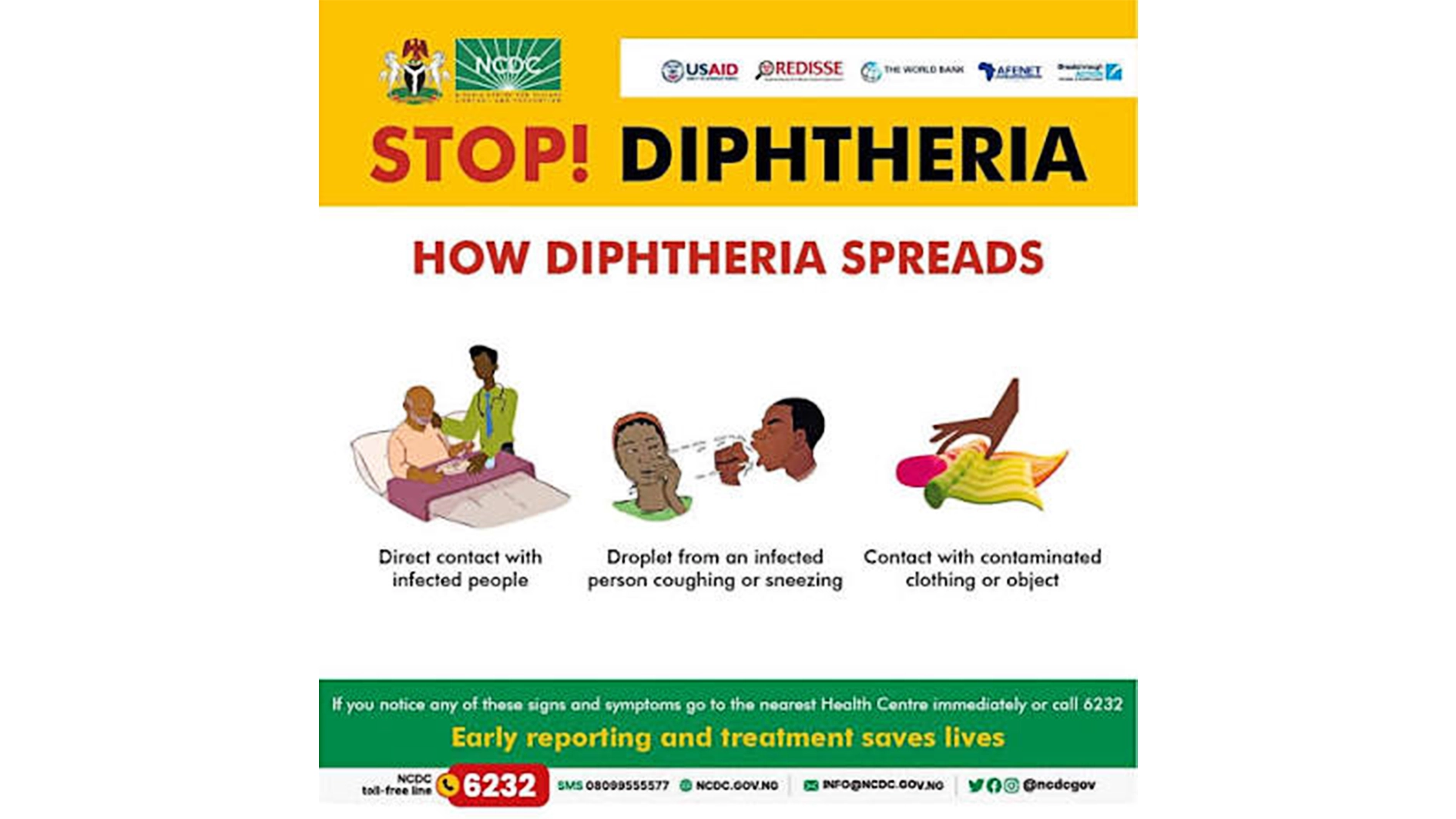
• Experts urge schools to step up vaccination, administer booster doses
With schools reopening across the country, paediatricians and public health officials have warned of an increased risk of diphtheria transmission among school-age children, urging schools and parents to strengthen vaccination, health screening, hygiene and early referral.
The warning follows an upsurge in diphtheria cases, with children aged five to 15 years reportedly accounting for a significant proportion of those affected.
Data from the Nigeria Centre for Disease Control and Prevention (NCDC) shows that about 12,977 suspected cases, 10,476 confirmed cases and 406 deaths have been recorded since the beginning of the year.
During the same period in 2025, about 9,080 confirmed cases and 978 deaths were recorded nationwide. According to the NCDC, eight states, Kano, Kaduna, Katsina, Borno, Bauchi, Plateau, Sokoto and Zamfara account for about 98 per cent of confirmed cases.
Diphtheria is a highly contagious bacterial infection that spreads mainly through respiratory droplets from coughing, sneezing or talking, as well as direct contact with infected skin lesions or contaminated objects.

An Associate Professor at the Institute of Child Health, University of Benin (UNIBEN), and Programme Coordinator, Med-Vical School Health Programme, Edo State, Dr Izehiuwa Enato, told The Guardian that school reopening was significant because close interaction among pupils creates opportunities for transmission, particularly among susceptible children.
“Diphtheria is a respiratory disease and it can be deadly,” she said, adding that the infection could also manifest as a skin disease.
Enato said more than 71 per cent of children affected in the current outbreak were within the five-to-15-year age group, making schools a critical point for prevention and early detection. She identified gaps in vaccine uptake and waning immunity among older children as major concerns.
Enato explained that Nigeria’s routine immunisation schedule provides diphtheria-containing vaccines at six, 10 and 14 weeks of life, but booster doses for older children have not been consistently promoted.
She warned that immunity acquired during infancy could decline over time, leaving school-age children increasingly vulnerable if they do not receive recommended boosters.
The paediatrician said early symptoms could resemble an ordinary infection, including fever, sore throat, cough and chills. However, the disease could rapidly become life-threatening when a characteristic pseudomembrane forms in the throat and airway.
“The membrane, together with swelling of lymph nodes around the neck, can obstruct the airway and make breathing difficult. If these children don’t present to the hospital early enough, it may be too late to save their lives,” she cautioned.
She urged parents not to send children with fever and sore throat to school without seeking medical advice, particularly while diphtheria is circulating.
Enato also called on schools to verify pupils’ immunisation records and establish clear systems for identifying and referring suspected cases. She recommended appointing a health focal person or school nurse to coordinate responses to suspected infections.
She said schools should educate teachers, pupils, cleaners, administrators and other staff on the symptoms, transmission and appropriate response to suspected cases. At the healthcare level, she said suspected cases should be promptly investigated and documented, while public health authorities should initiate contact tracing where necessary.
Enato stressed the importance of prompt treatment, noting that antibiotics could reduce complications and transmission, while severe cases might require specialised hospital care.
She also advised schools to strengthen respiratory hygiene and provide adequate handwashing facilities with soap and water. Where running water is unavailable, she recommended improvised facilities such as Veronica buckets.
Also speaking with The Guardian, Associate Professor of Infectious Diseases, Pathogen Genomics and Molecular Epidemiology at Adeleke University, Ede, Dr Oladipo Kolawole, warned that crowded and poorly ventilated classrooms could facilitate transmission.
He called for a multi-layered response involving school administrators, parents and health authorities, including mobile school-based catch-up vaccination teams in high-risk communities and updated clinical advisories for healthcare providers.
Kolawole also urged schools to verify pupils’ immunisation status during registration and strengthen infection-control measures through improved ventilation, hand hygiene and arrangements to separate symptomatic pupils.
He advised school managers to establish temporary isolation spaces for pupils who develop symptoms and maximise cross-ventilation by keeping classroom windows open where appropriate.
He stressed that caregivers should not send children with symptoms such as sore throat, fever or voice changes to school and should ensure that their children are up to date with routine vaccinations and recommended boosters.
Kolawole said inadequate vaccination coverage had left many children unprotected, while delayed diagnosis and treatment could turn a preventable infection into a life-threatening illness. He said the recurrence of diphtheria pointed to weaknesses in routine immunisation coverage and disease surveillance rather than failure of the vaccine.
According to him, supply-chain bottlenecks, vaccine stockouts at rural primary healthcare centres and misdiagnosis at the primary-care level could delay treatment, as early symptoms are sometimes mistaken for malaria or tonsillitis.
Kolawole stressed the need for immediate administration of diphtheria antitoxin (DAT) when diphtheria is clinically suspected, without waiting for laboratory confirmation, to neutralise circulating toxins before they cause irreversible tissue damage.
He added that prompt treatment with antibiotics such as erythromycin or penicillin could halt bacterial growth and transmission, while tertiary hospitals in high-burden areas should be equipped to provide emergency airway management for severe cases.
MEANWHILE, speaking during a webinar titled “Diphtheria Watch: Know It!! Stop It!”, the Head, Disease Prevention and Health Promotion at the NCDC, Dr Tochi Okwor, stressed the need for rapid treatment of affected persons to reduce complications and deaths.
Okwor highlighted vaccination, early detection and community engagement as critical measures for preventing further transmission, particularly among children who have received no vaccines or failed to complete the recommended schedule.
She said the tools to prevent diphtheria already exist, but the challenge was ensuring that vulnerable populations had access to them and used them effectively.
Okwor also called on religious and community leaders to help address concerns, misconceptions and other barriers preventing families from vaccinating their children.

