 Follow Us on Google News



 Follow Us on Google Discover
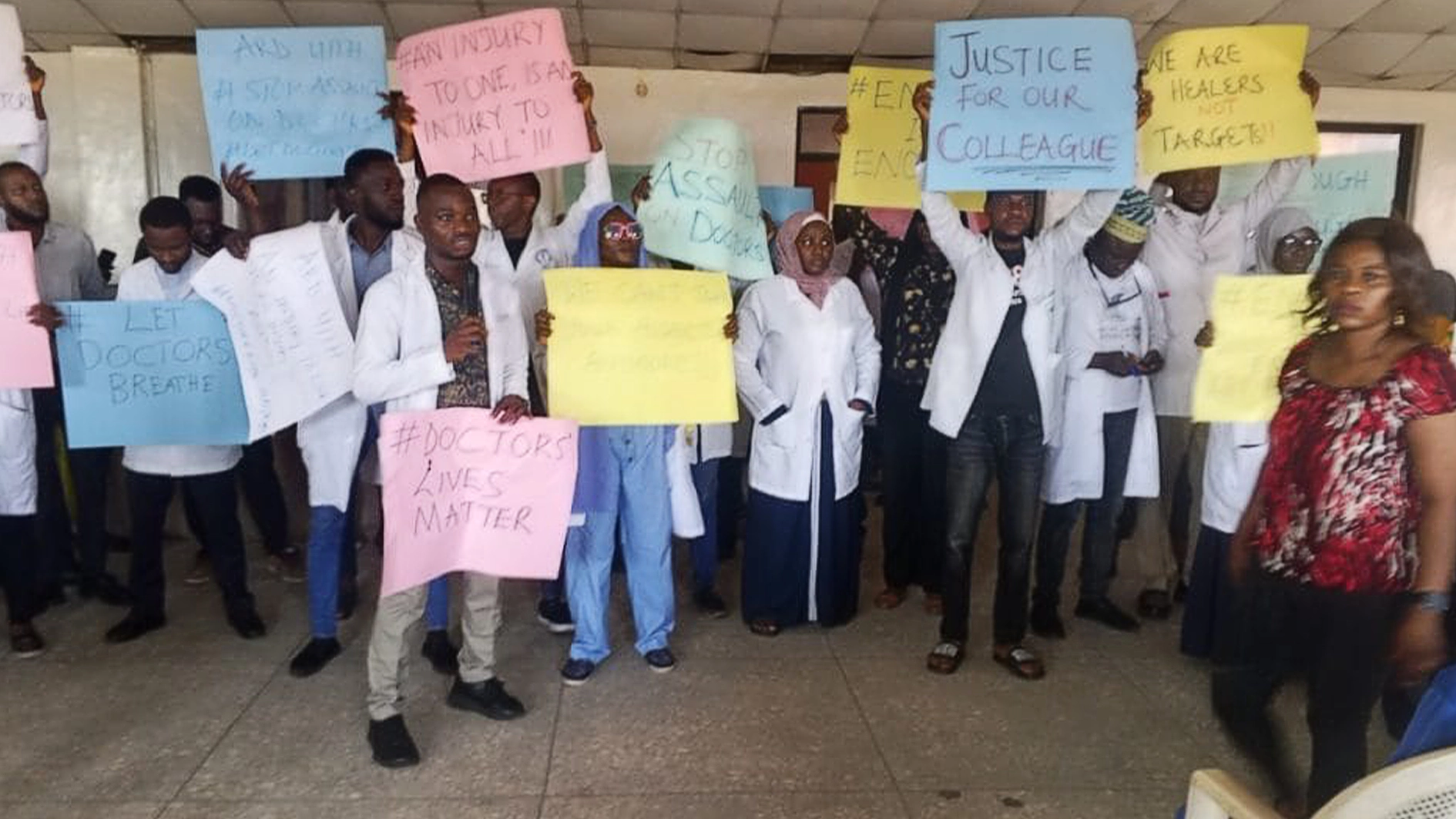
The Federal Government has called for stronger regional cooperation and practical measures to tackle the migration of health workers and improve healthcare delivery across West Africa.
Minister of State for Health, Dr Adekunle Salako, made the call at a workshop organised by the West African Health Organisation (WAHO) in Abuja to finalise a regional work plan for motivating and retaining health workers in Economic Community of West African States (ECOWAS) member countries.
Salako, represented by the Director and Head of the Department of Health Planning, Research and Statistics, Dr Ovuoraye John, said the initiative should complement continental efforts to address workforce shortages, including a programme targeting two million community health workers across Africa by 2028.
He said the simultaneous hosting of regional health workforce discussions, activities marking the 50th anniversary of the West African College of Physicians and preparations for a high-level African Union forum presented an opportunity to align priorities.
“We now know that we cannot do it alone in silos. We need every resource available to us as a country to get it right. The health workforce is the challenge that we are facing on our continent,” he said.
On public health security, Salako urged participants to observe Nigeria’s Ebola prevention protocols, noting that the country had continued to allow public gatherings despite recording a confirmed case.

He said no additional cases had been recorded since the initial confirmation, while contact tracing had been expanded to 53 people. All contacts had been monitored, and those considered at risk had tested negative, he added. The index patient was recovering after being evacuated to Switzerland.
Also speaking, the representative of the West African College of Surgeons, Prof. Foluso Owoeye, urged governments to address health workers’ migration by improving working conditions, strengthening healthcare infrastructure and providing better opportunities for career advancement.
He warned that the continued loss of trained professionals threatened the sustainability, quality and accessibility of healthcare across the sub-region. Owoeye said it was unacceptable for West African countries to invest substantial resources in training medical personnel only for their expertise to benefit other countries while local communities remained underserved.
“We cannot continue to train healthcare professionals for the benefit of the rest of the world while our own communities remain underserved,” he said.
He identified modern medical equipment, specialist training, mentorship, research opportunities and professional advancement as key measures for retaining health workers. He also called for realistic, measurable policies with clear targets, timelines and institutional accountability.
According to him, retention policies must involve healthcare workers and reflect their aspirations and workplace experiences. He reaffirmed the college’s commitment to working with WAHO and national governments on training, mentorship, research and policy advocacy.
“Our ultimate success will not be measured by the elegance of the document we produce at this workshop, but by the number of healthcare professionals who, because of its implementation, choose to stay, serve and thrive in our sub-region,” Owoeye said.
Earlier, WAHO Director-General, Prof. Palokinam Pitch, said regional authorities had directed that the work plan be completed to guide health workforce retention over the next five, 10, 15 and 20 years. The document would be presented to the Assembly of Health Ministers for consideration and implementation.
Pitch, represented by WAHO’s Director of Public Health and Research, Prof. Joseph Olorunda, said work had begun on harmonising training curricula, with 58 curricula developed across various disciplines and subspecialties. The move is expected to ease professional mobility and allow health workers trained in one ECOWAS country to practise in another.
WAHO’s Head of the Regional Council of Health Training Personnel, Prof. Kofi Balogun, said retention required adequate remuneration, suitable accommodation and supportive working environments.
Earlier, Olorunda identified poor pay, delayed salaries, inadequate working conditions, limited career progression, uneven workforce distribution and migration as major barriers to effective healthcare delivery.
He said Africa accounted for 24 per cent of the global disease burden but had only three per cent of the world’s health workforce. The region would need an additional 4.2 million health workers by 2030, while a 2025 UK government report cited at the meeting indicated that 85,000 to 90,000 Nigerian-trained doctors and nurses were registered in the United Kingdom.
The proposed framework is expected to strengthen long-term workforce planning, harmonise training, improve professional mobility and promote evidence-based staffing, particularly in underserved communities.
WAHO urged ECOWAS governments to treat health workforce retention as a public health priority, with better pay, improved working conditions and career development central to keeping skilled professionals in the region.