According to statistics, nearly more than half the population in Africa don’t have access to quality healthcare. With launched pilots in Kenya and Uganda both in East Africa, Health eVillages is aiming to address this shortage.
Founded in 2011 by Donato Tramuto and in partnership with the not-for-profit Robert F. Kennedy Human Rights organization, Health eVillages is an organization borne out of the need to make healthcare services more easily accessible especially in more remote and underserved regions of the world.
Health eVillages aims to address the fact that within our lifetimes, one billion people will go to their graves without ever having access to health care workers, medication, clean water or affordable health facilities. Health eVillages collaborates to advance health care access and improve the quality of care by providing state-of-the-art mobile health technology including medical reference and clinical decision support tools, as well as other community-focused resources, to medical and public health professionals serving the most vulnerable populations around the world.
Health eVillages works on a simple but powerful principle: empower healthcare professionals in remote and resource-limited areas with the latest medical information and tools, and they can provide better care to their communities.
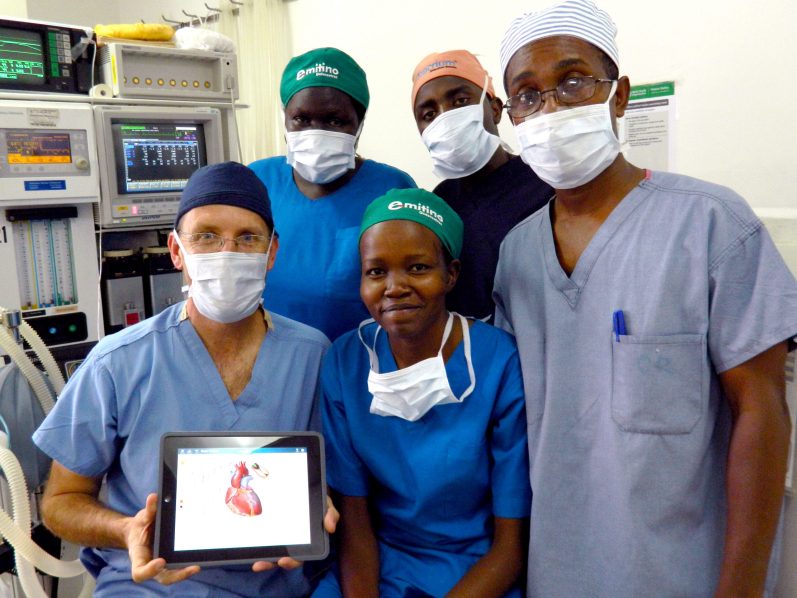
The organization provides healthcare professionals with handheld devices, like iPads and iPhones, preloaded with medical reference and clinical decision support tools. These tools can be used offline, making them ideal for areas with limited or no internet connectivity. Health eVillages customizes the content on these devices according to the most pressing local health needs, ranging from primary care to HIV/AIDS, maternal and child health, and non-communicable diseases.
Over the years, Health eVillages has made a significant impact in underserved areas worldwide. For instance, in Lwala, Kenya, the organization’s mobile devices have helped increase the number of safe deliveries for expectant mothers, contributing to a significant reduction in maternal and infant mortality.
[ad unit=2]