 Follow Us on Google News


 Follow Us on Google Discover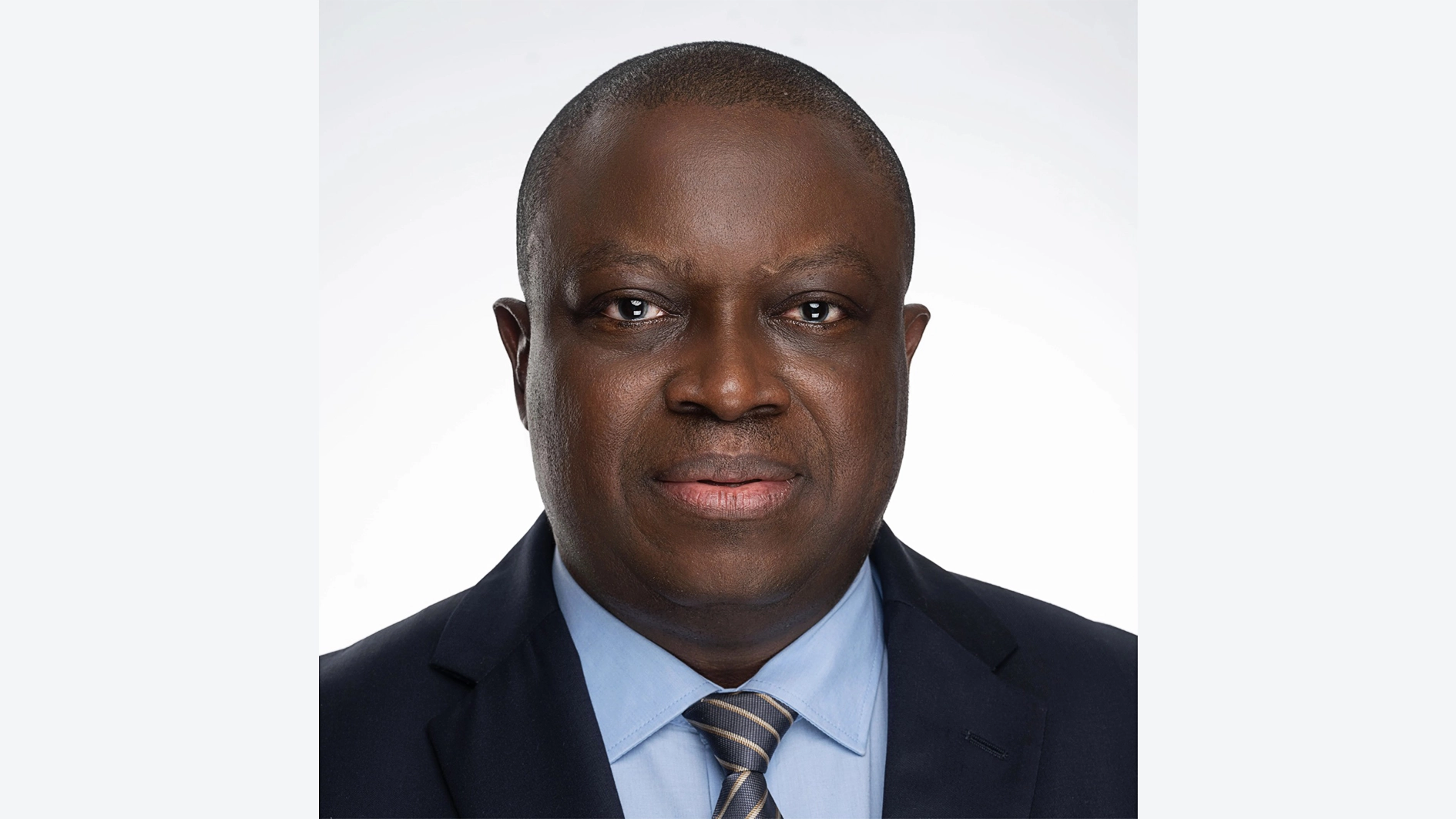
By Ifeanyi Igwebike Mbanefo
• Now Popular As Nigeria’s Greatest Act Of Corporate Grace
There are islands that keep to themselves because geography demands it, and islands that keep to themselves because memory, caution, and power have taught them to. Bonny was both. For decades, it lived in a carefully guarded solitude — a silence not quite peace, not quite fear, but something older and more deliberate than either. It was the silence of a place that seemed to say: let the world come close, but only to the edge of the tide.
A holding of breath by a community that has fought incessant devastating wars, especially with neighbours – Andoni, Okrika, Opobo, courtesy of King Jaja. I lived inside that silence. I served as NLNG’s Community Relations Manager through the years when the Bonny–Bodo Road died, revived, died again, and at last rose from the mud, mangrove, and the archives like an oath that history had delayed but could not erase. I watched its ghost hover over the island for years, a road not yet built but already heavy with the burden of destiny. And I watched the man who would finally drag that ghost into flesh — quietly, stubbornly, and almost single-handedly — Dr. Babs Omotowa. This is the story as I lived it. And what I learned directly from the man at its centre.
The Water Remembers Everything
Long before Bonny became an island that said no to a road, it was an island the world could not ignore.
In the eighteenth and early nineteenth centuries, Bonny stood among the busiest slave ports on the West African coast. Captives from the Igbo interior were pushed through its creeks toward European ships waiting offshore. Historians estimate that hundreds of thousands passed through Bonny’s waters — a human tide that surged between 1780 and 1810, slowed only when Britain outlawed the trade in 1807, and continued illegally for years after.

When slavery ended, palm oil took its place. The same waterways that had carried human cargo now bore barrels of red gold toward Europe’s factories. Bonny became indispensable again. Then came crude oil and Shell. Then natural gas liquids and ExxonMobil. Then liquefied natural gas and Nigeria LNG Limited. For nearly three centuries, Bonny has been one of Nigeria’s vital gateways to the world — and for nearly all of that time, the world reached it only by water. The Federal Soldiers sent to secure Bonny crude oil export terminal during the civil war, were moved from an important military facility in Victoria Island, Lagos, today known as the Bonny Camp. The road this story is about would be the first time in Bonny’s long history that the island’s value would flow through its people, not merely past them.
The Island That Chose To Wait
When NLNG first drew up plans for its great gas liquefaction plant, the drawings included a road — a proper road — linking Bonny to the mainland at Bodo. The community said no. From afar, that may appear short-sighted. It was not.
Bonny’s leaders feared that a road would fling the island open to strangers, upset its fragile social balance, and weaken the cultural authority of those who had long controlled access to land and opportunity. Some feared crime. Others feared change. A few feared losing the quiet leverage that isolation had always given them. So, Bonny chose the water. And the water, as always, chose Bonny.
Then the modern world arrived anyway — by sea. At the height of NLNG’s construction, more than seventeen thousand workers descended on Bonny Island. Boats carried them daily. Helicopters lowered others onto a strip of land that had neither the roads nor the housing to absorb them. Bonny had asked to keep the world offshore. Instead, the world arrived all at once — and remained offshore all the same, because the island could not capture the wealth passing through it. Workers earned their wages on Bonny soil and spent them in Port Harcourt, in Lagos, anywhere a road or runway could carry them. Bonny had won its isolation. In the same breath, it had lost the prosperity isolation was meant to protect.
Meanwhile, the waters grew dangerous. Pirates multiplied. Boats capsized. Lives were lost. The arithmetic changed. Slowly, reluctantly, the island turned toward the road it had once refused. That first refusal is not folklore. It sits in the minutes of an NLNG shareholders’ meeting, recording the refund of money already budgeted for the road. The community did not accept it. So, the money went back.
Bonny had chosen to wait. And wait it did.
Thirty Years, One Road, No Progress
The Federal Government was not blind to the injustice. An island producing close to fifteen percent of Nigeria’s revenue deserved a road. A contract was awarded. And then nothing happened. For more than thirty years, the contractor collected annual allocations of ₦1–2 billion, filed variation claims for almost exactly the same amount, and left the road trapped in a permanent state of half-finished stalemate. Federal Ministry of Works records showed that Gitto Costruzioni Generali Nigeria Ltd which received an initial mobilization fee of ₦10,463,233,981.26, eventually walked away with 43% of the contract sum for 12% work done. Rumours swirled of political ties, donations, influence. What did not swirl was progress. A road is a promise. For thirty years, Nigeria broke that promise.
The Bill That Frightened A Good Man
In 2008, NLNG’s Managing Director, Dr. Chima Ibeneche, revived the idea. He assembled a team — Siene Allwell-Brown, Chinasa Ego-Osuala, Kudo Eredia-Eke, Ifeanyi Igwebike Mbanefo, Godson Dienye, Belejit Ikuru, and others — to determine the true cost.
The number came back: over ₦100 billion. It was more than the annual budgets of many Nigerian states. It was too heavy, too immense, almost impossible to carry. Ibeneche let the idea recede. Three false starts now: a community that feared the road; a government that funded nothing; a company that had tried twice and failed twice. Into this graveyard of good intentions walked Dr. Babs Omotowa in 2012. “Forty Years Is Unfair.” The spark came from a visitor. General Yakubu Gowon visited NLNG late in 2012. In passing, he mentioned that the design for the Bonny–Bodo Road had begun during his tenure — in the 1970s. Omotowa did the arithmetic. Forty years. An island that had carried Nigeria’s wealth on its back, still reachable only by water. He decided the waiting would end with him. What followed was not a single heroic gesture, but a campaign — patient, strategic, relentless. He built the case before he ever presented it.
The Moral Case
Bonny’s people were dying on the water. Pirates ruled the creeks. NLNG’s footprint was growing. The company owed the community more than condolences. A road was not merely concrete and steel. It was an act of duty — a way to honour the lives that had been risked, and lost, in the shadow of corporate success.
The Business Case
A road would:
• End NLNG’s dependence on expensive air and marine logistics.
• Allow staff to live in Port Harcourt and travel to Bonny in about 45 minutes.
• Reduce operational costs.
• De-risk Train 7 construction and future expansion. This was not charity dressed in ceremony. It was strategy in its most humane form.
The Political Case
He costed an alternative route through Andoni. He met Governor Rotimi Amaechi personally. He anticipated objections before they arose. He pre-engaged non-Nigerian directors on the Board. He secured NNPC’s support. He prepared answers before questions could be asked. By the time he entered the Boardroom, nothing could surprise him. It took nearly a year. But the Board approved it: NLNG would provide ₦60 billion — half the cost — if the Federal Government removed the incompetent contractor and awarded the road to a capable one. It was the breakthrough the road had waited forty years for.
The Rooms Where The Road Was Reborn
Omotowa met with Architect Mike Onolememen, then Minister of Works. The Minister understood at once. He terminated Gitto Construction’s contract. The project was retendered and Julius Berger through a competitive bid process. For the first time in decades, the road had a pulse. Then the administration changed.
A new Minister arrived: Barrister Babatunde Fashola. In his first meeting, he dismissed the road as a lesser priority — behind roads “for moving cattle and rams.” He said he was unimpressed by NLNG’s ₦60 billion commitment. Omotowa returned from that meeting visibly stung — not by disagreement, but by ingratitude. He told the Minister plainly: cooperate, or the offer would be withdrawn. It took nearly another year — and the quiet intervention of the Minister’s own directors — before the project moved again.
The Clause That Saved The Road
Omotowa offered to advance NLNG’s entire ₦60 billion immediately — even in dollars — so Julius Berger could mobilize without delay. In exchange, NLNG insisted on a clause Gitto had never faced: Any future cost overrun would be borne by the Federal Government, not NLNG. That single clause broke the thirty-year cycle of appropriation and disappearance. It was the road’s shield. It was Omotowa’s quiet genius. It was the turning point.
What Was Finally Built
Thirty-nine kilometres of heavy-duty road. Three major bridges. All on a swamp and mangrove terrain that swallowed lesser contractors whole. Variations arose — as they always do — but they now landed on the Federal Government’s account, routed through the Road Infrastructure Development and Refurbishment Investment Tax Credit Scheme. The project moved from N120 billion to N280 billion. It became the largest single corporate social responsibility project in Nigeria’s history. And it very nearly did not happen at all.
A Road Inside A Larger Dream
The road was only the spine of a larger vision — Bonny-Dubai. Around 1970, Dubai and Bonny had strikingly similar economic foundations: both were dependent on oil. Indeed, Bonny was ahead in some economic indices. It became a primary crude oil hub in 1965 when the Bonny Island Terminal was completed. Oil was discovered in Dubai’s Fateh field in 1966 and commercial exports began subsequently.
These happened before Dubai accelerated past Bonny and then past Nigeria itself, transforming resource wealth into global ambition, gleaming infrastructure, and a city that seemed to rise from imagination as much as from sand.
Our dream for Bonny was quieter, but no less bold: a 25-year masterplan; ₦75 billion committed by NLNG and N25 billion committed by Shell; a modern city imagined from coastline and gas. I was tasked with turning parts of that dream into reality:
• Removing Monkey Village, a 25-year-old ghetto defacing NLNG’s $30 billion plant.
• Constructing 70 new buildings for Finima indigenes whose houses were demolished to build NLNG, 46 years prior, but were not replaced. We also paid those whose houses were demolished but not adequately compensated. We wanted to make peace with the past. We planned for a prosperous future with no one left behind.
• We planned restructuring Bonny Utility Company, which provides electricity to the island. – Omotowa gifted the kingdom assets worth billions of dollars, including Bonny vocational School and Bonny Utilities Company.
• We Set up a foundation with UNIDO, Bank of Industry, World Bank, as partners.
• We promoted Bonnynization and creating a talent pipeline for Bonny. We leveraged NLNG scholarship scheme and took youths straight to Oxford and Leeds and Cambridge.
• Engaged Accenture to hand-hold Bonny through its transition from rural community to industrial and commercial heartbeat of Nigeria.
It was a solid foundation
We were not merely building structures. We were restoring what the community had been owed for years. But none of it mattered without the road. The road was the artery. The road was the beginning.
For The Record
I write this because I was there. Because I watched a man do what three governments could not. Because I believe leadership, when it is real, deserves its name in history. The bill that once frightened Ibeneche was almost exactly what Omotowa eventually structured: ₦60 billion from NLNG, ₦60 billion from the Federal Government. What one man saw as impossible, another saw as solvable. Every government since Gowon has owed Bonny this crossing. I only ask that the record show clearly where the breakthrough came from. Dr. Omotowa did not ask me to write this. I didn’t seek his permission to write it. Because the truth does not ask for permission. So, I write it. In my voice. With my witness. With my conscience.
Because Bonny will one day cross that road without remembering how close it came to never existing. And because history should remember the man who refused to let it die. I believe the proper name for that road is Babs Omotowa Highway.
• Ifeanyi Igwebike Mbanefo, CEO Museums and Monuments Academy, lives in Montreal, Canada.

