

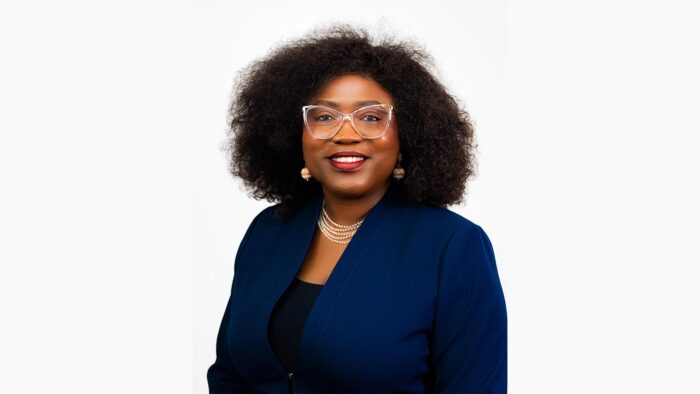
Professor Olubukola Olatosi is a Pediatric Dentist, clinician-scientist, and pediatric oral health researcher currently undertaking postdoctoral research at the University of Manitoba, Canada. With a career spanning pediatric dentistry, public health, research, and community service, her work focuses on preventing early childhood oral disease and improving access to care for underserved populations. She is the Founder and Executive Director of Smiles of Hope for Children Foundation (SHCF), through which she is translating her research and longstanding commitment to children’s oral health into community action across Nigeria. In this interview, she speaks on caring for undeserved children.
What is the inspiration behind Smiles of Hope for Children Foundation (SHCF)?
The inspiration for Smiles of Hope for Children Foundation came from both my professional journey and something very personal. Community service has always been close to my heart. Over the years, I had participated in many outreach programmes collaborated with different foundations and initiatives, and served as lead dentist at several community events. But after completing and defending my PhD at the University of Manitoba in December 2025, I began thinking more deeply about what I wanted the next chapter of my life to represent.
On December 14, 2025, I had what I can only describe as a very clear vision placed on my heart: it was time to give back in a more intentional and sustainable way, particularly to children who might otherwise remain unreached. That became Smiles of Hope for Children Foundation. Our philosophy is very simple: every child deserves a healthy smile, regardless of where that child is born or the circumstances in which they live. What makes our approach particularly meaningful to me is that we go into the communities where children actually live. Rather than asking families to leave their environment and come to us, we bring oral health education, screening and, where feasible, preventive and basic care directly to them. It is not always the easiest environment in which to provide care, but being physically present allows us to listen, understand the realities families face, and serve in partnership with the community. That is what Smiles of Hope represents to bringing hope, one smile at a time.
How has the journey been so far?
The journey has been incredibly rewarding and, in many ways, humbling. When we conducted our first outreach in Ago-Egun Community in Lagos, the response was overwhelming. More than 500 children participated, and over 100 volunteers came forward to support us. The level of community participation made me feel as though people had been waiting for something like this. Since then, we have continued to reach children in other communities, including Sangotedo, Lagos Island and Abeokuta.
Across our first four outreaches, 721 children received oral health education and oral hygiene resources, 502 children were screened, and 92 preventive and basic treatments were provided. But the journey has also taught me that impact is not just about numbers. It is the child receiving a toothbrush and learning how to use it correctly. It is identifying disease in a child who has had little opportunity to see a dentist. It is a caregiver asking questions about prevention. And it is seeing professionals from different backgrounds volunteer their time because they believe in the mission. The response has exceeded what I imagined when we started.
How do you source funds? Do you have sponsors?
We have been very fortunate to receive support from individuals, colleagues, friends, volunteers and organisations who believe in what we are trying to accomplish. Much of our funding so far has come through individual donations and in-kind contributions. For our first outreach, for example, my PhD supervisor, Dr. Robert Schroth, and the Healthy Smile Happy Child team in Canada donated 500 toothbrushes, toothpaste, dental floss and fluoride supplies.

We have also received financial and material support from people from different walks of life, and many professionals have donated something equally valuable their time and expertise. We are still a young organisation, so building sustainable funding is one of our priorities. We are actively seeking partnerships with corporate organisations, healthcare institutions, professional bodies and philanthropic organisations. For us, transparency is extremely important. We want our supporters to be able to see where their contributions go and, most importantly, the children and communities their support is reaching.
What life experiences most shaped who you are today?
Two experiences immediately come to mind. The first is my journey through dentistry. I trained in Nigeria, and those early years shaped my understanding of both the possibilities and inequalities within healthcare. I later specialized in pediatric dentistry and have spent much of my professional life caring for children. That has allowed me to see firsthand how something as preventable as dental caries can cause tremendous pain and affect eating, sleeping, schooling and quality of life. The second has been my research journey in Canada.
My doctoral research at the University of Manitoba focused on improving oral health for young First Nations and Métis children, particularly exploring how preventive oral healthcare can be integrated into primary healthcare and delivered in culturally appropriate, community-centered ways. Working with communities reinforced something very important for me: we should not assume that we know what communities need. We must listen, build relationships and work with people rather than simply designing programmes for them. Those experiences one rooted in Nigeria and the other strengthened through my work in Canada have profoundly shaped the philosophy behind Smiles of Hope.
What makes you passionate about this cause?
My passion for children. As a pediatric dentist and researcher, I know how preventable many childhood oral diseases are. Yet I have seen children experience severe pain, infection and extensive dental treatment from diseases that could often have been prevented or identified much earlier. That is difficult for me to accept. A child’s circumstances should not determine whether they live with dental pain. Prevention does not always require sophisticated technology. Sometimes it begins with knowledge, a toothbrush and fluoride toothpaste, an early screening, fluoride treatment, and knowing where to seek help. That is why I am passionate about reaching children early before preventable disease becomes pain.
As a professor, how do you balance your teaching work and the NGO?
Balancing research, professional responsibilities, family and the foundation certainly require planning. But I don’t see Smiles of Hope as completely separate from my academic work. They are connected by the same question: How can we prevent oral disease and make care more accessible to children who are most likely to be left behind? My research helps me understand problems and evaluate solutions. The foundation provides another avenue for translating knowledge into community action. I am also very conscious that a sustainable organisation cannot depend entirely on its founder. That is why we are building a team, developing partnerships and creating structures that will allow SHCF to grow beyond me.
Are you having the impact you hoped for?
I would say we are seeing very encouraging early impact, but I am deliberately cautious about claiming more than we can demonstrate. We can measure our reach: hundreds of children have received education and oral hygiene resources; more than 500 have already been screened across our first four outreaches; and children requiring preventive or basic treatment have received care or referrals. Those are important achievements. But I want SHCF eventually to go beyond counting how many children we reach. I want us to evaluate whether our programmes lead to sustained improvements in preventive behaviours, earlier utilisation of dental services and, ultimately, better oral health outcomes. So, I am delighted with where we are, but I see this as the beginning rather than the destination.
What advice would you give someone starting a nonprofit organisation like yours?
I would say: start with the problem, not the organisation.Be very clear about the need you are trying to address and listen to the people you hope to serve. You don’t need to have everything perfectly in place before beginning, but you do need integrity, accountability and a genuine commitment to the community. Start small. Document what you do. Measure your impact. Be transparent about resources. Build partnerships rather than trying to do everything yourself. And perhaps most importantly, don’t underestimate people. When your purpose is genuine and people can see the impact, you may be surprised by how many are willing to contribute their time, expertise, resources and encouragement.
Where do you hope to see SHCF in the coming years?
My vision is for Smiles of Hope for Children Foundation to grow into a sustainable, evidence-informed organisation that expands access to preventive oral healthcare for children across underserved communities in Nigeria. I see international collaborators. I would like us to move beyond periodic outreach programmes toward sustainable community- and school-based prevention models. That includes regular oral health education and screening, preventive services, strong referral pathways, caregiver education, and partnerships with schools, healthcare institutions and communities. I also want research and evaluation to remain part of our work so that we are not simply saying we are making a difference we can demonstrate what works, learn from what does not, and continually improve. Ultimately, I hope SHCF becomes an organisation that brings together professionals, communities, institutions and supporters around one simple belief: Every child deserves a healthy smile. And wherever there is a child who has been overlooked or underserved, I hope Smiles of Hope can help bring that child a little closer to that reality.
