
 Get Guardian on Google
• 36 assemblies approve police bill, clearing constitutional hurdle
• President seeks technology, intelligence-sharing to tackle security threats
• U.S. satellite support boosts military operations against militants, says Musa
• Nigeria agrees cross-border pursuit arrangement with neighbours
• Disu redeploys senior officers to strategic police commands
Nigeria’s proposed state police system has received unanimous backing from all 36 State Houses of Assembly, exceeding the constitutional requirement for the amendment and setting the stage for its transmission to President Bola Tinubu for assent.
The legislative breakthrough coincides with fresh moves to strengthen the country’s security architecture, including Tinubu’s call for technology-driven intelligence operations, expanded military cooperation with the United States and the redeployment of senior police officers to strategic commands.
The unanimous endorsement represents a breakthrough in efforts to decentralise Nigeria’s policing system, with all 36 state legislatures approving the constitutional amendment seeking to establish State Police Services alongside the Federal Police Service.
The Clerk to the National Assembly, Kamoru Ogunlana, announced the development yesterday in a statement, confirming that his office had completed the verification of the approvals and established that the Bill had satisfied all constitutional and administrative requirements for transmission to the President.
The endorsement exceeds the constitutional requirement of 24 state assemblies under Section 9(2) of the 1999 Constitution, as amended, which provides for approval by at least two-thirds of the 36 State Houses of Assembly before an alteration can proceed.
The latest development represents an increase from the 28 approvals reported last week, with eight additional state assemblies joining their counterparts in endorsing the proposal. Ogunlana, however, did not identify the eight states.
He explained that although the Bill had earlier satisfied the requirements for transmission, the leadership of the National Assembly directed a brief delay to allow further engagement with the states and build broader consensus.
According to him, the unanimous endorsement demonstrates cooperation between the National Assembly and state legislatures, as well as constructive collaboration between the federal and state governments.
The Bill, titled A Bill for an Act to Alter the Constitution of the Federal Republic of Nigeria, 1999 to Provide for the Establishment of State Police Services and for Related Matters, was passed by the Senate on June 24 and the House of Representatives on July 23, 2026.
The National Assembly subsequently transmitted it to the 36 state legislatures on September 16 for consideration and communication of their decisions.
Ogunlana described the development as a significant milestone in the country’s constitutional reform process, adding that it would provide a foundation for the consideration of other proposed amendments under the ongoing Sixth Constitution Alteration exercise.
He commended the state governors, Speakers and members of the State Houses of Assembly, as well as other stakeholders, for their cooperation in advancing the reform.
Under the proposed arrangement, state governments will establish and operate their own police services alongside the Federal Police Service, with the two structures sharing responsibility for policing across the country.
Governors will appoint commissioners of police on the recommendation of the National Police Council, subject to confirmation by their respective State Houses of Assembly.
While the federal police will retain responsibility for national security matters, state police formations will handle law enforcement, crime prevention and security challenges within their respective jurisdictions.
Proponents argue that decentralised policing will improve intelligence gathering, strengthen community policing and enable security agencies to respond more quickly to threats peculiar to different communities.
They also maintain that placing policing closer to the people will improve local intelligence and make security operations more responsive to emerging threats.
However, concerns remain over possible political interference, abuse of authority, inadequate funding and the effectiveness of accountability mechanisms.
Critics have particularly cautioned that governors could deploy state police formations against political opponents unless the proposed structure incorporates strong safeguards against executive interference.
Tinubu seeks stronger intelligence collaboration
THE legislative breakthrough comes as President Tinubu intensifies efforts to strengthen the country’s security architecture through intelligence sharing, technological innovation and strategic partnerships.
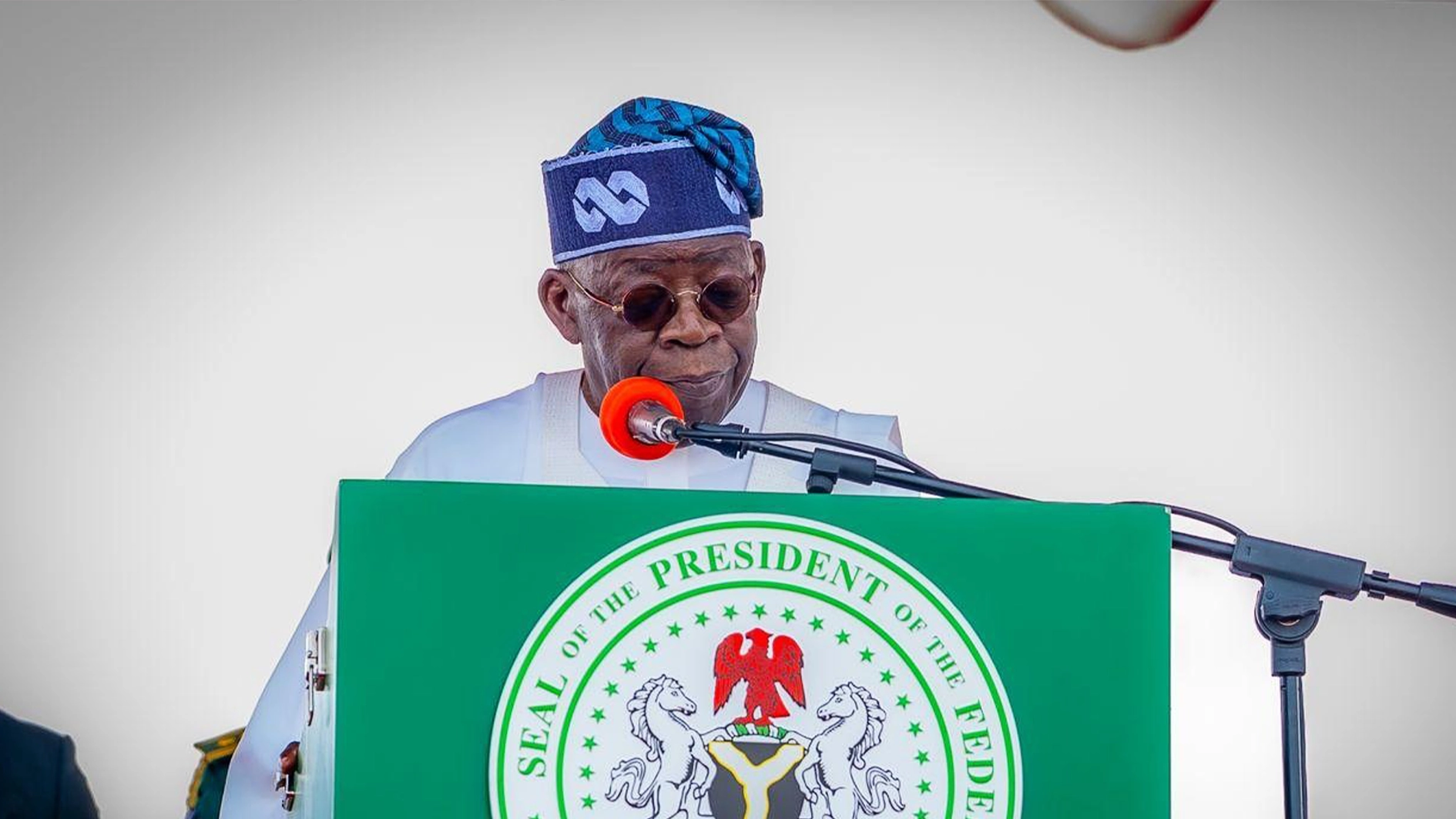
Speaking yesterday at the opening of the Chief of Defence Intelligence Annual Conference 2026 in Abuja, Tinubu urged security agencies to improve operational coordination and embrace emerging technologies in tackling the country’s increasingly complex security challenges.
Represented by the National Security Adviser, Nuhu Ribadu, the President also called for stronger partnerships with global technology companies and research institutions to improve Nigeria’s intelligence-gathering and national security capabilities.
He urged Nigerian Defence Advisers serving abroad to maximise bilateral and multilateral engagements to strengthen international cooperation and support the country’s security objectives.
The conference, held at the Armed Forces Officers’ Mess, Asokoro, Abuja, was themed Optimising Intelligence Through Technological Innovations and Strategic Partnerships in a Complex Security Environment.
It brought together the Minister of Defence, General Christopher Musa (rtd); Chief of Defence Staff, General Olufemi Oluyede; Chief of Army Staff, Lieutenant General Waidi Shaibu; Chief of Defence Intelligence, Lieutenant General Emmanuel Undiandeye; service chiefs and other senior security officials.
Tinubu said Nigeria had recorded significant gains in counter-terrorism operations through sustained military action and improved collaboration among security and intelligence agencies.
He also said the country had emerged as a leading nation globally in the prosecution and conviction of terrorism suspects, demonstrating its commitment to confronting terrorism through military operations and judicial action.
According to him, the government remained determined to ensure that terrorists and other criminal elements were neutralised on the battlefield and subjected to appropriate legal processes.
He disclosed that four of eight identified senior terrorist leaders had been killed or arrested under his administration.
Among the operations he cited were actions against Ahmed Ohida’s ISWAP southern expansion network, the elimination of senior Islamic State leader Abu Bilal Mainuki in May 2026, and the arrests of Abu Barra of Ansaru and Mamuda of Mahmudawa in 2025.
He commended the Armed Forces and other security agencies for their sacrifices, stressing that operational successes must translate into lasting peace and security.
Tinubu also called for closer cooperation among the Armed Forces, Department of State Services, National Intelligence Agency, Nigeria Police Force and other security institutions to improve intelligence fusion, ensure timely responses to emerging threats and protect vulnerable communities.
U.S. intelligence support boosts military operations
MEANWHILE, Defence Minister Christopher Musa has disclosed that the Nigerian military is receiving real-time intelligence and satellite support from the United States to track militant leaders and disrupt insurgent networks.
Musa, who spoke during a briefing yesterday, said intelligence sharing, satellite imagery and training provided by Washington had strengthened the military’s capacity to identify and strike targets.
He disclosed that Nigerian troops had killed several terrorist and bandit leaders in overnight operations in the Northwest and Northeast, adding that the military was conducting near-daily operations with improved intelligence support.
“We took out a lot of the bandit leaders and the terrorists themselves,” he said.
According to him, Nigeria and the United States have continued to expand security cooperation as the country confronts Islamist insurgencies in the Northeast, armed banditry in the Northwest and kidnapping gangs across the country.
He said Nigeria was also expecting additional helicopters from the United States and Italy to strengthen its operational capacity.
The minister recalled the joint Nigerian and US operation that killed Abu-Bilal al-Minuki, a senior Islamic State leader, in May 2026.
He added that security agencies were monitoring the use of Starlink, cryptocurrencies and commercial drones by militant groups and working with American authorities to disrupt their financing networks.
Musa further disclosed that Nigeria had agreed on a five-kilometre cross-border right-of-pursuit arrangement with Cameroon, Niger and Chad, allowing troops to pursue militants and bandits across designated border areas.
He warned that Islamic State Sahel was seeking to recruit criminal gangs in northwestern Nigeria, raising concerns that largely profit-driven bandit groups could evolve into ideologically motivated insurgents similar to ISWAP in the Northeast.
According to him, militants and bandits were exploiting dense forests and porous borders with Niger and Benin to evade security forces after carrying out attacks.
He, however, said advances in surveillance had improved the military’s capacity to track criminal groups through difficult terrain, restrict their movements and disrupt their logistics.
“We don’t want them to develop that capacity,” Musa said. “We’re blocking the logistics and taking them out from within Nigeria.”
Disu reshuffles strategic police commands
IN a related development, the Inspector-General of Police, Olatunji Disu, has reassigned several senior officers to strategic commands and departments across the Nigeria Police Force as part of efforts to reposition the institution for improved performance.
The redeployment, announced in a statement signed by the Force Public Relations Officer, CSP Ani Iniedu, yesterday, affects Deputy Inspectors-General of Police, Assistant Inspectors-General and Commissioners of Police.
Among the major appointments, DIG Olaolu A. Adegbite will head the Force Intelligence Department, while DIG Dankombo F. Morris takes charge of the Department of Information and Communication Technology.
AIG Clement Robert has been posted to head the Force Criminal Investigation Department, while AIG Enyinnaya Adiogu takes charge of Zone 4 Police Headquarters, Makurdi.
Other assistant inspectors-general have been assigned to the Maritime Police Command, Zone 7 Headquarters, Force Operations, Border Patrol and other strategic departments.
The redeployment also affects commissioners of police, with new postings involving the Plateau, Nasarawa, Enugu, Ondo and Niger State commands.
Other commissioners have been assigned to the Special Protection Unit, Anti-Human Trafficking, Police Railway Command, Forensics and Special Enquiry Bureau, among other departments.
Disu charged the officers to uphold professionalism, accountability and integrity in their new assignments, urging them to remain committed to effective policing and service delivery.