

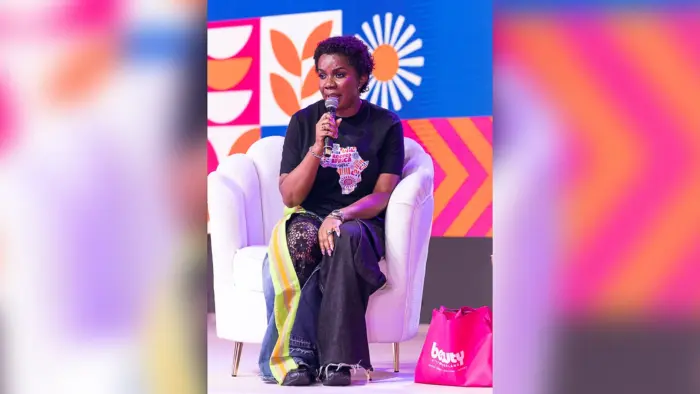
Africa’s beauty and personal care industry, estimated at $66 billion, with Nigeria accounting for approximately $10.3 billion, continues to face inadequate institutional recognition and investment despite its expanding market, entrepreneurial opportunities and potential for job creation.
Founder of Beauty in the Motherland (BITML), Beatrice Nnadili Eneh, who disclosed the estimates in an industry assessment, has called on governments, financial institutions and development agencies to accord the sector greater priority in Africa’s creative economy agenda.
According to figures compiled by the beauty entrepreneur and industry strategist, Africa’s beauty and personal care industry has an estimated annual growth rate of 9.6 per cent, compared with 7.25 per cent for apparel and fashion, valued at $31 billion, and a reported growth rate of 80 per cent for the film and audiovisual sector, valued at $16 billion.
In Nigeria, her estimates put the beauty and personal care industry at $10.3 billion, ahead of apparel and fashion at $6.7 billion and film and audiovisual at $6.4 billion. The corresponding growth rates were estimated at 9.3 per cent, 5.91 per cent and 15 per cent, respectively.
While these figures provide an indication of the scale Eneh attributes to the sector, published industry research presents varying market valuations, depending on the products, services, geographical coverage and methodologies considered.
In a 2025 industry publication, Credence Research valued Africa’s beauty and personal care market at approximately $62.5 billion in 2022, projecting that it could reach $103.46 billion by 2030, at a compound annual growth rate of 6.5 per cent.

Technavio, in its Africa Beauty and Personal Care Market Growth Analysis for 2026–2030, projects an additional $10.84 billion in market growth, at a compound annual growth rate of 9.6 per cent between 2025 and 2030.
Research and Markets also identifies expanding consumer demand, evolving product preferences and distribution channels as important elements shaping the continent’s beauty market. Its published market reports, alongside Statista’s Beauty and Personal Care Market Outlook, provide further benchmarks for assessing the industry’s commercial potential.
For Nigeria, Euromonitor International’s July 2026 report recorded 23 per cent retail value growth in beauty and personal care in 2025, supported by demand for skincare, cosmetics, personal hygiene products and changing consumer preferences. This represents retail value growth, rather than the sector’s real economic growth rate.
The differences between published market estimates underscore the need for consistent industry definitions, reliable employment statistics and comparable economic data to guide investment decisions and policy development.
For Eneh, however, the central concern is that the beauty industry’s economic potential has not translated into sufficient recognition within Africa’s financial and development institutions.
She expressed disappointment that, despite increasing conversations around the creative economy, beauty and personal care businesses appear to receive comparatively limited attention from institutions such as the African Export-Import Bank (Afreximbank), Central Bank of Nigeria (CBN) and Bank of Industry (BOI).
“As an ecosystem leader, beauty entrepreneur, industry strategy investor and strategy expert with decades of research and empowerment initiatives focused on Africa’s beauty industry, I have computed organic accurate data of Africa’s beauty industry that reveals mind-blowing economic impact and growth potential,” she said.
Eneh argued that the industry has traditionally been viewed through a narrow lens of makeup artistry, hairdressing and beauty retail, rather than as an economic ecosystem encompassing manufacturing, agriculture, research, innovation, packaging, distribution and international trade.
She maintained that these perceptions have contributed to the marginalisation of beauty professionals and limited the sector’s visibility in policy discussions.
“For a long time in Africa, individuals with roles such as hair dressing, barbering, makeup artistry are undermined by fellow Africans. The irony is that same individuals go outside Africa and respect individuals with same positions,” she said.
Describing the sector’s capacity for growth, she declared: “We are the lion in the jungle, yet we are not given the attention we deserve. So this is the step to take the bull by the horns, which we do through Beauty in the Motherland.”
Eneh explained that the initiative was established to bridge structural gaps, connect entrepreneurs with opportunities and demonstrate that the beauty industry can operate as an independent economic force while supporting other creative sectors.
She also drew inspiration from remarks by Nigeria’s First Lady, Senator Oluremi Tinubu, on the importance of paying attention to small-scale economic activities, noting that seemingly modest enterprises can become important drivers of national prosperity.
According to Eneh, the message should encourage policymakers and investors to look beyond the traditional classification of businesses and recognise the cumulative economic value of occupations that are often regarded as insignificant.
She disclosed that the First Lady’s message reinforced her decision to expand her personal investment and entrepreneurial support from 24 to 72 entrepreneurs who share her vision of building successful businesses in sectors historically considered small.
“I use this medium to let her know that I heard her and have since increased my investment from 24 to 72 entrepreneurs whom I see share this vision of winning big in things culturally considered as small,” she said.
She further revealed plans for a three-year investment programme aimed at establishing one of Africa’s major beauty and personal care manufacturing hubs, beginning in Nigeria, with the broader ambition of creating economic opportunities for millions across the continent.
For Eneh, expanding local manufacturing remains critical to ensuring that Africa captures greater value from its natural resources, indigenous expertise and growing beauty consumer market rather than allowing other economies to dominate production and export opportunities.
Through Beauty in the Motherland, she has continued to champion stronger industry coordination, entrepreneurship, strategic partnerships and investment opportunities.
Established in 2023, the platform has evolved into a meeting point for manufacturers, emerging beauty brands, industry professionals and other stakeholders seeking to strengthen Africa’s beauty economy.
Its fourth edition, held in Lagos in October 2026, brought together beauty entrepreneurs, exhibitors, industry leaders and investors for exhibitions, business networking and conversations on market access, innovation and local manufacturing.
Eneh, who is also Chief Executive Officer of Nectar Beauty Hub, has a professional background spanning entrepreneurship, manufacturing, supply chain management and business development.
Her wider business engagements and empowerment initiatives have focused on supporting enterprise growth, developing entrepreneurs and increasing opportunities for women within emerging industries.
Drawing from her engagement with international beauty platforms, including Cosmoprof, Beautyworld, Egypt Beauty, Cosmetista in Morocco and the Professional Beauty Association in the United States, she urged African governments to adopt a more deliberate approach to developing the sector.
She noted that countries such as South Korea and Turkey have demonstrated the commercial possibilities of building globally competitive beauty brands, manufacturing capacity and export-oriented businesses.
Eneh said the creation of Beauty in the Motherland was driven by her ambition to build a structured ecosystem capable of advancing the continent’s beauty economy beyond $100 billion within five years.
She added that achieving this would require better access to financing, stronger industry data, favourable policies, investment in local production and greater recognition of the professionals and businesses sustaining the sector.
While acknowledging progress in conversations around Africa’s creative economy, she maintained that institutional support must extend beyond the most visible industries to sectors with significant commercial and employment potential.
She called on beauty entrepreneurs to continue investing in innovation, capacity development and collaboration, expressing confidence that the sector would become a stronger feature of global economic conversations in the coming years.
“Our growth remains unstoppable, but the storytelling and narrative must change to reflect the true story,” she said.
