

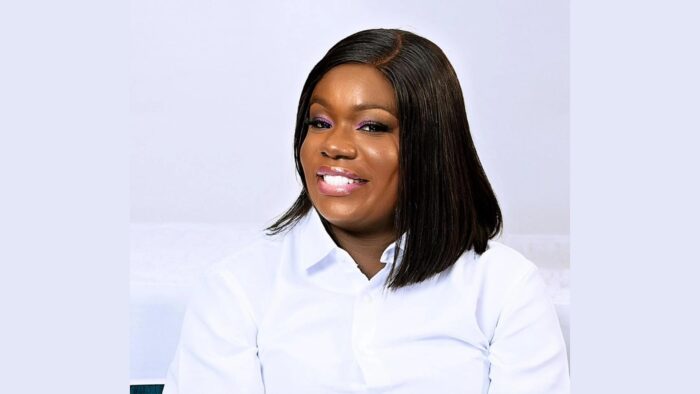
The New Generation Girls and Women Development Initiative (NIGAWD) has marked its 14th anniversary with a renewed commitment to advancing women’s rights, empowering vulnerable women and girls, promoting democratic integrity and challenging harmful cultural practices across Nigeria and Africa.
Founded on September 17, 2012, by Abimbola Aladejare-Salako, who doubles as Executive Director NIGAWD, began from what the organisation described as a “step of faith” in a small shop following a vision she received earlier that year.
Fourteen years later, the women-led organisation has expanded its work across socio-economic empowerment, sexual and reproductive health and rights (SRHR), gender-based violence prevention, the elimination of female genital mutilation (FGM), policy advocacy, electoral integrity and human capital development.
Among its interventions is support for vulnerable children and women, including the rescue of street children and efforts to return teenage mothers to school. The organisation has also implemented economic empowerment programmes targeting widows and orphans to support their financial independence and long-term stability.
In the area of adolescent health, NIGAWD established its “When Girls Talk” and “When Boys Konnet” programmes, which it said have reached more than 10,000 adolescent girls and boys with sexual and reproductive health and rights information.
The organisation has also expanded its approach to digital advocacy through AskNIVI, a WhatsApp-enabled platform providing SRHR information, as well as social media campaigns, digital engagement and the use of artificial intelligence-generated videos.

NIGAWD said the integration of grassroots organising and digital advocacy has become increasingly important as women and girls navigate both physical and online spaces.
Its work against female genital mutilation has also taken the organisation beyond Nigeria. Aladejare-Salako represented the campaign against FGM at the United States’ first End FGM Summit in Washington in 2016 and served as African Union Saleema Youth Ambassador for West Africa and an End FGM Ambassador between 2016 and 2019.
Through these roles, she participated in anti-FGM advocacy and the development of frameworks across Nigeria, Sierra Leone, Egypt, The Gambia, Kenya, Senegal, Mali and Burkina Faso.
On gender-based violence, NIGAWD has focused on prevention, survivor support and ethical storytelling. At Expo 2020 Dubai, Aladejare-Salako advocated the adoption of a “Do No Harm” approach in telling the stories of survivors of gender-based violence, emphasising the need to protect survivors’ dignity in media and international development interventions.
She also served as a member of the Civil Society Africa Reference Group on the Spotlight Initiative.
Beyond direct interventions, the organisation has engaged in policy advocacy, including campaigns for the implementation of the Maputo Protocol and advocacy around the Ekiti Youth Agenda, seeking stronger legal and policy protections for women and young people.
NIGAWD has also positioned democratic participation and electoral integrity as a key component of its work. Through the Vote Not Fight – Election No Be War campaign and the YERP Naija initiative, it has promoted peaceful elections and youth participation across Nigeria’s six South-West states.
More recently, the organisation spearheaded the Osun State Governorship Election Situation Room, where it undertook data integration and specialised compliance training for legal assessors.
The organisation’s anniversary statement also highlighted its contribution to human capital development, describing NIGAWD as a platform that has trained and developed young graduates and volunteers over the past 14 years.
It said many former volunteers and staff members, or NIGAWD alumni, are now working across different sectors in Nigeria and other parts of Africa.
Reflecting on the journey, Aladejare-Salako said the organisation’s growth had exceeded what she envisaged when she began the initiative.
“Fourteen years ago, as a young woman with no support, I took a leap of faith to obey an instruction. I didn’t know if this vision would collapse at year three,” she said.
“Today, we look back at a 14-year journey of immense impact, powered by the grace of God and the dedication of our vision helpers. We have ensured that the voices of women are protected, their stories are told with dignity, and our democratic institutions are held accountable.”
NIGAWD attributed its growth to partnerships and support from development organisations, noting that its first institutional funding came from the European Union’s 10th European Development Fund through UNDP/UNODC.
