 Follow Us on Google News
 Follow Us on Google Discover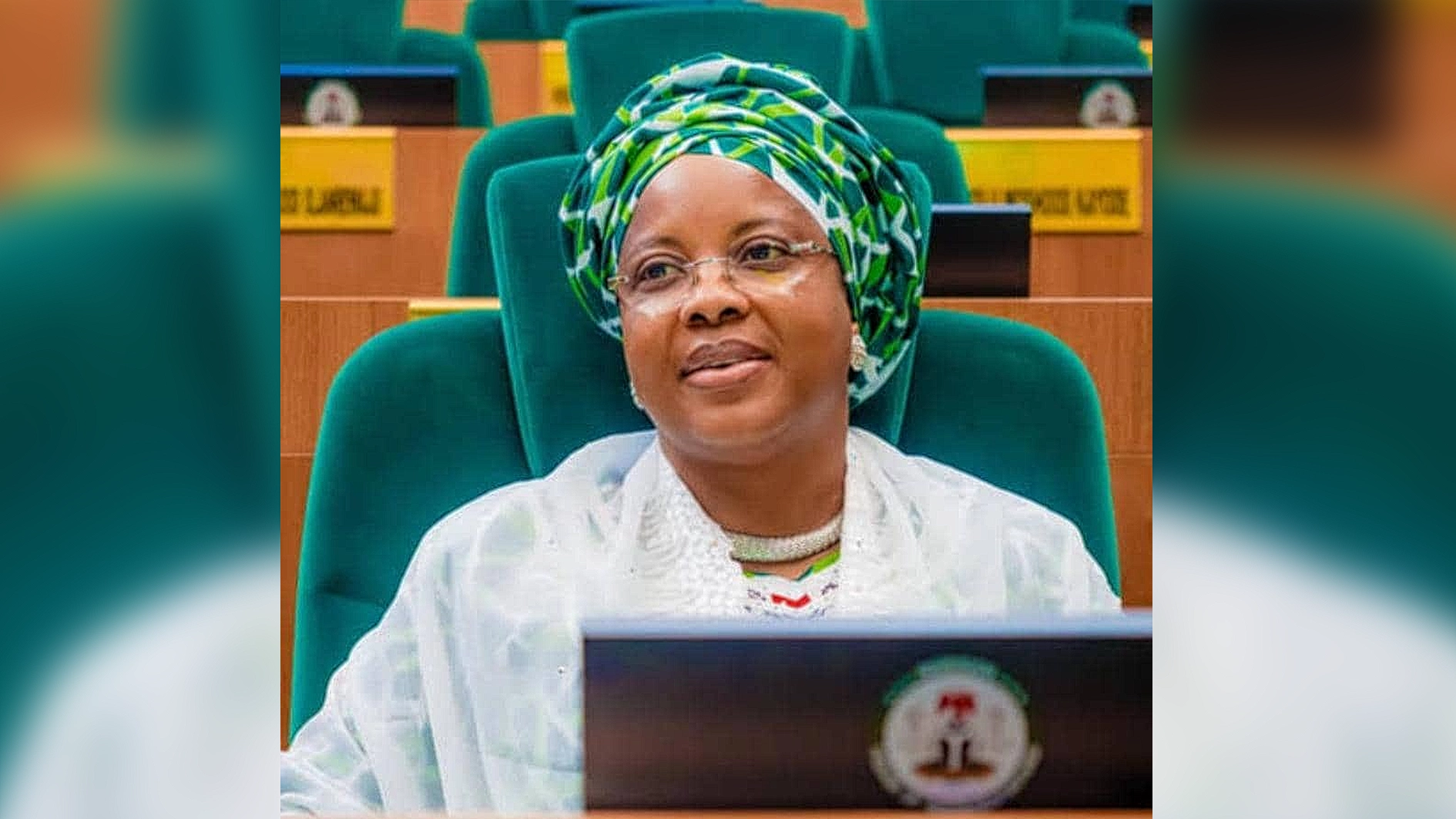
Honourable Kafilat Adetola Ogbara is the House of Representatives member representing Kosofe Federal Constituency and Chairman of the House Committee on Women Affairs and Social Development. Ogbara is one of the lawmakers at the forefront of the campaign for the proposed Reserved Seats for Women Bill as part of the efforts to address the structural imbalance of women representation in politics by creating dedicated legislative seats for them. In this interview with SULIYAT TELLA she speaks about the proposed bill, its current status and prospects ahead of the 2027 elections, the necessity and urgency for a political system where women can compete freely, safely and fairly, while also addressing a fundamental question: will more seats for women ultimately translate into more political power?
There have been different references to the reserved seats for women, including HB 1349 and other proposals associated with you. Kindly clarify which proposal is currently being championed, when it was introduced and what prompted it?
When I got to the House of Representatives in this 10th Assembly over three years ago, my first assignment was to request to see all the bills that were rejected in the 9th Assembly, particularly all the gender bills.
My advocacy for women’s inclusion generally started more than 20 years ago. Even when I was at the University of Lagos, when I contested to be the ULSU treasurer, my major aim of joining that contest was to ensure the inclusion of a woman. I happened to be the only woman in that executive. I think we had a female assistant secretary, but I have always had this belief that women have been sidelined for too long and there hasn’t been enough recognition for them. The stereotype has become so deep that once they say, “Oh, she’s a woman,” it is as if she is nobody. This is why we are insisting and working tirelessly into ensuring that women are well represented. So when the house nominated me to champion the HB 1349 bill sponsored by Rt. Hon. Benjamin Kalu, of which I am a co-sponsor, I see it as a calling and the right opportunity to start doing away with the stereotype. I sponsored my own bill separately, HB 1421, which was my original bill on the same reserved seats for women. But my own content has higher numbers, asking for two women in every state and one senator, among others. So, the difference is mainly in the numbers.
Every other thing is the same. However because Hon. Benjamin Kalu is the Deputy Speaker and he also sponsored the same reserved seats bill, requesting one seat for women per state, we felt that was more realistic and achievable. So, we decided it was better to put our bills on hold. My bill is still there and still exists, but I have just put it on hold, and we have all come together for HB 1349. It is sponsored by Hon. Benjamin Kalu, and I am a co-sponsor of that bill. So, I am the one championing the bill with the leadership of the house, other members of the National Assembly, Civil society organisations and well-meaning Nigerians. The bill was brought to the floor, I think, about two years ago, in July or so, for second reading, that was when we started planning the advocacy and campaign and everything. I have taken an active role in building legislative and public support for the passage of the bill since then. This bill is mainly a temporary corrective measure to address the structural imbalance that we have.
For decades, we all know that women have not been there. The advocacy started with all our women leaders in the past. They stood for the emancipation of women, ensuring that women’s voices were heard.
For this bill, there is a structural plan of about 16 years for us to review it. The intention is to create space for women not to only participate, but represent, build political experience and gradually enable them to ensure that the system is more inclusive by correcting the imbalance and strengthening our democracy.

When we are saying that we want our women to be included, we are not asking that it should be a favour.
The government will be investing in National development if you include women. When women win political space, Nigeria wins a broader, stronger and more representative democracy.
We cannot say we have a democracy when the women in the country are not adequately represented. Even our daughters don’t see themselves in the future leadership of Nigeria because of the absence of enough women; when they see women up there, particularly in the legislative arm of government, the next generation of girls sees themselves in the future of Nigeria.
So, we cannot say that we are practising democracy when we are not being inclusive. That is very undemocratic. We need true democrats with democratic values. I must also say that this bill, HB 1349, is asking for a woman Senator in every state. We have three senatorial districts in each State and we want, in addition to the three already elected, a special seat for a woman.
It does not mean that out of the three elected in every state, we still cannot have a woman among them. It doesn’t mean that because we are seeking special seats, women cannot contest the conventional seats.
That’s not what we are saying. Once we have that special seat, we are going to have one per state, which will be 37 women in Nigeria. For the House of Representatives, we are seeking to have one woman per state for the special seats. It does not mean that women cannot contest the existing House of Representatives seats. For instance, in Lagos State, we have 24 House of Representatives members and I am the only woman there. So, if the special seat bill passes today, another woman can still contest the special seat while I still contest for the conventional seat. The rights, powers and privileges, everything about being a member of the House, are the same. It does not discriminate against them or make them lesser persons on the floor of the House or in the National Assembly.
Basically, this is what the bill is seeking to achieve. For the Houses of Assembly in every state, we are seeking to have three special seat members in every state, one from each senatorial district. It does not mean that other women cannot contest for the Houses of Assembly seats across the state as well.
We have 40 seats in Lagos. Women can still contest those seats, get nominated, and women should still contest for the special seats that will be contested by women in every political party.
All women in every political party will be contesting the seats. By the time we went for the public hearing and the advocacy campaign was at a high level, the bill was seeking 37 seats for the Senate, one per state for the House of Representatives, which is also 37 seats and three per state for the House of Assembly, without the inclusion of people living with disabilities. Now, the bill has been reviewed, and they have said that we are not even going to be having general elections for the Reserved Seats Bill.
But an electoral-college model will be used, where elected people in every state will be the ones to elect the people who will occupy the special seats.
All political parties will bring forth their candidates who want to contest the seats, and then the elected people in that state, starting from the senators and House of Representatives members, including councillors, will elect the winner for the special seats.
That’s the adjustment we have made, and we have also included people living with disabilities in the special seats bill. I think what we did was to have one senator per Region, one from the North and one from the South. That’s what we did for the Senate for people living with disabilities, and then one representative per geopolitical zone. So, we have included all that in the new bill. Some have advocated that these amendments of the bill should come in the form of an executive bill, but whichever form it comes, we are hopeful that, by the grace of God, the bill will be passed.
What is the broader objective of these seats?
We have very broad objectives. Our broader goal, actually, is to ensure that the number of women continues to increase without the existing barriers while impacting humanity. Presently we have less than 4% representation in Nigeria, and this has become a National and an International embarrassment.
This bill is not just about having more women in Parliament, although that is a goal. If passed, we would have achieved that. It is to ensure that we have more women because the more women we have, the more impact and voices we have, depending on how impactful these women themselves prove to be, so that we can get better representation for women.
Women participate in politics. I say this all the time: a lot of people confuse participation with representation. If you go to our ward meetings and state meetings, we see a lot of women. The percentage is always very high. They are the crowd that will be seated, the dancers, the clappers and the singers.
It is the women. But when you check on the high table, it is only the men you find there. Maybe by chance, you find a woman.
So, this is the challenge that we have been facing, and this bill seeks to break that circle of exclusion that has persisted for decades. The broader goal is for us to have a balanced, more inclusive and representative democracy. If we are saying we are having a democracy and our women are not there, and we are half of the population, is that democratic? It’s not democratic at all.
When we have proper representation in parliament, the laws that affect the entire country will have the semblance that they should have. This law will also ensure that we are not replacing merit with gender.
This bill will ensure that we are removing the structural barriers that have kept capable women out, especially political gatekeepers, the high cost of elections, because politics is very, very expensive, cultural stereotypes, political violence, you know politics can be very violent and the intimidation and harassment of women. Of course, there is also a lack of equal access to party structures. In most party structures and executives, we find that most of the time, there are many men, and they are the ones who normally take these decisions.
Why create additional seats for women rather than focus on getting more women elected into existing seats? What makes the reserved seats necessary?
We are focusing very hard on having more women because we know that the current system is not giving women what they need, and that is the opportunity and privilege. They deliberately exclude women, and I stand to be corrected on that because I’m speaking from experience and from what I know.
For instance, in the last primary election, we had just two female Senatorial candidates (Lagos and Abia) from across the Country in the ruling party, the ruling party that has over 30 governors. Women have been taken for granted for too long in Politics.
When women are not elected as candidates, they have already lost before Nigerians get to vote. We are not even sure those two that have been selected as candidates will win the general election until after the election. So, if anything happens, by whatever proxy, we may not even have one single woman in the Senate.
If, by the primary election, we are having just two out of 109 senators, just two candidates, that is the height of insult to women, lack of respect and lack of regard for women.
When women are empowered, the Nation is empowered. When women are empowered, poverty is reduced. When women are empowered, insecurity is reduced. When women are empowered, the children are better for it.
The future of this country is better for it.
So, we are misplacing our priorities as a Nation and until we realise that, Nigeria is going nowhere.
You know, I spoke about the deliberate exclusion of women. You find that in the primary elections we held, we see men who have gone four times, three times, returning. They are just writing their names; But women who have gone one time, two times, my regular examples are Hon. Mariam Onuoha from Imo State, Hon. Zainab Gimba, Hon. Khadija Bukar and more like that. We believe that it is not concluded until they publish the final list.
But if all the women existing in the National Assembly cannot be retained, cannot be returned, despite the fact that they are just writing names, this is the best opportunity that any political party has. If they are truly, genuinely sincere about women’s inclusion, this is the best time that they can include women. Because they are just writing the names, selection and not election so let them write the names of the women across the board. Let them write their names and include capable, eligible women.
These women are very brilliant. They have done so much in their constituencies. They have done so much for themselves, for the nation and for their constituents. Yet, they are facing a lot of barriers, despite the fact that they are also popular in their constituencies.
And this reserved seat, if by the grace of God it is passed, is going to be a corrective mechanism, but not to replace the women who are contesting the elections, like I said. When we have more women in Parliament, they are going to be building their own influence. They would have built their own political power. They would have built some level of financial strength, connections and all that. Their voices will resonate to help other women to be included.
And we cannot build on what we had before because the reserved seats are a different thing entirely.
What we have always had is talking about women participation. But this time, the Reserved seats bill will be constitutional. This will ensure that, whether any gatekeeper wants it or not, the women will be there. So, this is the essence of insisting and putting so much energy into ensuring that women’s representation is clear and sound.
Of course, this is also just a bridge for us to get to the destination. The Reserved Seats Bill is not the destination. The destination is still ensuring that when more women’s voices are heard, when they are more impactful on women’s issues, children’s issues and vulnerable people’s issues, we’ll be able to see the difference. Because the role a man will play is different from the role a woman will play. If you look at the role I played at the United Nations, when we had an issue with my dear sister, Senator Natasha Uduagan, which man would have been able to enter that place to do what I did? They cannot get there because that place is for IPU women. So, if you are not a woman, you can’t be there. Women have their role. Even when we are doing campaigns, there is no place a woman cannot enter. So, we have a role. Even in the days of Prophet Muhammad, sallallahu alayhi wa sallam, Khadija had a role. Aisha, when all those warriors went to war, when wounded and needed to be treated, they were the ones who treated all these warriors and all of that. So, there has always been that role that women play in their own space.
Some Nigerians are arguing that women in other professions have had to overcome barriers and still worked their way to the top. Why, then, should politics be different? Why should women have reserved seats for them in politics instead of competing for existing seats like men?
Well, you are right. I believe that women naturally should contest for and win on merit; they must be qualified and eligible. They must have all the necessary prerequisites to get to any level or any field they find themselves in.
But the truth is that this bill will ensure and guarantee proper representation. What we have always had in all those other professions has been participation and representation because they have never really been at any disadvantage at any point in time. They have been recognised based on their merits and qualifications. You can see the new Nigerian Bar Association (NBA) president we have in the legal profession. You can see a lot of our women in the banking industry. They know that if they don’t put them there, they are going nowhere. Those banks that must have put them there have put them there because they are sure that they can do it. They recognise that, and most of them are out to make profits. But in this case, politics is a totally different ball game. We have had structural problems, and it needs a structural solution. This is why it has to be constitutional. When we start and the women are there, those women will be able to enforce more laws and policies that will be able to break all these barriers that we are talking about. Most times, it’s not as if some of these laws don’t already exist, especially on electoral violence and all that. But implementation is a problem. When we have more women speaking about these issues and ensuring implementation, then all these barriers will, over time, fizzle out, and we will have a level playing field for our women. And don’t forget that our women have never been absent when our country needed them. We mobilise our communities. We build businesses. We raise families. Most of the time, we also defend our democracy, and we stand firmly with a lot of our political parties. But when it’s time to share the political dividends, that’s when they say, “Oh, she’s a woman.” No, no, no. They just have it right there in their head that she cannot deliver. You don’t look at the competence. You don’t look at the credibility. You don’t look at the commitment. And you don’t look at the capability. These are some of the issues we are facing. We have some places in the North where a woman dare not even come up with the intention that she wants to contest. In this age and time, how long are we going to be doing that? We cannot continue to do that.
So, when there’s a constitutional provision demanding that you bring a woman from that constituency where women dare not come up, you know that, by that time, the barrier is being broken. More women will see themselves as that first woman who will be nominated from that constituency to represent them there.
Other women will see that, they will try to emulate, they will be encouraged and they will know that they can also get there.
There are other countries that have used these templates and it is working very well for them. When we have a party that wants to build a lasting legacy, they must build a political structure where women are not just voters. They are not just mobilisers. They are not dancers and singers. Women must also be candidates, lawmakers, governors, decision-makers, vice presidents and even president. And we are going to get there, whether they like it or not. Our political system must be able to tell our daughters that leadership is possible for them, and not that leadership is a no-go area.
Will more seats necessarily translate into more power? How will you ensure that women elected through these seats have real influence over legislation, budgets and national decisions, rather than simply increasing the number of women occupying the seats?
We know that without enough women representation on the seats, we cannot solve all the problems facing women in Nigerian politics. But we are 100% sure that to primarily address representation, that’s number one. We believe that the more women we have, the more impact that these women will make. And, of course, it will definitely add to power for them, influence for them, a structural base to be developed, a grassroots base to be developed, wider connections, political party influence and a lot more.
Like I said, this bill will not discriminate against them because they came through special seats. No.
They’re going to have equal authority, equal privileges and all that. I also said that it’s just a bridge to get to our destination. Our ultimate goal is a political system where women can compete freely, safely and fairly.
That is our ultimate goal. Don’t look at gender, let everybody do their thing. But if women are not represented properly, particularly in political parties, you know that when we have more women in the legislative arm of government, they will influence laws that will ensure that those barriers are broken.
We know the barriers. These are our issues. These are our problems. These are the barriers facing us.
These are the obstacles that we face. So, we definitely know what to do if we have the right number to work in the legislative arm of government.
These women will be able to maximise the use of their opportunities. It will give them a seat at the table to participate in a powerful and meaningful way that will give their voice the right influence and the good use for their opportunities.
So, this is what we want to use the number to achieve in the first instance. They will create the bridge with their voice by getting the impact needed, by influencing the policies and the laws. Then, in the long run, that bridge will get us to our destination of having free, safe and fair competition at every level, from the grassroots to the national level, for men and women.
Ultimately, what would success look like if we revisit this policy in 10 or 16 years from now? What would convince you that it has genuinely changed women’s political power in Nigeria?
Success for me will be when we are able to have and compete for free, safe and fair elections, whether you are a man or a woman, and not replace competence with gender, let everybody be free and fairly treated.
When you know that this person is capable, forget about the gender. Put them there. When they have been voted for, when they have the support, let them be. Don’t intimidate them. Don’t oppress them because they are women.
So, success for me would be when we achieve that. And, of course, the first is the increased number that we would have achieved. After we have the reserved seats and we have more women there, more women would be energised and encouraged to go and contest all the conventional seats across the board, from the Senate and governorship down to the councillors election. Because you know that a lot of these women will be influencing laws based on their own priorities and experiences.
If you are not a woman, you cannot know what these priorities are. You cannot know what their experiences have been in terms of gender-based violence, domestic violence, female genital mutilation, menstrual issues and childbirth. You know all these things. They are our issues. If you are not one of us, you cannot understand. So, how can you sit in a room where you are making laws for about half of your population, which are women, and they are not at the table?
When they stop discriminating against women they would achieve a lot of success. When these women use their priorities and experiences to impact our policies and laws, of course they will be impacting generally on humanity in their own perspective, shaping our budgetary ways and national policy, ensuring that our budgetary allocations become gender-responsive.
Women will ensure proper scrutiny of some of these things and ensure that there are proper ways to conserve our wealth, to conserve our positivities as a nation. We would have reduced structural barriers to women’s representation. That would be a real success for me. And, of course, these women would have gained access to political party structures. If we start to have calls and demands for women’s representation, when women do very well in their constituencies, definitely the people will demand that, “Oh, we prefer a woman, we prefer a woman.”
By the time a lot of these women go there and prove their worth and show that women are even doing better than what a man is doing, and, of course, we also have a sustained increase in women winning both the reserved seats and the conventional seats. However, in the long run, it is not how many women that are there but the quality of women there. We are not saying, “Okay, Reserved Seats Bill,” and then the gatekeepers will go and bring their friends and relatives, No.
I have to take a note of caution on this aspect. It is about how impactful they end up being to change the political system enough for that political system to ensure that women can no longer be systematically kept out of the same system. We need women who are passionate, committed, ready to serve, ready to make a difference, make a change and ensure that we have a better nation. Most importantly, having more women there will help in the direct implication for quality of laws, governance and national development.
Women’s inclusion is not a favour to women. It’s an investment in better governance. We have just two senators as we have now. They have to do something about it too. Making laws without the women in the room is a big aberration that must not continue. The men should not think it’s just about them. We are their mothers, their sisters, we nurtured them, and we have to be included the way we ought to, for this nation to get to our desired destination.

