 Follow Us on Google News


 Follow Us on Google Discover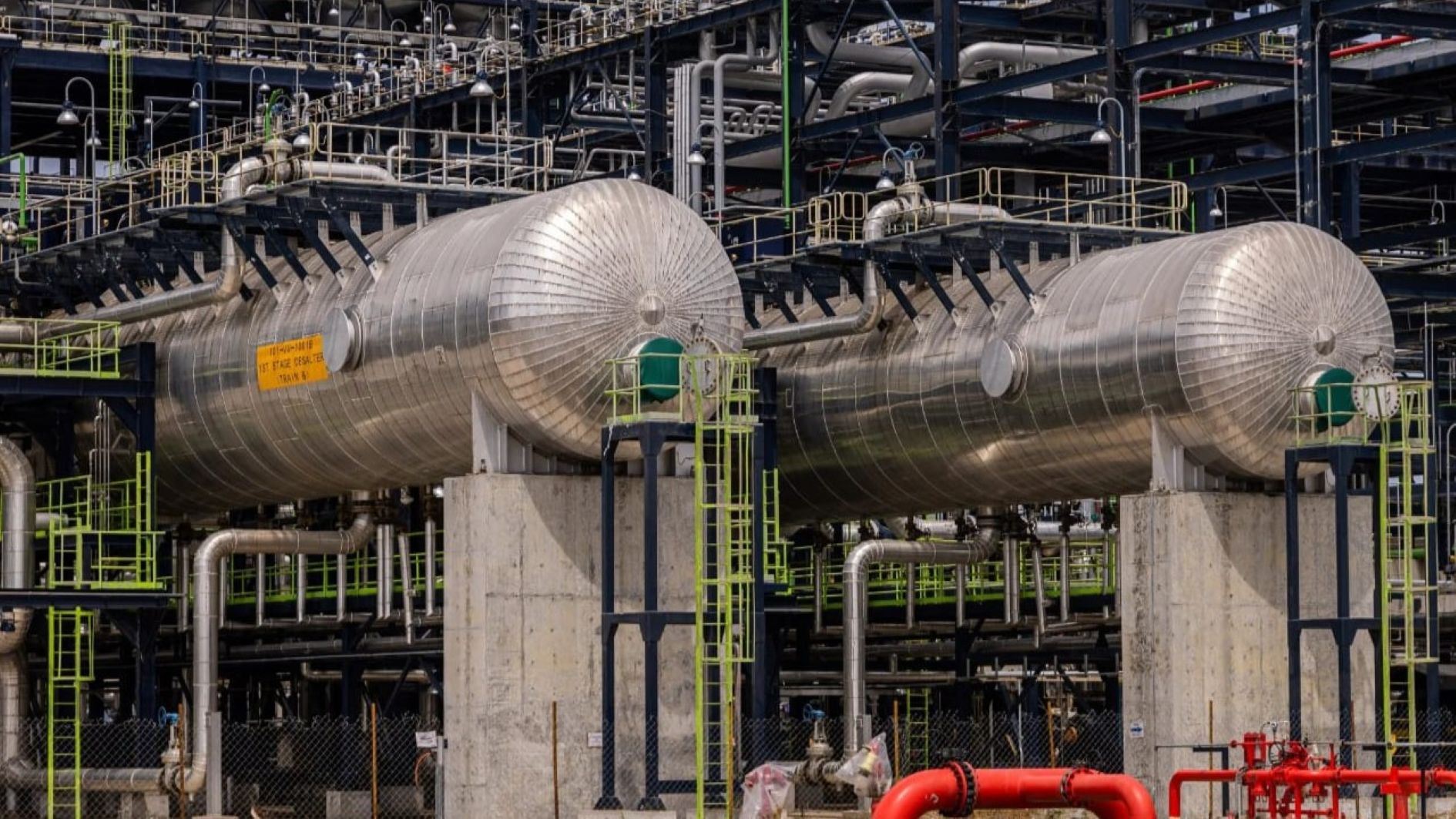
By Abdulbasit Yusuf
In every generation, there are projects that redefine what is considered possible. They challenge assumptions about local capacity, demonstrate that world-class execution is achievable within emerging markets, and inspire confidence that the future can be built at home. Nigeria’s refining renaissance presents one such opportunity.
The conversation around refining has understandably focused on fuel availability, pricing, import substitution and energy security. Yet beneath these outcomes lies another story deserving equal attention: the engineering philosophy behind building one of the world’s largest single-train refineries and what it means to create infrastructure designed not merely for today, but for tomorrow.
This matters because competitiveness in today’s global economy is no longer determined solely by natural resources. It increasingly depends on technology, operational excellence, resilience and the ability to anticipate future requirements. The most successful industrial assets are therefore not simply large; they are intelligently designed.
The Dangote Petroleum Refinery is significant not only because of its 650,000-barrel-per-day nameplate capacity, but because of the extraordinary engineering complexity required to bring such a facility together. In June 2026, the refinery reportedly achieved 700,000 barrels per day during a performance test, exceeding its official nameplate capacity.
Large-scale refining is among the most demanding industrial engineering undertakings. Thousands of interconnected systems must operate with precision. Processing units, control rooms, pipelines, storage facilities, utilities, marine infrastructure and safety systems must function as one integrated ecosystem.

Devakumar Edwin, Vice President, Oil & Gas at Dangote Industries Limited, explained that the refinery was designed and built by Nigerians, with Dangote Industries Limited acting as the Engineering, Procurement and Construction (EPC) contractor, incorporating cutting-edge technologies from around the world. “It is a point of pride that a Nigerian company not only designed but also built the world’s largest single-train refinery complex,” he said, highlighting the Nigerian engineering capability behind the project.
The scale becomes even clearer when one considers the range of disciplines involved. Chemical, mechanical, electrical, civil, structural, instrumentation, environmental and digital systems engineers must work together to ensure that the plant operates safely, efficiently and reliably.
The refinery’s engineering ambition is also evident in its infrastructure. Its offshore crude-receiving system is connected to the facility through subsea pipelines, while its extensive processing and storage systems are designed to support large-scale movement of crude and refined products. Its design incorporates international environmental and product-quality standards, including Euro V specifications.
And there is an even stronger supporting fact. The Nigerian engineering community itself has recognised the facility. The Nigerian Society of Engineers, Nigerian Academy of Engineering, Association of Consulting Engineering in Nigeria and COREN toured the complex, with NSE President Margaret Oguntala describing the facility as “mind-blowing” and saying the project gave her confidence that young Nigerian engineers are ready to take on the world.
The Dangote Refinery therefore matters not only for what it produces, but also for what it demonstrates. It demonstrates that complex industrial infrastructure of global significance can be conceived, financed, constructed and operated in Nigeria. It demonstrates the value of thinking beyond immediate market needs and designing for long-term competitiveness. And it demonstrates the importance of Nigerian engineers, technicians and professionals participating in projects measured against global benchmarks.
There is also a national dimension to this achievement. When Nigerians see complex infrastructure being built and operated to global standards, it changes expectations about what is possible. It can encourage young people to pursue engineering and technical careers, motivate companies to invest in innovation and workforce development, and strengthen confidence in Nigeria’s capacity to participate in sophisticated global industries.
Ultimately, the true measure of a refinery is not simply how many barrels it processes. It is how intelligently it is engineered, how safely and reliably it operates, how efficiently it converts resources into value, and how effectively it can adapt to an evolving energy landscape. That is what makes the Dangote Refinery more than a large industrial facility.
Its greatest significance may lie in the engineering confidence it represents: the confidence to build at scale, to compete against global standards and to create infrastructure capable of serving an economy for generations. For Nigeria, that is an important part of the refining story, and perhaps one of the most important stories yet to be fully told.
•Yusuf, an engineer and project consultant, wrote from Lagos

