For decades, Nollywood has thrived on faces and fame. But as the industry matures, its future depends less on stars and more on systems. In this conversation, Ruth Kadiri — actress, screenwriter, filmmaker, and entrepreneur — explains why ownership, structure, and long-term thinking will determine who survives the next chapter of African cinema.
For decades, Nollywood has thrived on star power, faces that captivate, performances that travel, and names that echo across continents. But the future of African cinema is being shaped by a different kind of force. A new wave of creator-entrepreneurs is shifting the industry from personality-driven to structure-driven, from applause-led success to ownership-led sustainability.
At the forefront of this transformation is Ruth Kadiri: actress, screenwriter, filmmaker, entrepreneur, and innovative storyteller. While many rode on fame, Ruth built a distribution empire. In 2014, she launched RuthKadiri247 on YouTube, a decision dismissed by many at the time but now celebrated as visionary. Today, she has over 4.6 million subscribers and 742 million views across her English and French channels, solidifying her status as Nollywood’s most successful YouTube filmmaker.
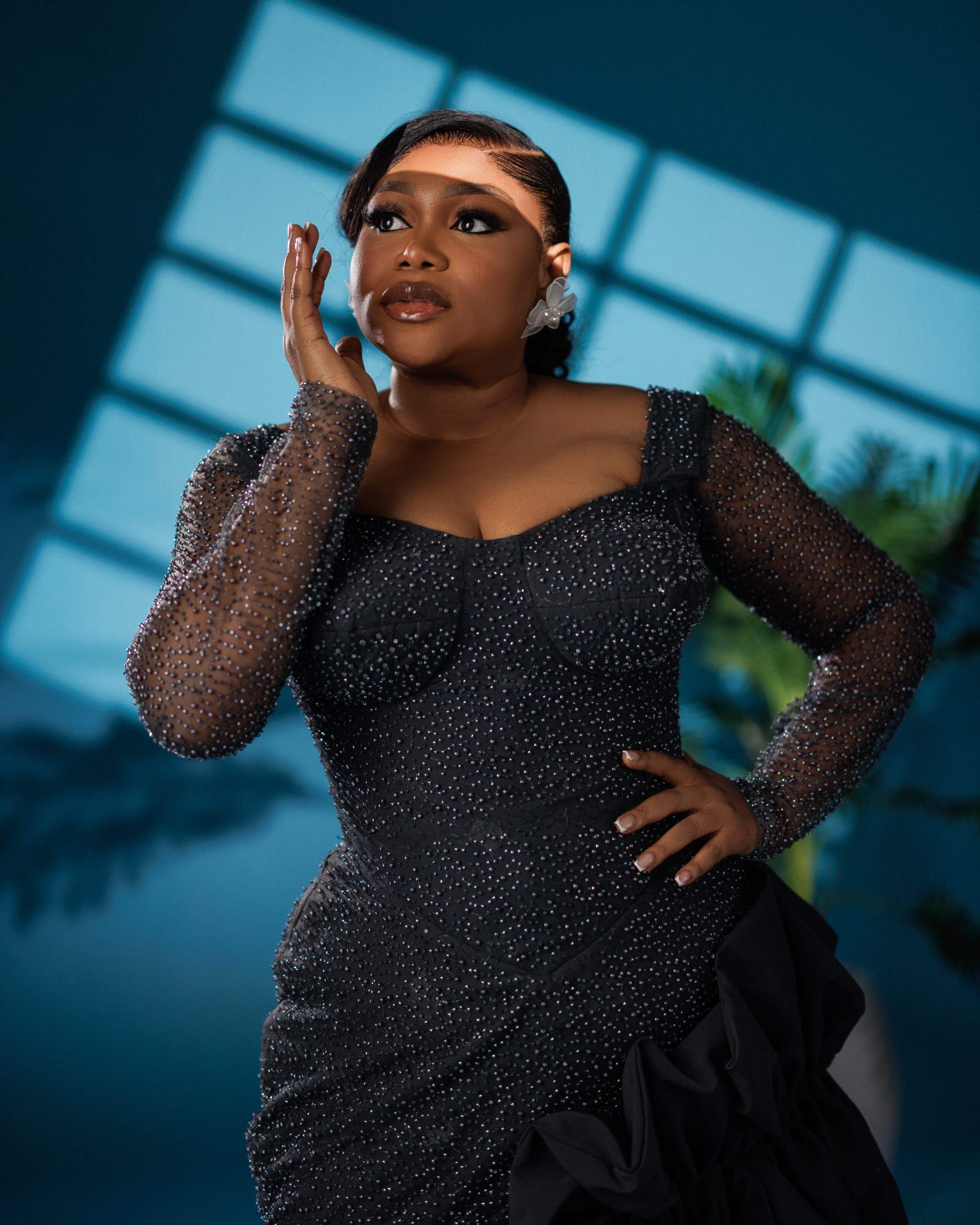
In November 2025, she took Gabon by storm with the premiere of her new French production feature film, Le Désir Ardent du Roi. Beyond being just a film event, it signalled that African films, especially Francophone-facing ones, can drive diplomacy, community, and economic exchange. More importantly, it demonstrated Ruth’s commitment to something Nollywood has often overlooked: intentional, sustained engagement with Francophone Africa.
This conversation explores not only the powerhouse filmmaker behind the phenomenon, but the business mind shaping the future of Nollywood.
Your YouTube channel, RuthKadiri247, has become a monumental success. Beyond the numbers, what was the core business insight that made you bet on YouTube when Nollywood was still sceptical?
I realised early on that distribution is the backbone of entertainment. If that structure is weak, everything collapses, no matter how talented you are. Many of us in Nollywood were pouring our energy into creating, but not enough into understanding where the work would live, how it would make money, or who controlled the pipeline.
I came to a crossroads: invest heavily in the big screen or build something that belonged entirely to me. I chose ownership. I didn’t want to sit around waiting for a platform to “pick” me or my films. I did not want to wait and hope that someone on a platform would look at me and say, “You over there, bring your film.” That creates desperation. It pushes creators into strategies that compromise their essence just to get attention.
Instead, I wanted a sustainable ecosystem where I could build, learn, experiment, and grow without asking for permission. YouTube offered what Nollywood lacked at the time: direct access to the audience, transparency, data, monetisation, global reach, freedom, and most importantly, a platform I could control and scale. That’s the difference between being in the system and building the system.
You’ve spoken often about structure. From running Ruth Kadiri Films, what would you say are the most critical pieces of business infrastructure Nollywood still lacks?
The biggest gap is long-term thinking. Nollywood is vibrant, but we sometimes celebrate the wrong kind of success: momentary visibility rather than sustainable growth. We need to ask ourselves critical questions. We’ve been here for a long time. By now, people should be asking, “Man, do you know how much these Nollywood people are making? It’s like billions of naira!”
But we’re not there because we’re not letting ourselves build good structure. Two major structures are missing: rights and revenue management. We don’t maximise the lifespan of our intellectual property. A film should earn over years, not months. Without proper rights management — licensing, cataloguing, syndication — creators leave billions on the table.
The second is data-driven greenlighting. In global cinema, data decides what gets made. In Nollywood, emotion and ego decide too often. When we rely only on applause, we forget that applause does not build an industry. Systems do. Until we celebrate structure as loudly as we celebrate stars, we will limit our potential.
You recently toured Gabon and premiered Le Désir Ardent du Roi to massive fanfare. Why was that trip significant?
Gabon was much bigger than a premiere; it was a bridge. It’s not my first Francophone territory, but this visit had a special purpose. I wanted to show my French-speaking audience that they are not an afterthought; they are part of the heart of my ecosystem. From the moment we arrived on November 13, the reception was massive.
Our official visits to the Nigerian Embassy in Gabon, ministries of entrepreneurship and education, and the Presidency all affirmed that cinema is diplomacy. Our media tour, seminars on the business of filmmaking, and investor sessions proved that Francophone Africa is hungry for representation, collaboration, and connection. Taking the film to them was a responsibility.
You champion women on and off-screen. Why is investing in female storytellers and technicians not only ethical, but economically smart for Nollywood?
Because women are one of Nollywood’s most powerful economic assets, and we’ve barely scratched the surface. Women understand the emotional architecture of African households. We tell stories that resonate generationally and drive loyalty, repeat viewing, and multi-market appeal.
From an economic standpoint, films centred on women consistently perform well on streaming platforms. Female-led production teams are proven to be operationally efficient. Diverse creative rooms generate more commercially viable stories. Investing in women isn’t charity. It’s smart business, because women are both the storytellers and the audience.
You’ve maintained creative and business ownership of your work. What advice would you give new filmmakers trying to retain control and build their legacy?
Start small, but own your platform. Young filmmakers often think ownership comes after success. But ownership is what creates success. You don’t need a massive budget to build equity; you need consistency, discipline and the courage to start with what you have.
My advice? Build your audience early. Study distribution like your life depends on it. Keep your masters. Collaborate, but don’t surrender your intellectual property. And don’t wait to be invited; create your platform. Legacy is built from the ground up, not handed down.
With so many actors but fewer writers and producers, what is a critical talent gap Nollywood must urgently address?
We need more development pipelines. More script labs, writer incubators, and producer bootcamps. Our industry glorifies the final product, which is the film, while neglecting the most important stage: development. Without strong writing and strong production, Nollywood cannot scale globally. The simplest solution? Create funded development programmes that nurture writers and producers, not as side roles, but as the core of the industry.
Over the next decade, where do you think Nollywood’s most significant financial growth will come from? International streaming, YouTube-style platforms, or a hybrid model?
A hybrid model. International streamers bring prestige and global reach. YouTube and ad-supported platforms bring scale, frequency, and ownership. Nollywood’s future is not choosing one; we need to learn to dominate both. Creators should use global platforms for visibility and personal platforms for sustainability. That’s how we build global brands with local roots.
The ‘star system’ has dominated Nollywood’s economics. How do we shift value toward the writers, directors, and distributors who make stardom possible?
We shift the narrative by shifting the incentives. Stars create attention, but structure creates wealth. The people who build the machine — writers, directors, editors, distributors, and so on — must be compensated in ways tied to long-term value, not one-time payments. We need royalty systems, contract transparency, industry-wide credit standards, and public recognition for behind-the-scenes excellence. When creators behind the camera earn sustainably, the entire ecosystem stabilises.
Moving on from Nollywood and filmmaking, when you’re not filming or building empires, how do you recharge?
I love to sleep. Sleep is my secret weapon. I love quiet moments with my family, that’s my reset button, and honestly, sometimes the best luxury is simply staying home, disconnecting, and enjoying peace.
People often describe you as quiet. Is this accurate?
(Laughs mischievously) I don’t know where that came from; I am NOT quiet. I talk—oh, I talk! I think people confuse being focused with being silent. I am observant, yes. But quiet? Never.
What is one thing you do that you no longer feel guilty about?
I used to feel guilty about working a lot. Each time someone said, “Ruth, you work too hard,” it used to trigger me, almost as if they were saying hard work was my destiny and a soft life was out of reach. But with time, I’ve learned to fully embrace who I am. I’m a builder. I love creating. I love pushing myself. Now, I’m unapologetic about it. I work very hard and I enjoy it. More importantly, I’m grateful that God has blessed the work of my hands. So instead of guilt, I now carry pride, gratitude, and a deep sense of purpose for what I do.