GDN SIDEBAR
In a coastal town shaped by fishing and trade, the National Museum Oron is home to the Ekpu, the carved wooden figures that once stood in the ancestral compounds of Oron families.
Oron is a town built around water. Located along the Cross River estuary in Akwa Ibom State, the town has long been connected to fishing, trade, and travel by water. Boats and waterways have played a role in how people moved goods and connected with communities across the region.
Away from the riverbanks is the National Museum Oron, one of Nigeria’s national museums and the place most closely associated with the Ekpu Oro.
The museum was established to preserve these carved wooden figures, which were collected from Oron communities in large numbers in the years before independence.
Ekpu collection
The story of the museum is closely tied to Kenneth C. Murray, a British art teacher and antiquities officer who became interested in the Ekpu in the late 1930s and 1940s. The figures were kept in ancestral shrines and family compounds. Many had been exposed to rain, termites, and other forms of damage. Murray began documenting and collecting them, bringing hundreds of the carvings together.
The museum opened in December 1959 to house the collection. For the Oron people, the Ekpu were not made simply to be displayed. They represented ancestors and were connected to family and burial traditions. The figures served as reminders of people who had died and remained part of the relationship between the living and their ancestors.
Some of the figures have large heads and distinctive facial features, while others are more restrained in their design. They were made by different artists at different periods, so they do not all look alike. The Ekpu collection also attracted attention outside Nigeria. Today, Oron figures are held by major institutions including the British Museum and the Metropolitan Museum of Art in New York.
During the war
The museum’s collection suffered heavily during the Nigerian Civil War. The museum was damaged during the conflict, and a large part of its collection was lost. More than 800 Ekpu figures had been associated with the collection, but only a little over 100 were recovered after the war.
Some were destroyed. Others were stolen or ended up elsewhere. The loss is difficult to separate from the museum itself because the Ekpu are the reason it became internationally known in the first place. It also raises a question that remains relevant today: what happens when cultural objects are removed from the communities that made and used them?
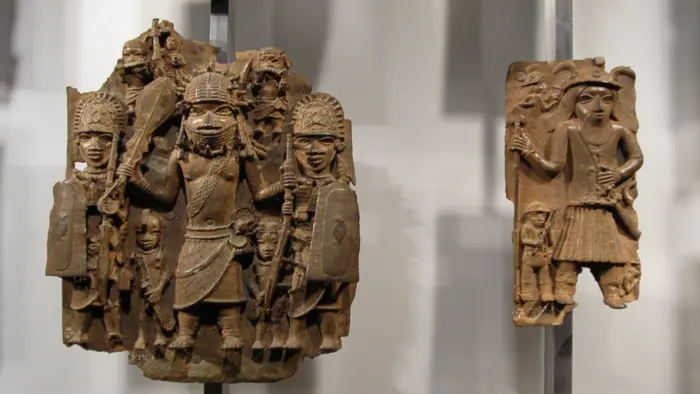
Some Oron figures are now in museums and private collections outside Nigeria. Their presence abroad has become part of the wider discussion around African artefacts, colonial collecting and the return of cultural objects.
Beyond Ekpu
There is more to see at the museum than the ancestral figures. Its collection includes other objects connected to the culture of Oron and the Cross River region, including traditional crafts and ceremonial pieces. The museum grounds also contain bunkers from the Civil War.
There is an adjoining crafts village as well, giving visitors a chance to see some of the traditional skills associated with the area. The result is a museum that brings together two very different periods of Nigerian history. The Ekpu point to older traditions and family histories, while the bunkers are reminders of a war that took place within living memory.
Oron town
Oron is not usually among the first places mentioned when Nigerians talk about places to visit in Akwa Ibom. But the museum gives visitors a reason to look beyond the state’s better-known attractions. Part of its appeal is the collection itself. The Ekpu are unusual objects, and seeing them in the place they are associated with gives the visit a context that photographs cannot provide.
In 2026, the Akwa Ibom State Government announced plans for a marine terminal in Oron, with proposed facilities for fishing, passenger transport and other commercial activities. For a town whose history has always been closely tied to the water, it is a return to something familiar.