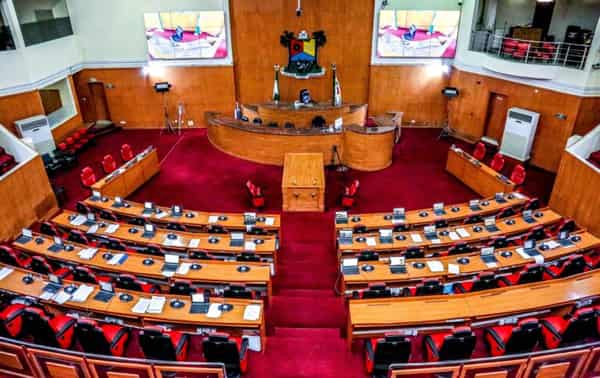
The Lagos State House of Assembly has moved the state’s proposed 2026 spending plan a step closer to passage, committing the “Budget of Shared Prosperity” to a committee for detailed scrutiny after a robust second reading debate.
The budget, earlier presented by Governor Babajide Sanwo-Olu on November 25, 2025, is anchored on four strategic pillars: poverty eradication, a human-centred approach, enhanced infrastructure, and effective governance and is targeted at building a safer and more prosperous Lagos.
Chairman of the House Committee on Economic Planning and Budget, Sa’ad Olumoh, informed the chamber that the 2026 plan was designed to consolidate the developmental strides recorded since Governor Sanwo-Olu assumed office in 2019.
He stressed a commitment to completing existing projects, asserting that the budget will cover all ongoing projects so none will be moved to the next administration.
The Majority Leader, Noheem Adams, lauded the budget, stating it reflected the growing competence and capacity of Lagos State. He championed the prioritisation of capital expenditure, which he noted demonstrates responsibility and long-term planning, predicting the bill’s passage would significantly boost the state’s economy.
However, the deliberation was not without reservations. Ajomale Oladipo voiced concerns regarding the potential impact of new tax reforms on budget performance, particularly in light of the state’s recent growth in Internally Generated Revenue (IGR) to 70 per cent.
Several members pressed for increased allocation to specific sectors. Desmond Elliot described the ‘Budget of Shared Prosperity as one that would meet the needs of Lagosians, but urged the House to prioritise infrastructural development, specifically inner roads across communities and called for improvements in environmental sanitation.
Appealing to broader security concerns, Osafile Foluke called for increased funding for the security sector to address emerging challenges both within the state and nationally.
Further advocating for key social sectors, the Deputy Majority Leader, Adedamola Richard Kasunmu, stressed the need for thorough scrutiny of appropriation details to ensure alignment with the budget’s goals and advocated for improved funding for the education sector, citing the need to secure a better future for the state’s youth.
In a push for economic diversification, Bonu Solomon highlighted the importance of investing in tourism and infrastructural development as viable means of boosting the state’s internally generated revenue.
Following the extensive deliberation, the Y2026 Appropriation Bill was committed to the Committee on Economic Planning and Budget for further legislative action. The committee has been directed to report its findings within five weeks.