 Follow Us on Google News


 Follow Us on Google Discover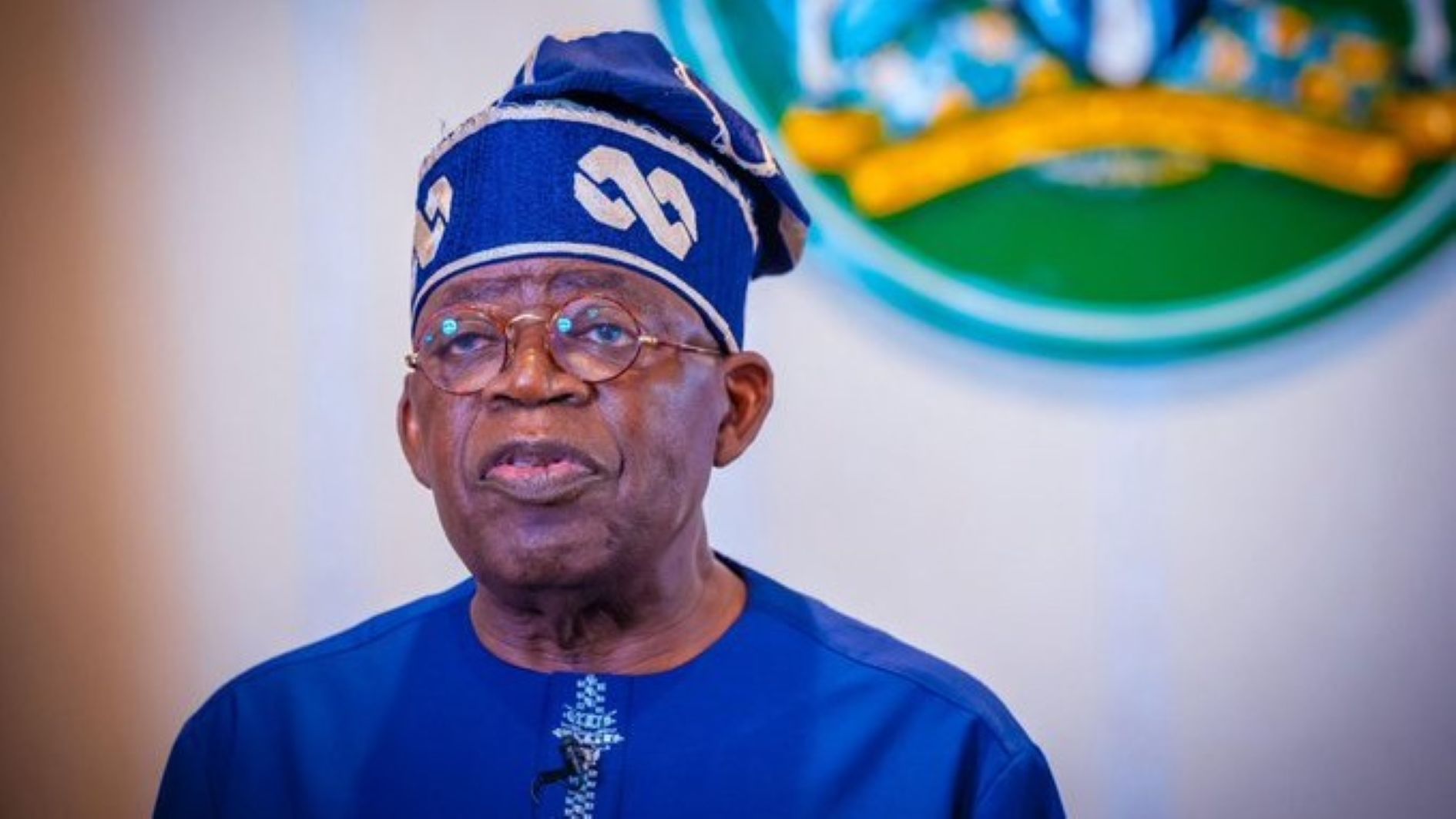
Women leaders and political stakeholders have called on President Bola Ahmed Tinubu to use his executive powers to remove barriers frustrating women’s participation and success in elective politics, including supporting legislation that would guarantee special seats for women in parliament.
The stakeholders made the call at the Women Candidates’ Summit 2026, organised by the Voice of Women Empowerment Foundation (VOWEF) at the National Assembly, Abuja, where they lamented the persistent marginalisation of women in Nigeria’s political space ahead of the 2027 general elections.
The convener of the summit and Executive Director of VOWEF, Mrs Toun Okewale-Sonaiya, who made the appeal, said Nigeria needed to move beyond encouraging women to contest elections to deliberately creating conditions that would enable them to win and occupy decision-making positions.
Okewale-Sonaiya, who is also Chairperson of Women Radio WFM 91.7, urged Tinubu to be more deliberate in advancing women’s political representation, saying the proposed special seats bill was one of the measures that could significantly change the current situation.
“I call on His Excellency, President Bola Ahmed Tinubu, to do everything within his powers to ensure that we have more women in elected positions,” she said.
“I know he’s working. I know the First Lady is working. But we just have to be more deliberate and intentional. There are some executive powers he can take. One of them is the special seats bill.”

She also appealed to the Independent National Electoral Commission (INEC), political parties, the National Assembly and the media to support measures that would provide women with a level playing field in the 2027 elections.
According to her, the challenge facing women in politics is not a shortage of capable candidates but a combination of structural and political barriers, including limited campaign financing, inadequate political support, low visibility, online abuse, gender-based disinformation and unequal access to political structures.
“These are not just women’s issues. They are democratic issues. A democracy cannot reach its full potential when women remain underrepresented in leadership,” she said.
The call came as the summit brought together women who secured party tickets for the 2027 elections, alongside political party representatives, development partners, civil society organisations, media executives and members of the diplomatic community.
Unlike previous editions of the summit, which focused largely on women aspirants, Okewale-Sonaiya said the 2026 edition was designed specifically for women who had already emerged as candidates after their respective party primaries.
She explained that the shift was necessary because support for women should not end after they secure party tickets.
“Support for women in politics should not end at the primaries. It must continue until women are elected into office,” she said.
She expressed concern that some women who won party tickets during the 2026 primaries were subsequently faced with inadequate funding, political sidelining and pressure to step down in favour of male candidates.
The situation, she said, underscored the need for sustained support between the conclusion of party primaries and the general elections.
Responding, the Minister of Women Affairs, Imaan Sulaiman-Ibrahim, also called for stronger efforts to increase the number of women elected into political offices, describing Nigeria’s current level of female representation as critically low.
Sulaiman-Ibrahim disclosed that women occupy only four of the 109 seats in the Senate and 17 of the 360 seats in the House of Representatives.
She said the figures amounted to about 2.7 per cent representation in the Senate and 4.7 per cent in the House of Representatives, leaving Nigeria’s overall federal legislative representation of women below four per cent.
According to her, the immediate priority should be to ensure that every woman who secured a party ticket remains on the ballot and gets the support required to win.
“I would like to encourage us to focus on from now till January: every woman that is on the ballot should get the seat so that at least the numbers can change,” she said.
The minister argued that women’s political representation should not be viewed as charity or a concession, but as an economic and developmental imperative.
“A democracy that governs with only half of its talent is not simply unjust; it is fundamentally underperforming,” she said.
Sulaiman-Ibrahim further disclosed that the Federal Ministry of Women Affairs was working towards reactivating women’s political empowerment centres across the country and transforming them into year-round political academies.
She said the centres would provide women politicians with training in campaign strategy, public speaking, political education, election monitoring and other skills needed to compete effectively in elections.
The minister also emphasised the importance of mentoring, saying experienced women politicians must deliberately create opportunities for younger women seeking to enter politics.
“Politics is like every other profession. You cannot achieve in politics without the proper training. You have to keep getting trained and retrained,” she said.
She called for stronger collaboration between government and civil society organisations working on women’s political empowerment, arguing that the two sectors must stop operating in silos if the country is to make meaningful progress.
According to her, the ministry was also working to leverage the numerical strength of women voters, who constitute nearly 47.5 per cent of Nigeria’s registered voter population.
She disclosed plans to mobilise 10 million women across the 774 local government areas into a structured voting bloc capable of influencing electoral outcomes and political party decisions.
However, the minister challenged women to translate their numerical strength into political leverage through strategic voting and negotiation.
“You can’t say you have a voting bloc when you’re all over the place voting for different people. How do you negotiate? Politics is negotiations,” she said.
The summit also drew attention to the wider regional deficit in women’s political representation, with Sulaiman-Ibrahim noting that women occupy only about 18.4 per cent of parliamentary seats across West Africa.
She said Nigeria and other countries in the region must intensify efforts to implement commitments towards gender parity in political representation.
The summit, themed “2027: From Primaries to Power,” was designed to provide female candidates with practical support in media engagement, debates, digital mobilisation, campaign messaging and strategic networking.
The organisers also launched the “Woman Agenda 2027–2031,” a unified policy framework intended to provide a common platform for women candidates and promote women’s leadership and representation.
Okewale-Sonaiya urged male political leaders to support rather than obstruct women seeking elective office.
“To the men who lead our institutions and political parties, I make a special appeal: please be allies, not gatekeepers. Open doors. Mentor women. Support their leadership,” she said.
She maintained that the success of women in the 2027 elections would require a collective effort involving political parties, government, electoral institutions, the media, civil society and voters.
“Supporting women must go beyond encouraging them to contest elections. It must include creating a level playing field, ensuring equal access to opportunities and resources, promoting issue-based campaigns, and making our political spaces safer and more inclusive,” she said.
She added that VOWEF’s ultimate objective was to ensure that more women did not merely contest elections but win them.
“Together, let us move from primaries to power and build a Nigeria where women’s leadership is not the exception or the expectation,” she said.

