
 Get Guardian on Google
The Federal Government and other leaders have called for increased financing, stronger intellectual property protection, improved distribution networks and wider market access to enable the continent to retain more economic value from its creative industries.
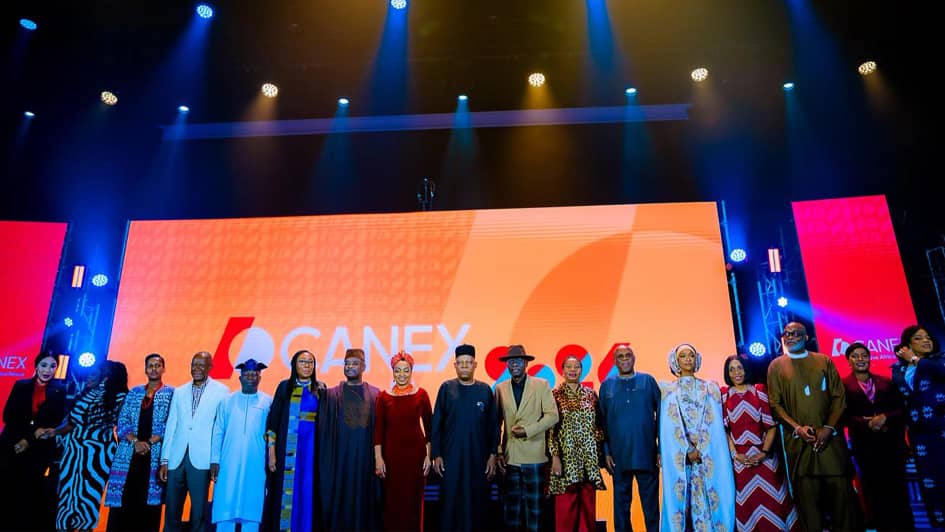
This call was made at the opening of the four-day Creative Africa Nexus (CANEX) WKND 2026 in Lagos, where policymakers, financial institutions, investors and industry stakeholders stressed the need to transform Africa’s growing creative talent into commercially competitive businesses and sustainable wealth.
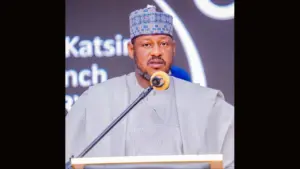
Opening the gathering on behalf of President Bola Ahmed Tinubu, Vice President Kashim Shettima said Africa must move beyond celebrating its global cultural recognition to building viable businesses capable of competing in international markets.
He said the continent must translate the growing global appreciation of its music, films, fashion, arts and other creative products into commercial opportunities for African entrepreneurs.
“In 1977, we came to celebrate our culture. In 2026, we come to capitalise on it. We come to turn the world’s applause into contracts, its admiration into markets, and the talent of our young people into enduring wealth,” Shettima said.
He also stressed the need to dismantle barriers preventing African creative businesses from accessing markets within the continent, arguing that the industry’s growth would remain constrained without stronger intra-African trade.
“We cannot continue to celebrate African creativity while making it difficult for African creators to access African markets,” he said.
Afreximbank has committed $2 billion through 2027 to support Africa’s creative and cultural industries, building on previous financing commitments as demand for funding across the sector continues to expand.
The bank’s intervention follows the growing commercial potential of the creative economy, with the 2024 edition of CANEX WKND in Algiers attracting participants from 81 countries and facilitating more than $540 million in trade and investment deals.

In Nigeria, Shettima said over $600 million in financing is also being unlocked for digital and creative enterprises through the Investment in Digital and Creative Enterprises programme (iDICE).
Speaking at the event, Minister of Industry, Trade and Investment, Dr Jumoke Oduwole, disclosed that proposed transactions worth more than $500 million were already being discussed between Nigerian entrepreneurs, buyers and investors through deal rooms co-curated with Afreximbank.
She said the gathering was designed to connect local creative businesses with international buyers and investors, creating opportunities for commercial partnerships across the different segments of the industry.
“We promised to bring buyers and investors here. Today, Nigerian creatives are negotiating with them in Lagos. Our ambition is a deal for every part of the creative economy, from sports and gaming to creative technology and infrastructure, the arts and gastronomy,” Oduwole said.
She noted that Nigeria had introduced several policy and investment measures to improve the business environment for creative enterprises and attract capital into the sector.
Among these is the country’s first National Intellectual Property Policy and Strategy, approved in 2025, alongside the Creative Sector Investment Playbook, launched in January 2026 to provide guidance for investments in critical areas such as studios, content production and distribution.
Nigeria is also working with Kenya and South Africa as co-champions of the African Continental Free Trade Area (AfCFTA) Protocol on Digital Trade, an initiative expected to strengthen cross-border digital commerce and create opportunities for African creative businesses.
However, Afreximbank President and Chairman of the Board of Directors, Dr George Elombi, warned that increasing production financing alone would not deliver the desired economic benefits unless African countries also addressed structural weaknesses in the creative industry’s value chain.
Citing estimates from the United Nations Economic Commission for Africa (UNECA), Elombi said the continent’s creative economy was valued at approximately $60 billion, representing about two per cent of the global creative industry.
He argued that despite the growing investments in music, film and other creative productions, Africa risked continuing to generate limited economic returns if it failed to develop the wider ecosystem required to commercialise and distribute its creative products.
“We can put these financing schemes into music and movie productions. Yet the value we derive will still be low. We must therefore focus on building the creative ecosystem,” he said.
Elombi identified distribution, branding, marketing platforms and intellectual property ownership as critical areas requiring greater attention, stressing that Africa must retain more control over the commercial processes through which creative works reach consumers and generate revenue.
His remarks underscored the need for a broader approach to financing that goes beyond funding individual productions to strengthening the infrastructure, businesses and institutions that support the creative economy.
CANEX WKND 2026 brought together over 15,000 delegates, including government representatives, investors, financial institutions, creators and businesses from across Africa, the Caribbean and the wider diaspora.
The four-day programme featured the CANEX Deal Room, Creative Economy Finance Summit, African Producer Accelerator, CANEX Music Factory, CANEX Book Factory and CANEX CreaThon.
It also included sector-specific programmes covering film and television, music, fashion, sports, literature and publishing, gastronomy, visual arts and technology, providing platforms for networking, business development, investment discussions and collaboration across the creative industries.