
 Get Guardian on Google
Preasidential candidate of the Accord Party (AP), Gbenga Olawepo-Hashim, has called for greater international intervention in Nigeria’s worsening humanitarian and security crises, particularly the estimated 3.68 million internally displaced persons (IDPs) across the country.
Olawepo-Hashim also called for the immediate release of Hausa cultural activist, Maisango, whom he alleged was being unlawfully detained, and further highlighted the reports of attacks and the destruction of 11 villages in Shanga Local Council Area of Kebbi State.
He questioned Maisango’s continued detention without trial, even though the Department of State Services (DSS) has dismissed him from its employ.
The AP presidential candidate spoke during an engagement with the United States Commission on International Religious Freedom (USCIRF), where he urged the international community to broaden its understanding of religious persecution and ethnic discrimination in Nigeria.
Noting the persecution of Christians in parts of Northern Nigeria, he argued that issues on religious freedom in Nigeria should not be viewed exclusively through the experiences of Christians and Muslims, as the Shia Muslims, minority Islamic sects and Hausa Muslim communities also experience discrimination and exclusion.
According to him, religious intolerance in the country sometimes intersects with ethnic identity and cultural differences, resulting in unequal treatment of people who profess the same faith.

On the humanitarian situation, Hashim cited figures from the United Nations High Commissioner for Refugees (UNHCR),indicating that approximately 3.68 million Nigerians were internally displaced as of October 2026.
He argued that the scale of displacement demonstrated the widespread consequences of insecurity, adding that the plight of affected communities should attract international attention irrespective of their religious or ethnic backgrounds.
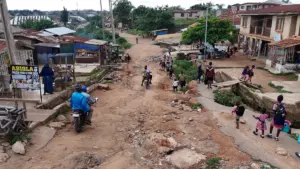
Among the incidents, he highlighted the reported attacks on communities in Shanga Local Government Area of Kebbi State, where 11 villages had reportedly been burnt and many residents killed.
He alleged that some armed groups operating in the region were driven less by religious conversion than by violence, territorial control and the destruction of established communities.
Meanwhile, he accused the federal government of failing to provide adequate protection for vulnerable populations and effectively confront armed groups, warning that the absence of accountability could further undermine public confidence in government.