 Follow Us on Google News


 Follow Us on Google Discover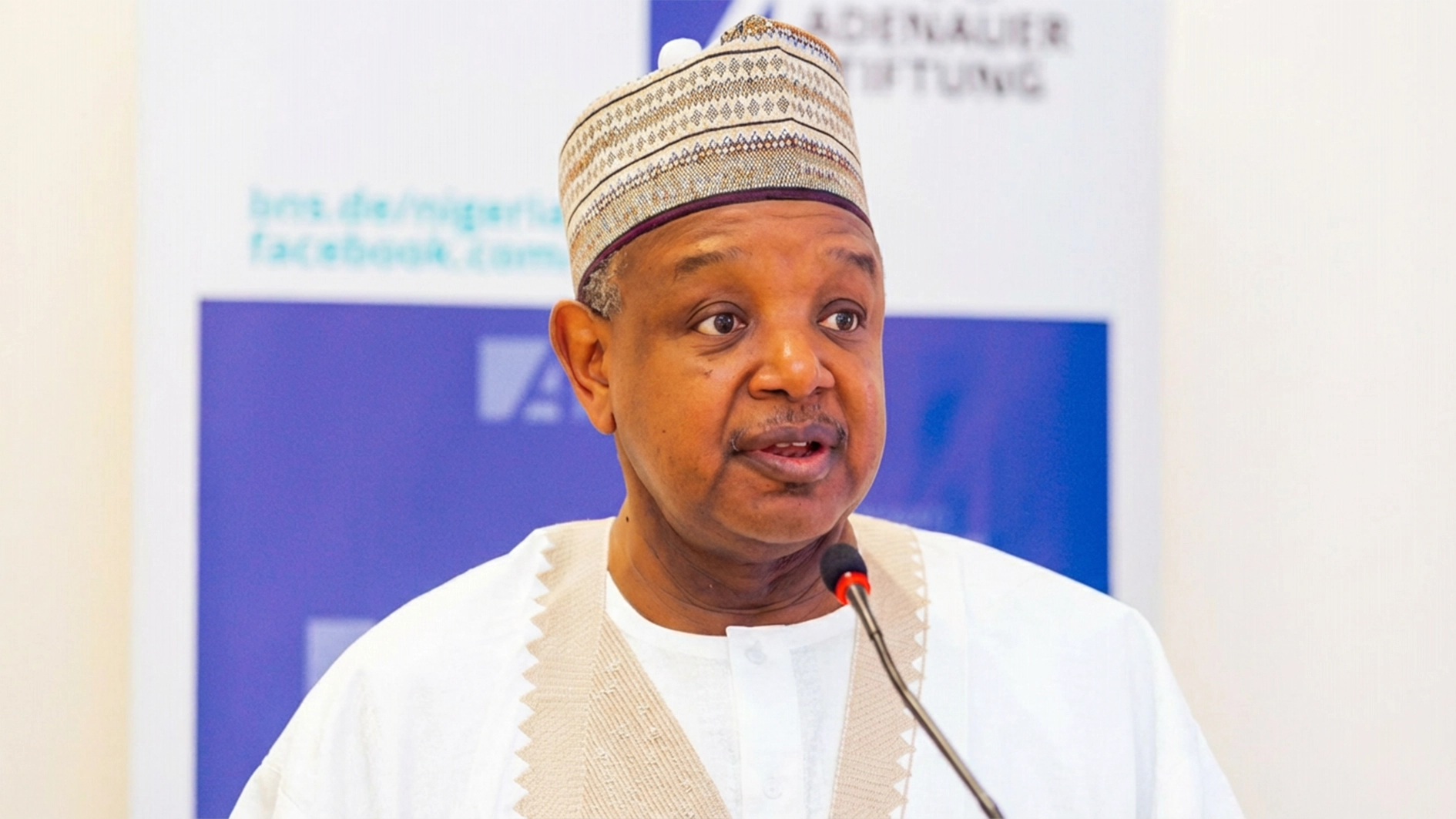
Minister of Budget and Economic Planning, Senator Abubakar Atiku Bagudu, has challenged Nigerians, lawmakers and the media to rethink the country’s approach to budgeting, declaring that Nigeria’s national budget remains too small to deliver the level of development the country desires.
Bagudu’s spoke at a capacity-building workshop themed “Leveraging Legislative Oversight and Media Collaboration to Safeguard the National Budget from Unlawful Insertions”
According to the minister, Nigeria has the smallest national budget among the world’s 10 most populous countries, warning that the country could not expect to achieve the same development outcomes as nations with significantly larger fiscal capacity.
He said the debate over the national budget should therefore go beyond allegations of unlawful insertions and focus on a more fundamental question: What should Nigeria’s national budget be, and what level of resources does the country require to achieve its development ambitions?
According to him, Nigeria faces a choice between simply budgeting according to what it can currently afford and developing the confidence, policies and public support required to mobilise more resources for economic transformation.
Bagudu said the second option would require Nigerians to understand the country’s fiscal limitations and support difficult decisions needed to expand government revenue, investment and borrowing capacity.
He said the Federal Government’s ambition of building a $1tn economy could not be separated from the size and structure of the national budget.
“The national budget should understandably be a product of that imagination,” Bagudu said, referring to the government’s development ambitions.
He argued that countries which successfully transformed their economies had made deliberate choices to move beyond their existing limitations.
Using Brazil as a comparator, the minister said Nigeria’s population is relatively close to that of the South American country, but Brazil’s federal budget is many times larger.
“Do I expect to achieve the same outcomes as Brazil? Is it that these needs do not exist? I believe they do,” he said.
Bagudu said the issue was particularly important because the Federal Government could not simply increase borrowing without securing public confidence.
He explained that borrowing is subject not only to legal approval by the National Assembly but also to public acceptance of the need for additional resources.
“If people do not support borrowing, the National Assembly will not allow borrowing,” he said.
The minister consequently urged the media to take a more active role in explaining Nigeria’s fiscal position to citizens and interrogating how other countries had expanded their economies.
He said public understanding was necessary if the government was to secure support for the difficult choices required to reverse decades of underinvestment in education, security, roads, water resources and other critical sectors.
On the controversy over budget insertions, Bagudu urged journalists and citizens to ask questions before reaching conclusions about projects that appear unusual or unnecessary.
He acknowledged the need for vigilance against unlawful insertions but noted that Nigeria’s federal structure means lawmakers often bring constituency-specific needs to the budget that may not be immediately apparent to people from other parts of the country.
He cited challenges such as desertification, erosion, oil-related environmental degradation and lack of access to water as examples of problems that may influence the priorities of individual lawmakers.
Bagudu recalled the controversy over the inclusion of freezers in the 2024 budget, saying further interrogation showed that the items were intended for a fishing community where women needed facilities to preserve fish.
He stressed that his explanation was not a defence of every legislative expenditure, but an argument for evidence-based interrogation.
“Without asking, you can come to judgment,” he said. The minister also explained that the budget passes through several human processes and that errors could occur even where safeguards exist.
He said budget documents transmitted to the National Assembly are signed page-by-page by representatives of the two chambers, while the Ministry of Budget and Economic Planning receives the signed version alongside the electronic version.
He therefore called for continued vigilance by lawmakers and the media while recognising that not every discrepancy necessarily represents deliberate manipulation.
Bagudu also called for a more nuanced debate about how much information governments should publish in their budgets, particularly in areas relating to national security.
He said transparency and citizens’ right to know remained important but argued that governments must also consider whether publishing every detail could expose sensitive national interests.
According to him, private companies do not disclose every aspect of their strategies because competitors could exploit such information, arguing that similar considerations could apply to some government policies and security operations.
He urged the media to hold public officials accountable while also examining the wider strategic implications of the information being demanded.
The minister further challenged the tendency to judge budget performance mainly through capital projects, saying recurrent expenditure also determines whether government can deliver essential services.
He argued that salaries for teachers, security personnel and health workers should not automatically be treated as less important than infrastructure spending.
“If I am fighting a war and I don’t pay security, what happens?” he asked.
Bagudu also defended debt-service payments as an essential component of fiscal management, warning that failure to meet debt obligations could trigger higher borrowing costs and ultimately affect private-sector businesses.
He, however, acknowledged the importance of capital expenditure, saying Nigeria needed to preserve recurrent obligations while also finding alternative financing mechanisms for infrastructure.
The minister pointed to private-sector financing of major highways as evidence, saying increased investor participation could reflect growing confidence in the country’s reform programme.
On artificial intelligence, Bagudu warned journalists and lawmakers against allowing AI tools to dictate their thinking.
He said AI should assist users in asking better questions rather than provide conclusions that replace human judgment.
“AI should help us ask the right questions rather than conclusive questions,” he said.
Participants examined ways of strengthening legislative scrutiny, media reporting and the use of technology in tracking public expenditure.

