 Follow Us on Google News
 Follow Us on Google Discover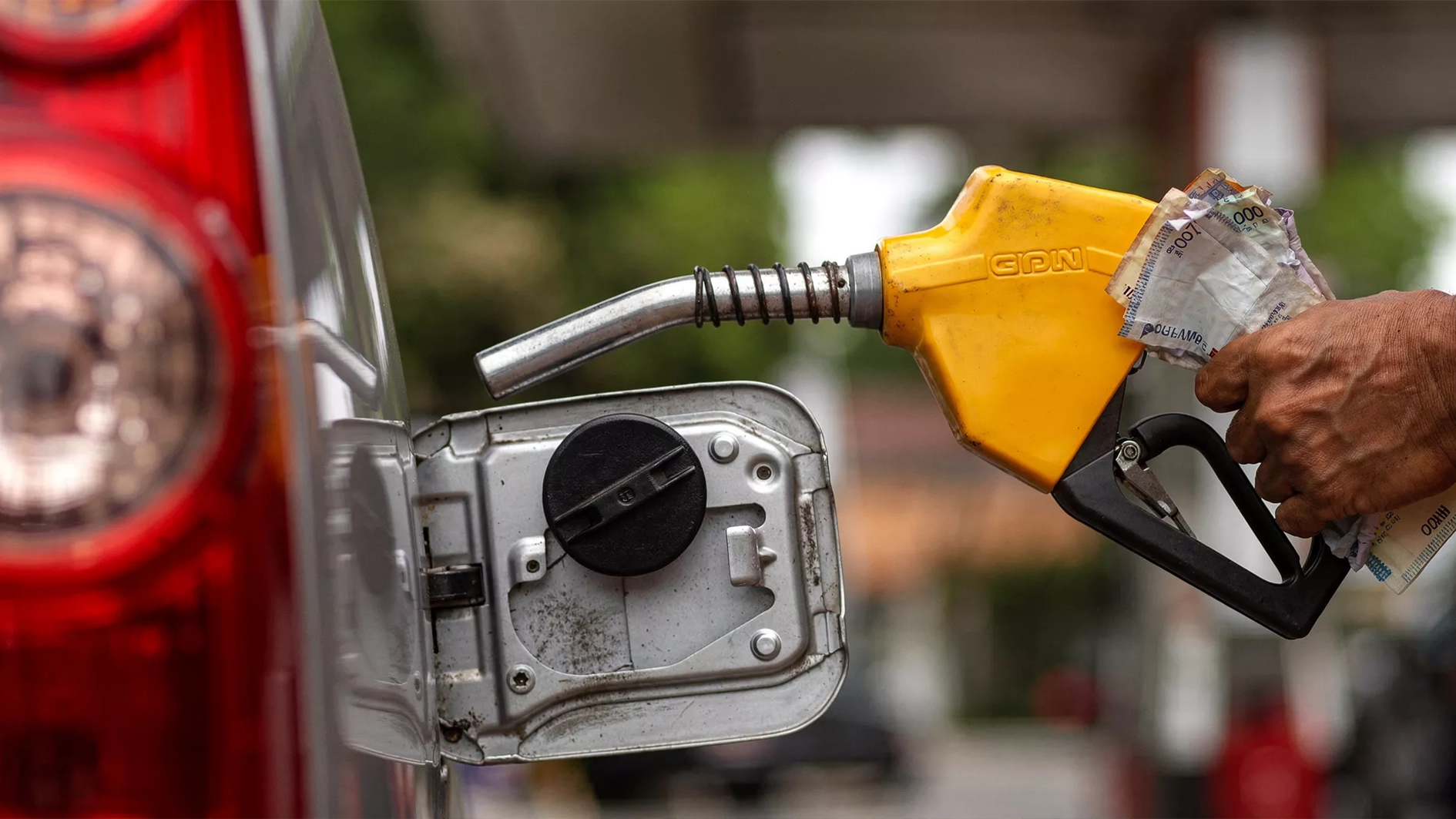
• Party asks govt to explain N15.8tr additional revenue from reforms
• ADC questions N47.25tr FAAC allocations to states in three years
• APC says subsidy return could hurt wages, education, other services
• Presidency says reforms revive businesses, restore investor confidence
• Yilwatda warns subsidy reversal could strain govt finances
• Duke calls subsidy debate ‘scam’, says petrol can sell for N200/L
The All Progressives Congress (APC) has defended President Bola Tinubu’s economic reforms, saying the removal of petrol subsidy has increased government revenues and improved the business environment.
However, this came as the African Democratic Congress (ADC)) challenged the President to account for the trillions of naira generated from fuel subsidy removal and explain what Nigerians have gained from the reforms.
The party, through Senator Abdul’aziz Yari, the Director-General of the President’s re-election campaign, demanded explanations on how the increased revenues had translated into improved living conditions for Nigerians.
The ADC said Yari’s comments were significant because he was speaking as the person responsible for persuading Nigerians to give Tinubu another four-year term.
In a statement by its National Publicity Secretary, Bolaji Abdullahi, the party said Nigerians should be concerned if the message of the President’s re-election campaign was that they must accept the current hardship as permanent.

“If the message of the President’s re-election campaign is that Nigerians must accept today’s hardship as permanent and anyone promising relief is a liar, then Nigerians must be seriously concerned,” the party said.
According to figures attributed to the Minister of Finance, subsidy removal and foreign exchange reforms generated about N15.8 trillion in additional resources for the Federation between June 2023 and December 2025.
It said about N5.4 trillion of the amount went to the Federal Government, N5.4 trillion to states and N3.9 trillion to local governments.
The ADC said states reportedly received N47.25 trillion in Federation Account Allocation Committee (FAAC) allocations between 2023 and 2025, rising from N10.09 trillion in 2023 to N15.26 trillion in 2024 and N21.90 trillion in 2025.
“Monthly FAAC distributions have since crossed N2 trillion, compared with less than N1 trillion around the period before subsidy removal. Yet, while government revenues soared, Nigerians became poorer,” it said.
The party said petrol prices rose from about N185 per litre in May 2023 to more than N1,300 in many locations by August 2025, while food inflation exceeded 40 per cent at points during the period.
It added that transport costs had also surged, while the promised compressed natural gas (CNG) mass-transit alternative had yet to reach Nigerians on the scale required.
“The contradiction is impossible to ignore. Government is counting trillions while Nigerian families are counting the meals they can afford. If governments are receiving substantially more money, why are Nigerians getting substantially less food to eat?” the party asked.
The ADC challenged Yari and the All Progressives Congress (APC) to explain whether Nigerians were better off after three years of what it described as unprecedented sacrifice.
“Before asking Nigerians for four more years, Senator Yari and the APC must answer one question: after N15.8 trillion in additional resources, record FAAC allocations and three years of unprecedented sacrifice, are Nigerians better off?” it said.
The party also expressed concern that increased revenues had coincided with increased borrowing by state governments.
It said about 20 states reportedly borrowed N458 billion in 2025 despite the increase in FAAC receipts.
“After N47.25 trillion to states in three years, Nigerians have a right to ask: where are the results? If states received an additional N5.4 trillion from the reforms, let the government publish the projects. Show Nigerians the schools, hospitals, roads, and mass-transit systems that their sacrifice paid for,” the party said.
The ADC described as “disgraceful” the government’s inability, in its view, to show tangible improvements from the additional revenues, arguing that workers’ salaries could no longer guarantee food on the table.
It also criticised the level of budget implementation, infrastructure development and security, saying local contractors remained unpaid and major public roads were in poor condition.
The party further accused the APC administration of presiding over worsening poverty and insecurity while claiming that its reforms were working.
The ADC also challenged the President’s campaign to explain why the APC government had taken more than three years to begin making plans to reduce transportation costs ahead of the 2027 elections.
“If Senator Yari says subsidy can never return, then he must tell Nigerians what the President’s campaign is offering instead. What is the plan to dramatically reduce petrol prices and bring down food and transportation costs before 2027? ‘Endure’ is not an economic policy,” it said.
The party said the 2027 election would ultimately be determined by which political platform could address food insecurity, unemployment, insecurity and the rising cost of living.
“Nigerians have sacrificed enough. They need a break,” the ADC said.
Tinubu’s reforms revive businesses, restore investor confidence, says Presidency
DEFENDING Tinubu’s economic reforms, the Technical Assistant on Regional Development Programmes in the Office of the Vice President, Dr Hafiz Abdullahi, said yesterday that ongoing economic initiatives undertaken by the administration are restoring confidence in Nigeria’s business environment and creating new opportunities for entrepreneurs to expand.
Abdullahi spoke during the unveiling of Makib Estilo, a new business outlet in the Central Area of Abuja, by the Minister of Women Affairs, Hajiya Imaan Sulaiman-Ibrahim.
The minister noted that businesses are witnessing rapid growth because the Tinubu administration is supporting micro, small, and medium enterprises (MSMEs) through targeted intervention funds, single-digit loans, and free business formalisation drives.
Corroborating the minister’s stance, Abdullahi attributed the growth of the enterprise from a small shop into a diversified business to what she described as improving economic conditions under the administration’s Renewed Hope Agenda.
The presidential aide also challenged opposition politicians criticising the administration’s economic policies to engage directly with businesses and ordinary Nigerians before concluding that the reforms had worsened economic conditions.
Abdullahi said critics should assess the reforms objectively, arguing that while economic changes could initially be difficult to absorb, Nigerians were gradually becoming accustomed to the new realities and beginning to appreciate their potential benefits.
“Change is not easy. People don’t easily adapt to change. I don’t adapt to change easily myself,” she said.
According to her, the reforms were introducing new economic realities to Nigerians, but their impact was becoming clearer as businesses and citizens adjusted to them.
Abdullahi specifically urged opposition politicians: “They should judge us with clean eyes. They should open their eyes, interact and come to us and ask questions instead of using hearsay.
“They should relate with us with an open mind. If they really do that, I think they will see how the economic reforms are affecting the country more positively.”
Abdullahi said the administration’s economic reforms had begun to ease some of the difficulties previously faced by businesses, particularly enterprises dependent on imported goods.
She identified developments in the foreign exchange market as a major factor contributing to renewed confidence among entrepreneurs.
“The Renewed Hope Agenda, as we all know, coming from the Presidency, is one of the greatest things happening to Nigeria. This is one of the administrations that has done well for entrepreneurs,” she said.
She recalled that the sharp depreciation of the naira had previously increased the cost of importing goods and made business expansion more difficult.
“If you look at the dollar, as my sister mentioned earlier, before, the dollar was just going up rapidly, so it was getting difficult for us to import and bring things into Nigeria.
“But after the economic reforms were introduced, everything started coming down. You can see that the business is stabilised,” Abdullahi said.
She added that plans to expand the business had been conceived earlier but could not be implemented at the time, saying the changing economic environment had strengthened the promoters’ confidence to proceed.
“We wanted to do this earlier, but it didn’t happen. But with the administration of President Bola Ahmed Tinubu, you can see that everything is blooming. You can see that we are moving forward, and we don’t want to stop anytime soon,” she said.
APC chair warns against return to fuel subsidy
ALSO, the National Chairman of the All Progressives Congress, Nentawe Yilwatda, warned Nigerians against calls by former Vice President Atiku Abubakar to restore fuel subsidy, saying such a policy could reverse gains recorded under the ongoing economic reforms.
Yilwatda said returning to the old subsidy regime could lead to fuel queues, threaten the sustainability of the new minimum wage and affect government funding for education and other essential services.
He spoke in Abuja while receiving a delegation of economic stakeholders who visited him to discuss the state of the Nigerian economy, ongoing reforms and prospects for sustainable economic growth.
The APC chairman said the subsidy debate should be assessed based on its economic implications rather than political rhetoric, particularly the fiscal burden imposed on government under previous administrations.
According to him, Atiku’s proposal raises questions about how the subsidy would be financed and sustained without returning the country to the fiscal pressures associated with the previous regime.
“Subsidy may appear attractive because it promises cheaper petrol, but Nigerians must also ask the bigger question: who pays for the subsidy and what happens to the resources that government must divert to finance it?
“A policy cannot be judged only by its immediate benefit at the pump. We must examine its impact on government revenues, salaries, pensions, education, healthcare, infrastructure and the overall capacity of government to meet its obligations to citizens,” he said.
In a statement by his Special Adviser on Media and Information Strategy, Yilwatda said several state governments struggled to meet their salary obligations before the current administration, with some unable to pay workers regularly while others resorted to partial payments.
He attributed the improved fiscal position of many states to increased federal allocations following the removal of fuel subsidy, saying the additional resources had enabled governments to meet salary and pension obligations and undertake development projects.
He cautioned that any proposal to reintroduce subsidy should undergo rigorous economic scrutiny to prevent the country from recreating the fiscal pressures of the past.
Yilwatda also raised concerns about the possible impact of reduced government revenues on education, recalling prolonged disruptions to academic activities in Nigerian universities under the previous administration.
“A return to a fiscally unsustainable subsidy regime could have consequences far beyond the price of petrol. When government revenue is squeezed, the first victims are often the critical sectors that directly affect the welfare and future of our people,” he said.
On the new minimum wage, the APC chairman said the sustainability of improved workers’ wages depended on the ability of federal and state governments to meet their recurrent obligations.
He said the objective should go beyond announcing higher wages to creating an economic environment that would enable governments to pay workers consistently without sacrificing investment in infrastructure, education, healthcare and other essential services.
Yilwatda also said the ongoing reforms were creating opportunities in sectors previously constrained by weaknesses in Nigeria’s foreign exchange and payment systems.
He cited the increasing ability of Nigerians to use locally issued bank cards for legitimate transactions abroad and the expansion of digital payment opportunities as developments improving the country’s participation in the global digital economy.
According to him, the changes are particularly important to young Nigerians, content creators, freelancers and other digital entrepreneurs whose livelihoods depend increasingly on international payments.
“Our young people are no longer limited by geographical boundaries. A Nigerian content creator, software developer, consultant or freelancer can provide services to clients anywhere in the world. But that opportunity requires a financial and payment system capable of supporting the global digital economy.
“We must therefore be careful about policies that could undermine the progress being made in strengthening Nigeria’s financial and digital ecosystem,” he said.
Duke: Nigeria’s fuel subsidy debate is a ‘scam’
MEANWHILE, former Cross River State Governor and presidential candidate of the Peoples Redemption Party (PRP), Donald Duke, has dismissed Nigeria’s fuel subsidy debate as a “scam”, saying petrol could sell for about N200 per litre if the country properly harnessed its crude oil resources and other petroleum products.
Duke spoke amid differing positions on the subsidy regime by President Bola Tinubu and former presidential candidates Atiku Abubakar and Peter Obi.
Tinubu removed the petrol subsidy in May 2023, saying the decision was necessary to redirect government resources to other sectors.
While Atiku has advocated a targeted subsidy to cushion the impact of rising living costs, Obi has opposed its return and called for savings from subsidy removal to be transparently invested in productive and social sectors.
However, Duke said the debate had failed to adequately consider Nigeria’s crude oil production and the range of products that could be derived from a barrel of crude.
“Look, I don’t believe there’s any subsidy in fuel,” Duke said.
“For a barrel of crude oil, there are about seven by-products. The two consequential ones are diesel and petrol, PMS and AGO, and kerosene, aviation fuel and all those things.
“You sell them at commercial rates, okay? Work it out. You can almost sell petrol today at N200 a litre, not the N1,000-plus.
“So that thing about subsidy, I think, is the biggest scam that has been perpetrated, maybe globally.”
The former governor also questioned why Nigeria continued to face energy challenges despite its abundant natural resources.
“You’re an energy-blessed country,” he said, listing hydrocarbons, solar, hydro, uranium and lithium among the country’s energy resources.
“Why are we still energy-poor? Because the political will is not there. But even beyond the political will, we’re not thinking through this.”

