 Follow Us on Google News


 Follow Us on Google Discover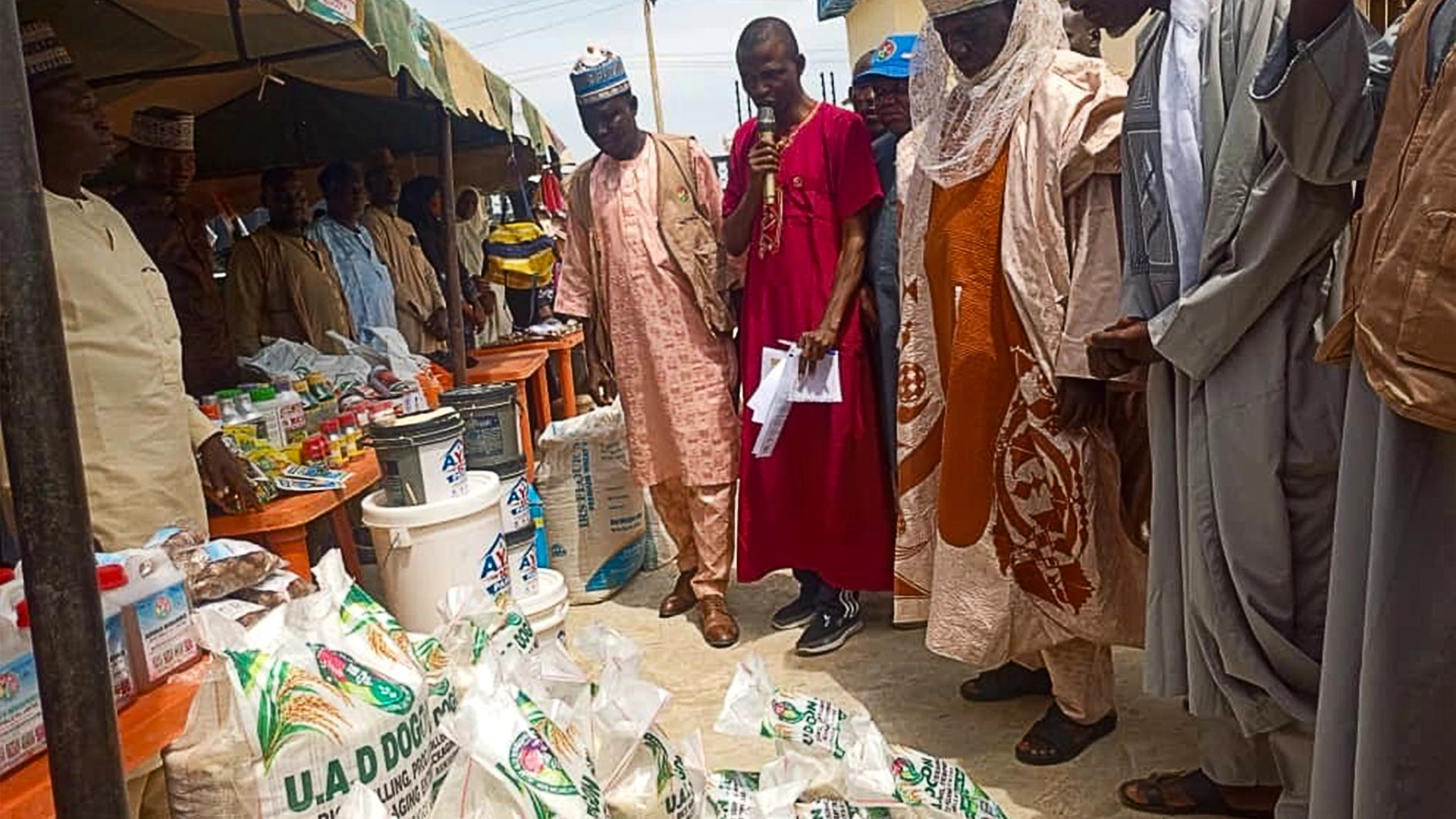
Farmers in Bauchi State have showcased climate-resilient agricultural produce and alternative livelihood products at an event organised by the Foundation for Sustainable Smallholder Solutions (FSSS) to commemorate the 2026 World Food Day.
The event, held on Thursday, brought together farmers and beneficiaries of the foundation’s interventions across seven local government areas in Bauchi North Senatorial District to showcase agricultural technologies, farming practices and products aimed at strengthening food security and improving livelihoods.
The Emir of Katagum, Umar Faruq, urged farmers to embrace dry-season farming, saying reliance on rain-fed agriculture alone could undermine efforts to achieve food security amid changing weather conditions.
The emir, represented by the Uban Doma of the emirate, Ummaru Lili Hassan, said farmers should apply the knowledge and technologies acquired through the foundation’s training to expand agricultural production beyond the rainy season.
“Our people are farmers, but I am aware that the training by this group has empowered you with new technologies. So, I call on you to take the training seriously, especially for dry-season farming,” he said.
He added, “We can no longer survive only with rainy-season farming. We need our farmers to embrace dry-season farming.”

The emir expressed optimism that the adoption of improved farming methods would enhance agricultural productivity and contribute to food security in the state.
Speaking at the event, the Lead Brand and Communication Manager of FSSS, Clinton Inene, said that Heineken Africa Foundation and Nigerian Breweries PLC have supported the project across seven local government areas of Bauchi North, adding that the celebration provided an opportunity to showcase the achievements of the foundation’s interventions over the past year.
He said the programme covered Katagum, Gamawa, Giade, Itas Gadau, Jama’are, Zaki and Shira local government areas, with a focus on strengthening farmers’ resilience to climate change, improving household livelihoods and promoting sustainable agricultural practices.
“Today is more like a combination of all the activities that we have been doing for the past one year in Bauchi North. What we have been doing in these local governments is building resilience on the farm and strengthening the livelihood resilience of farmers,” Inene said.
He explained that the foundation had introduced agroforestry, water-conservation techniques, irrigation systems, fertilisers and drought-resistant seeds to help farmers adapt to changing weather conditions.
According to him, agroforestry encourages farmers to grow trees alongside crops to improve soil quality and mitigate the effects of adverse weather conditions.
He said water-conservation techniques would help farmers retain water beyond the rainy season, while irrigation systems would enable them to cultivate crops during dry periods.
Inene said the foundation also organised a farmers’ market where beneficiaries displayed agricultural produce and products from skills acquired through its livelihood support programme.
He noted that some beneficiaries had diversified into non-farm businesses, including bag production, paint-making, soap production and hairdressing, to generate additional income and reduce their dependence on farming.
The manager stressed that food security required more than increasing agricultural production, noting that access to balanced and nutritious meals was equally important.
He said the foundation was promoting backyard gardening, fruit-tree cultivation and the rearing of small livestock, including goats, rabbits and chickens, to improve household nutrition while providing additional sources of income.
One of the beneficiaries, Umar Abdulraheem, a rice miller from Gojon Jeji in Jama’are Local Government Area, said support from the foundation had improved his business and enabled him to establish a more organised enterprise.
Abdulraheem said the foundation provided him with milling machines and constructed a structure for his business, improving his working environment. “Before I met the foundation, I just sold rice like every marketer in the market, but now I have branded my package, and I am a registered company,” he said.
Another beneficiary, Sulaiman Auwal, said the training and market linkages provided by the foundation had improved his access to quality seedlings suitable for cultivation under unstable rainfall conditions.
Similarly, Hauwa Muhammad, who produces traditional caps, said the foundation’s support had strengthened her skills and enabled her to generate income to meet her personal needs.
World Food Day is observed annually on October 16 to raise awareness of hunger, food security and the need for sustainable food systems.
The theme of the 2026 celebration is “Innovate Today, Nourish Tomorrow.”

