 Follow Us on Google News


 Follow Us on Google Discover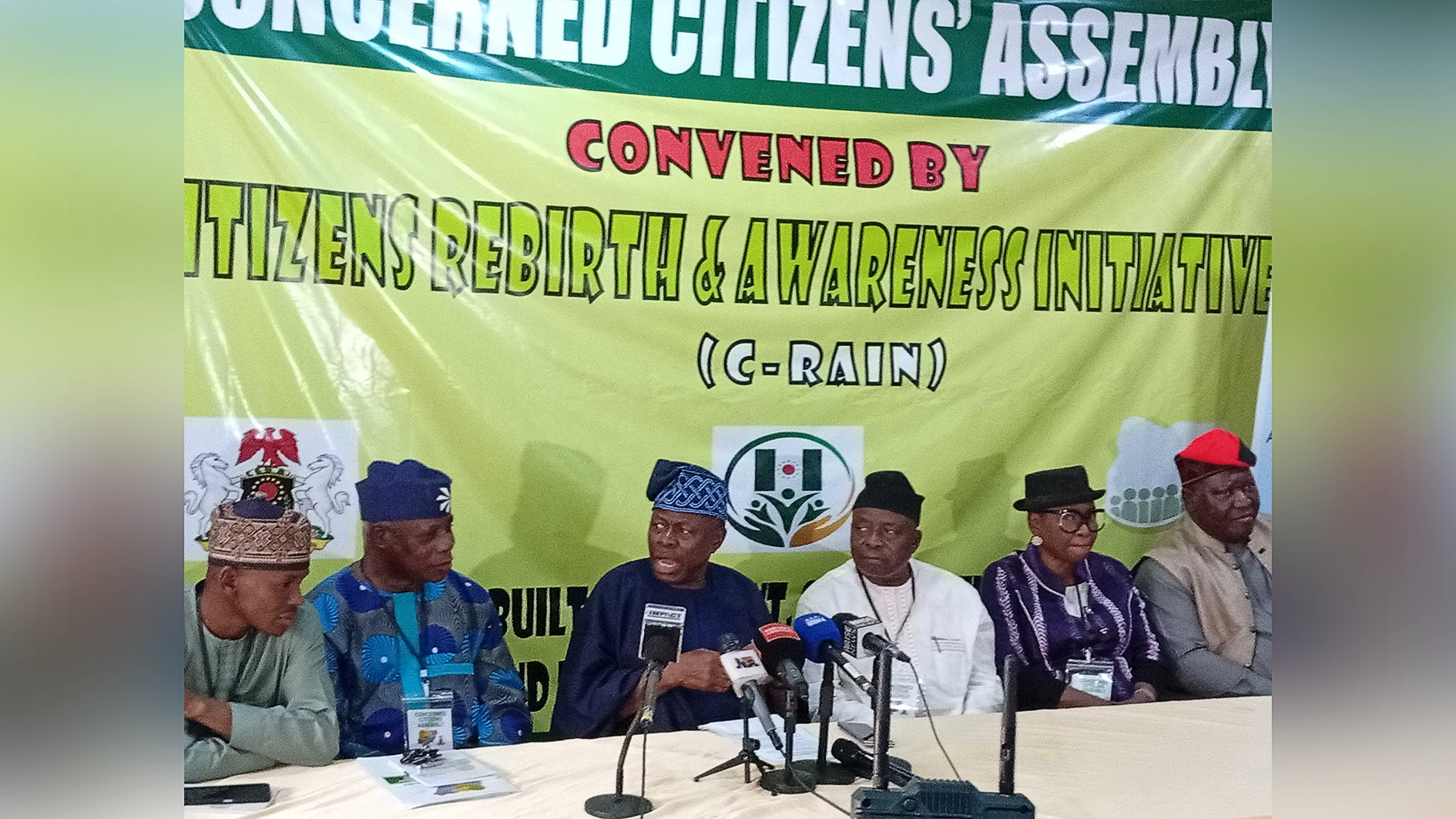
The Concerned Citizens Assembly has called for the restructuring of Nigeria into 17 autonomous regions, with greater control over their resources, security and internal affairs.
The group made the call in a communiqué issued on Wednesday at the end of its three-day deliberations at NICON Luxury Hotel, Abuja.
The communiqué was read by the Convener of the Assembly, Deacon Owolabi Oladejo.
The Assembly said Nigeria’s over-centralised system had hindered development, weakened accountability and contributed to the country’s security challenges.
It proposed a new federal structure in which regions would control most of their internal affairs, while the Federal Government would handle only clearly defined national responsibilities.
The proposed 17 regions are Akwa Ibom, Ane Igala, Apa-Agba, Bendel, Caliphate, Cross River, Gurara, Hausa, Igbo, Ijaw, Kanem, Lower Benue, Niger, Plateau, Rivers, Savannah and Yoruba.

The Assembly said the former Plateau-Gurara proposal was divided into Plateau and Gurara regions, while the Apa-Agba proposal was also approved.
It said disputes over boundaries and communities should be resolved through dialogue, evidence and the consent of affected communities.
Where negotiations fail, the Assembly proposed the use of referendums to allow affected people to decide.
The Assembly proposed that regions should retain 80 per cent of revenues generated within their territories, while 20 per cent would go to the Federal Government.
It said the arrangement would promote productivity, competition, accountability and development.
The group also proposed regional control over economic resources and development.
The Assembly called for the establishment of regional police forces to handle internal security and public safety.
However, national defence, territorial integrity and external security would remain the responsibility of the Federal Government.
It also proposed that each region should have its own constitution, subject to the Federal Constitution and fundamental human rights.
The Assembly said regional autonomy must not become a tool for the domination or discrimination of minorities.
It called for constitutional protection for minorities, women, children and other vulnerable groups.
Such protection, it said, should include equal treatment, political representation, cultural rights and access to public services.
The group stressed that its proposal was not aimed at breaking up Nigeria.
It said Nigeria would remain one sovereign country, but with regions enjoying greater freedom to manage their affairs.
According to the Assembly, national unity would be stronger when based on consent, justice, equality and mutual respect.
The Assembly also called for the immediate establishment of a National Rebirth Commission.
The commission, it said, should coordinate constitutional negotiations, settle territorial disputes, facilitate referendums where necessary and oversee the transition to autonomous regional governance.
The group urged the Federal Government, National Assembly, civil society organisations, traditional institutions and Nigerians to begin a national dialogue on the proposed restructuring.
It said the new federal arrangement should be based on autonomous regions, fiscal federalism, limited federal powers, regional security, minority protection, democratic consent, justice and equity.
The Assembly said the restructuring process must be peaceful, transparent, inclusive and based on the consent of Nigerians.
Oladejo had earlier described restructuring as a “national survival strategy”, arguing that it should be treated as a serious national issue rather than a political slogan.

