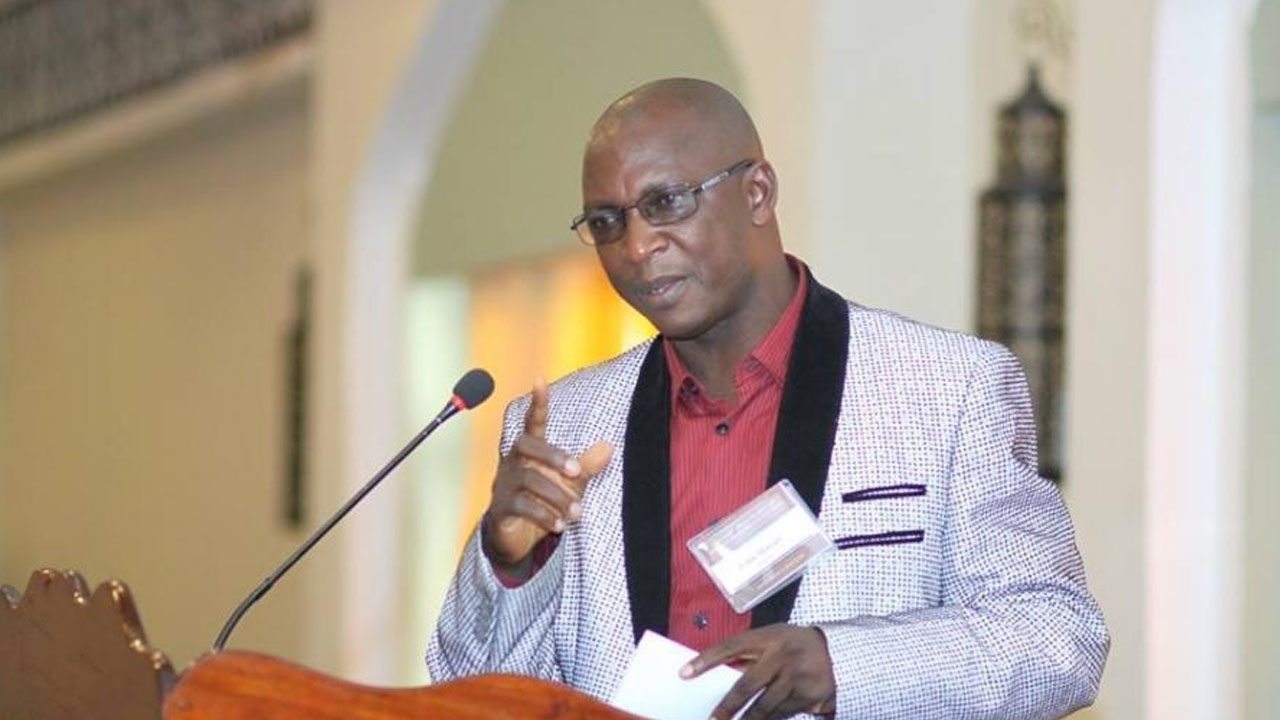
Lagos State Government has ordered a comprehensive investigation into allegations of medical negligence surrounding the death of Nkanu Nnamdi Esege, the 21-month-old son of renowned Nigerian author, Chimamanda Adichie, who reportedly died at a private hospital in Lagos.
This was as a medical expert, Dr Anthea Esege-Nwandu, disagreed with the claims by Euracare Multi-Specialist Hospital’s statement released on Saturday, while accusing the hospital of negligence.
Little Nkanu Nnamdi Esege, who was a niece of Dr Nwandu, died at Euracare’s facility under controversial circumstances
In a statement on Saturday signed by the Special Adviser to Governor Babajide Sanwo-Olu on Health, Dr Kemi Ogunyemi, the state government said it had been officially informed of the “deeply distressing” account shared by the author regarding the circumstances surrounding her son’s death.
The government condoled the author and her husband, Dr Ivara Esege, describing the loss of a child as a devastating tragedy.
“The Lagos State Government places the highest premium on human life and maintains zero tolerance for medical negligence or unprofessional conduct in any health facility operating within the state,” the statement reads.
According to the statement, Sanwo-Olu has directed the Health Facility Monitoring and Accreditation Agency (HEFAMAA) to immediately launch a thorough, independent and transparent investigation into the incident to determine both the immediate and underlying causes of the child’s death.
“In line with this directive, HEFAMAA has commenced investigation and has already visited the facility involved as part of the ongoing inquiry,” the statement noted.
The government said the agency would conduct an extensive review of all allegations, medical records and reports connected to the case.
It added that HEFAMAA would work closely with the Medical and Dental Council of Nigeria (MDCN) and other relevant regulatory bodies to ensure a credible and professionally guided investigation.
While Euracare reported inaccuracies in the account of how the child passed, Nwandu disagreed. In a detailed rebuttal, she identified alleged significant falsehoods in the hospital’s statement.
She stated: “Euracare claims the child had received care at two paediatric centres. This is false. He was in one hospital before coming to Euracare for the procedures. It claims they provided care ‘in line with established clinical protocols and internationally accepted medical standards.’
“International standards demand that a child on oxygen who is given sedation must have continuous oxygen therapy. Did Euracare do this? No! They confirmed this verbally to me when I went to the hospital to question the doctors. International standards demand that the child should have had continuous monitoring of oxygen levels in his blood.
No. International standards demand continuous monitoring of pulse and respiration. Did Euracare do this? No.”
According to her, since there was no monitoring, is it possible to accurately document when the child stopped breathing or for how long he stopped before he was resuscitated?
She probed further: “Is it international standard for an anesthesiologist to carry a child post-sedation on his shoulder, unable to visually see the child, with absolutely no monitoring, while insisting that he alone would be in the elevator with the child? No.
“To transfer the child to the Intensive Care Unit (ICU), the anesthesiologist disconnected his oxygen and carried him on his shoulder. Is that standard practice? No.”
Nwandu, a fellow of the American College of Physicians with a Master of Public Health degree from Johns Hopkins Bloomberg School of Public Health, asserted that the child was medically stable and booked for a scheduled evacuation flight to Johns Hopkins Hospital in Baltimore when the alleged negligence took place.