 Follow Us on Google News


 Follow Us on Google Discover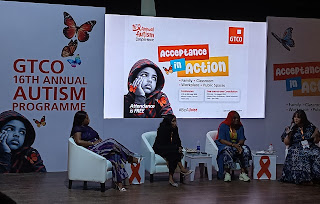
Experts have called for greater inclusion, early communication support and meaningful employment opportunities for people on the autism spectrum, while urging parents and caregivers to better understand and develop their children’s individual abilities.
The call was made at the 16th GTCO Autism Conference, themed “Acceptance in Action,” held at the Muson Centre, Lagos, where autism experts, behavioural analysts, speech pathologists, educators, parents, caregivers and advocates gathered to discuss practical approaches to supporting people living with autism.
Speaking, Tomi Agboola Odeleye
Speech Pathologist advocated the early use of Augmentative and Alternative Communication (AAC) tools for non-verbal children on the autism spectrum.
In her presentation, titled “AAC and Non-Verbal Children: The Case for Early Communication Tools for Non-Verbal Children on the Spectrum,” Odeleye explained that early access to communication tools could help non-verbal children express their needs, interact with others and improve their quality of life.
She demonstrated how the tools could be used by parents, caregivers and schools, adding that families and educational institutions could invest in appropriate AAC resources or improvise simple communication aids to support children.
President and Chief Executive Officer of Behaviourprise Consulting Inc.Lanre Duyile, a Board Certified Behaviour Analyst, speaking during a session titled “Behaviour Speaks. Listen, Understand It,”

He urged parents and teachers to observe, document and understand children’s behaviour before responding to it.
Duyile advised caregivers to keep records of the date and time a behaviour occurs, as well as what happened before and after it. According to him, documenting the antecedents and consequences of behaviour can help parents and therapists identify patterns, possible triggers and appropriate intervention strategies.
He encouraged families to discuss their observations with qualified therapists to develop practical and individualised solutions suited to each child’s needs.
Duyile said caregivers often find themselves in a “land between” challenges and progress, stressing the importance of looking beyond the behaviour itself to understand what a child may be communicating.
He urged parents and teachers to ask why a behaviour is occurring rather than simply reacting to it, noting that understanding the reason behind a behaviour could lead to better developmental outcomes.
International Behaviour Analyst, autism advocate and parent, Solape Azazi, spoke on “Practical Caregiver Strategies for Communication, Regulation and Daily Routine.” She shared practical approaches for establishing structured routines, improving communication and supporting emotional regulation among children with autism.
Speaking to Adaoma Nnabeze, a participant disclosed that she and his brother Wisdom
were attending the conference for the first time.
She also disclosed that Wisdom’s parents discovered his autism-related traits about two years ago. She said the both of them have planned to attend the second day of the conference and visit Ikeja the following week for a free check-up and treatment programme for her brother.
According to her, Wisdom is currently out of school following difficult experiences in the classroom. She also disclosed that he has an exceptional ability to imitate the voices of animated characters.
During the interaction, Wisdom revealed that while he could draw simple shapes such as circles and squares, he struggled to draw human figures. He, however, demonstrated an interest in music, singing, animation, video games and gadgets, as well as constructing objects from random materials.
Responding to the family, the behavioural expert advised them to focus on Wisdom’s strengths and interests instead of concentrating only on his limitations.
He suggested that areas such as technology, animation, video editing, digital creativity and hands-on construction could provide useful avenues for learning, self-expression and future development.
The expert noted that some autistic individuals possess significant abilities that may not always be recognised within conventional educational settings, stressing the need for individualised learning approaches.
The session reinforced the importance of creating opportunities that allow children on the spectrum to develop their interests, gain confidence and prepare for greater independence.
An early childhood teacher from a private school, Mrs Niniola Oriyemi, who attended the conference for the first time, said she had gained fresh knowledge about autism and other developmental conditions.
Oriyemi said although she already had some knowledge through her work in a private school and had received relevant training, the conference had broadened her understanding and strengthened her appreciation of the need for compassion and appropriate support for children with autism and other disabilities.
Earlier, the Group Chief Executive Officer of Guaranty Trust Holding Company Plc (GTCO), Mr. Segun Agbaje, reaffirmed the Group’s commitment to advancing autism awareness, promoting inclusion and expanding access to developmental support, professional guidance and learning opportunities for individuals on the autism spectrum and their families.
The breakfast conference also lunch, featured six expert-led sessions covering autism acceptance, communication, behaviour management, caregiving, family support and employment opportunities.
In the opening expert session, Dr. Bernadette Kilo, a specialist in Autism Spectrum Disorder, spoke on “Bridging the Gap Between Today’s Reality and Tomorrow’s Promise for Autism Acceptance,” emphasising greater societal acceptance, early intervention and collaboration in improving outcomes for autistic individuals.
The conference also featured a panel discussion involving Whitney Hammel, Anny and other Board Certified Behaviour Analysts, who shared perspectives on evidence-based interventions and multidisciplinary collaboration in autism care.
Another session, moderated by Lola Dada Oliey, featured Eziafakaku Nwokolo, a Board Certified and Qualified Behaviour Analyst, who spoke on “Transitioning and Creating Employment Pathways for Adults on the Spectrum.”
The session examined ways of supporting autistic adults through vocational preparation, independent living and meaningful employment.
The final session, “Autism and Family Systems – Parents/Carers,” featured Camille Proctor, parent and autism advocate; Osezusi Bolodeoku; Damilola Coker, International Behaviour Analyst and autism advocate; and Cinzia Adanna Ebonine, a Special Educational Needs specialist and parent.
The panel examined the experiences of families raising children with autism and discussed practical strategies for strengthening caregivers and improving support for individuals on the spectrum.
The conference reinforced the need to move beyond autism awareness to practical action by giving families, professionals, schools and communities the knowledge and tools required to promote acceptance, communication, inclusion and opportunities for meaningful participation in society.

