 Follow Us on Google News



 Follow Us on Google Discover
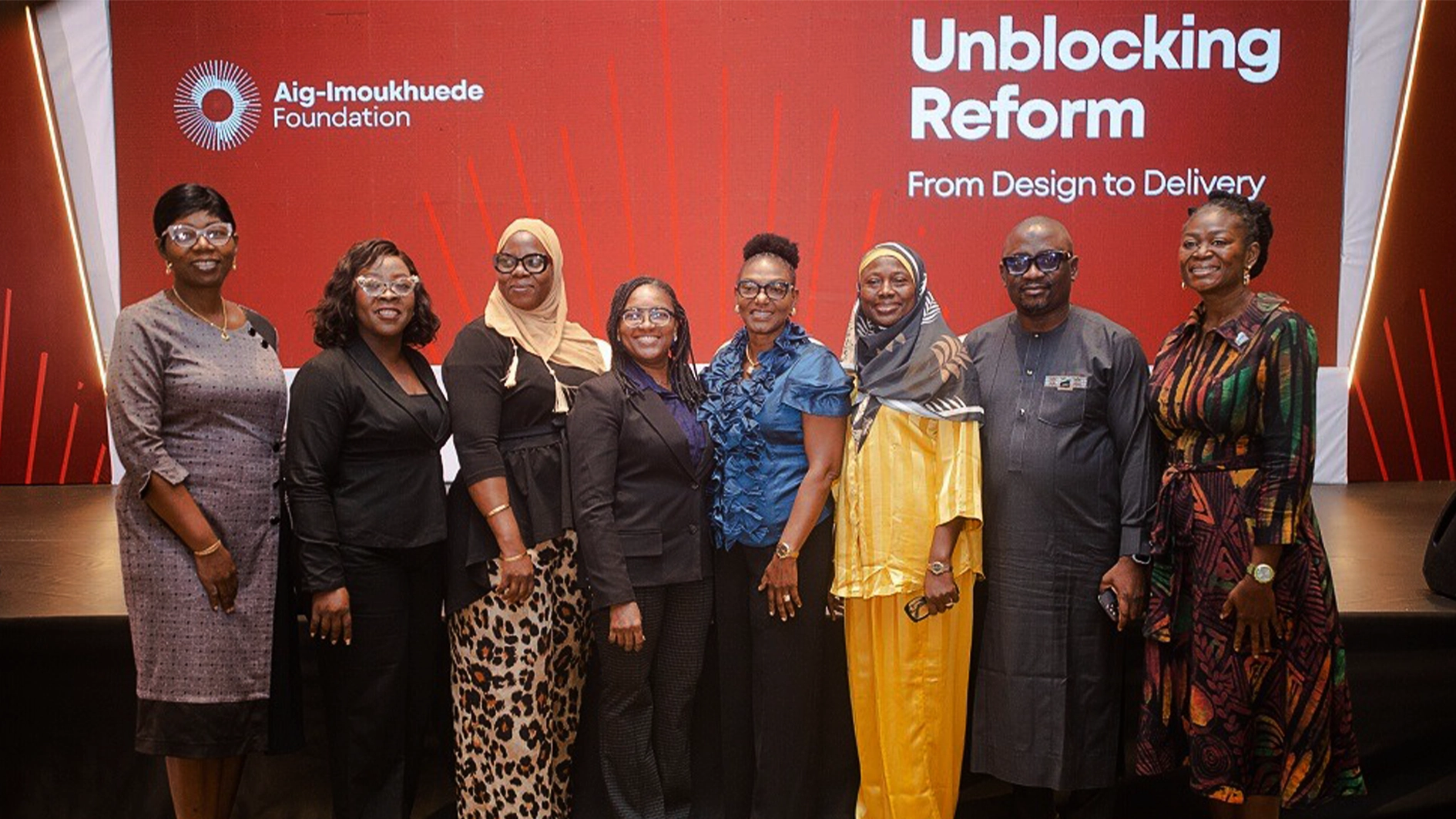
Public sector reform leaders have warned that policies and institutional changes may fail to deliver meaningful results without effective stakeholder engagement, adequate resources, institutional collaboration and sustained accountability.
They made the observation at the 2026 Public Sector Reform Convening organised by the Aig-Imoukhuede Foundation in Lagos.
At the event, government officials, public sector leaders, alumni and other reform stakeholders examined the challenges of translating policy decisions into tangible outcomes for citizens.
The event was themed “Unblocking Reform: From Design to Delivery,” and focused on the factors that determine whether reforms move beyond policy documents to achieve their intended objectives.
Discussions centred on the need to understand institutional realities, secure the support of people affected by changes, improve communication and build coalitions capable of sustaining reforms beyond their initial implementation.
Speaking at the event, the Executive Vice Chair of the Aig-Imoukhuede Foundation, Ofovwe Aig-Imoukhuede, said successful reform leadership required more than developing sound policies, stressing that leaders must understand the environments in which reforms were expected to operate.

She said resistance to reforms should not automatically be interpreted as unwillingness to embrace change, noting that objections could arise from institutional circumstances and the concerns of those expected to implement or experience the changes.
“This is not to suggest that every objection to reform is unreasonable or that resistance can simply be overcome through better communication.
“Rather, effective reform leadership requires an understanding of institutional contexts, a willingness to listen to those affected and a deliberate effort to build the support necessary for implementation,” she said.
Aig-Imoukhuede’s position reflected the central concern of the convening: that the success of public sector reforms depends not only on the quality of their design but also on the ability of leaders to build the institutional support and cooperation required to implement them.
The foundation said the gathering drew on an analysis of reform projects undertaken by members of its alumni network.
The analysis identified stakeholder engagement, communication, organisational culture and collaboration as important factors influencing implementation outcomes.
The findings informed discussions on how reform leaders could address institutional resistance, improve cooperation among stakeholders and develop practical approaches to ensuring that policy changes produce measurable benefits.
The Lagos State Head of Service, Olabode Shuageeb Agoro, who delivered the keynote address, also highlighted the underlying capacity and resource challenges that could undermine reform initiatives.
He said resistance to change might stem from inadequate skills, insufficient resources or a lack of understanding of the objectives of a proposed reform, rather than a deliberate attempt to frustrate government policies.
According to him, repeatedly issuing instructions without addressing these underlying challenges would not necessarily improve implementation.
“A capacity gap cannot be resolved by repeating an instruction. Leaders must communicate the purpose of reforms, align institutions around their objectives, provide the resources and capabilities required for implementation, and ensure that accountability continues long after implementation,” Agoro said.
He stressed that public servants were more likely to support institutional changes when they understood their purpose and felt that their contributions mattered.
“People always feel better if they are carried along. Nobody wants to feel that they don’t matter. So it is always important to engage at all levels,” he added.
The convening also featured a panel discussion titled, “Advancing Reform: Building Buy-In and Coalitions,” which examined ways to secure stakeholder support and strengthen collaboration among those responsible for implementing public sector changes.
An in-conversation session with experienced reform leaders provided another platform for discussing the practical difficulties of sustaining institutional changes and maintaining momentum after policies have been introduced.
Participants took part in an interactive Reform Reality Check and a Reform Solutions Lab, working in multidisciplinary groups to develop practical approaches to organisational support, stakeholder engagement and collaborative action.
The exercises were designed to help participants examine reform challenges within their respective institutions and identify solutions that could be adapted to their own working environments.
The foundation said the convening formed part of its broader efforts to position its alumni network as a platform for peer learning, strategic dialogue and collaboration among public sector reform leaders across Africa.

