 Follow Us on Google News



 Follow Us on Google Discover
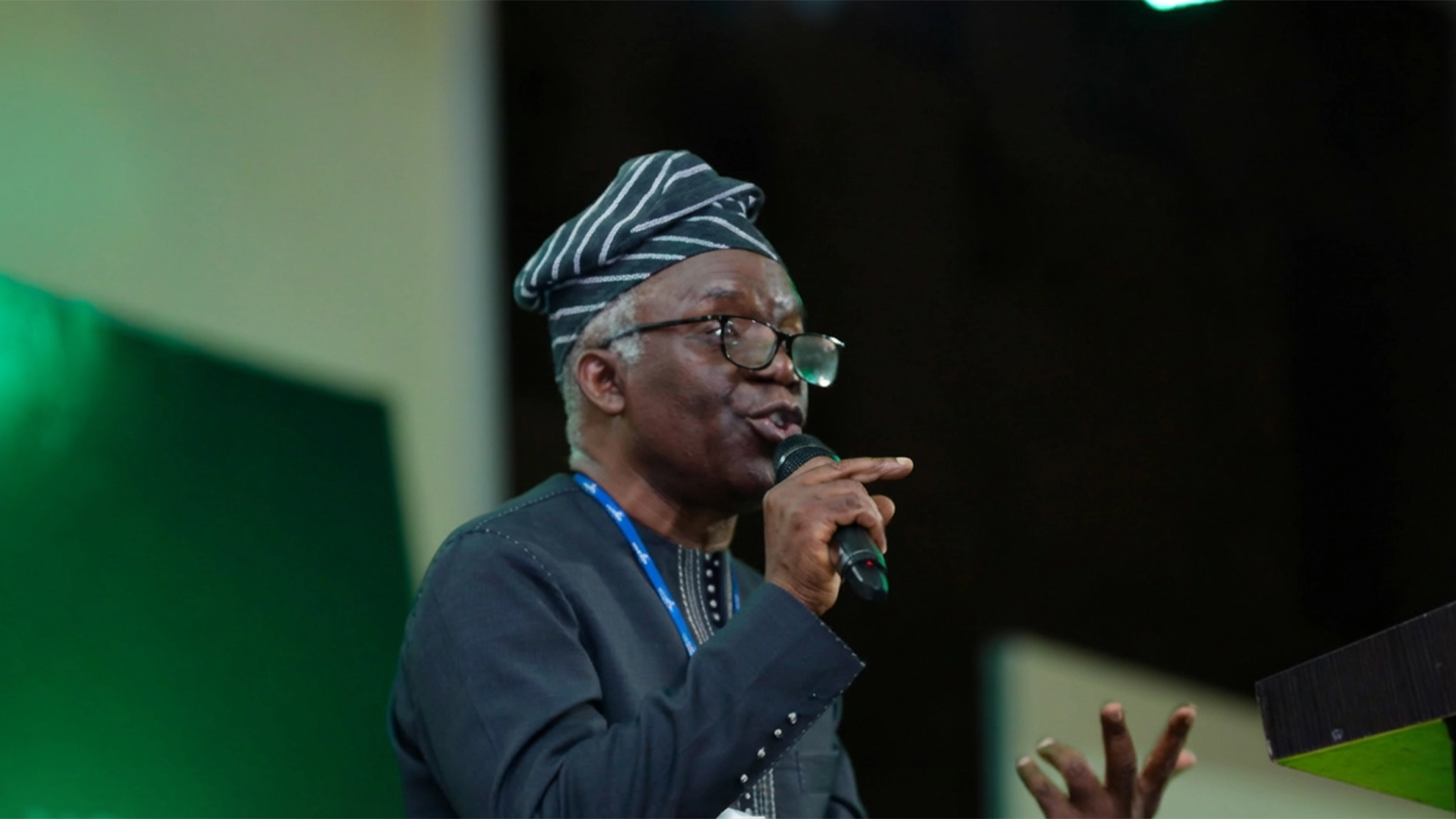
Human rights lawyer Femi Falana (SAN) has urged African countries to rally behind Cuba against economic sanctions imposed by the United States, saying the Caribbean nation made enormous sacrifices towards Africa’s liberation from colonialism and apartheid.
Falana said African countries owed Cuba a moral and historical obligation to defend its sovereignty and right to self-determination, recalling the country’s military, medical and educational assistance to African nations during their struggles for independence and development.
He spoke at a rally organised by the Nigeria Solidarity Movement with Cuba in Lagos, where he called on African Union member states to oppose the United States’ economic blockade against Cuba at the United Nations.
Falana urged African countries to vote against the sanctions and embargo during the UN deliberations scheduled for October 27 and 28, 2026, arguing that the measures had inflicted severe hardship on the Cuban people and undermined their fundamental rights.
He also called on the United States Congress to ensure compliance with what he described as a Supreme Court judgment invalidating tariffs imposed by President Donald Trump under the International Emergency Economic Powers Act.
Tracing Cuba’s historical relationship with Africa, Falana said the country’s solidarity with the continent became a cornerstone of its foreign policy following the 1959 Cuban Revolution led by Fidel Castro.

He said Cuba subsequently supported anti-colonial movements and progressive governments across Africa, beginning with its military mission to Ghana under Kwame Nkrumah in 1961 and assistance to Algeria following its independence in 1962.
Falana also recalled the 1964 visit of Cuban revolutionary Ernesto Che Guevara to liberation movements in Portuguese-controlled African territories and his subsequent involvement in the Democratic Republic of the Congo.
According to him, Cuba’s support for liberation struggles extended to Guinea-Bissau, Mozambique and Angola, where Cuban military advisers, fighters and equipment assisted movements fighting colonialism and apartheid.
He said thousands of Cuban troops were deployed to Angola to support the People’s Movement for the Liberation of Angola against South African apartheid forces and rival armed groups backed by Western governments.
Falana noted that at least 55,000 Cuban troops participated in the Battle of Cuito Cuanavale between 1987 and 1988, describing the confrontation as a turning point in the struggle against apartheid.
He said South Africa’s military setbacks helped compel the apartheid regime to enter political negotiations that contributed to Namibia’s independence in 1990 and the eventual end of apartheid rule in South Africa in 1994.
The senior advocate said Cuba’s commitment to Africa was rooted partly in its historical and cultural connections with the continent, citing Castro’s declaration that African blood flowed through the veins of Cubans because many of their ancestors had been taken to the Caribbean as enslaved people.
Falana said Cuba’s contribution to Africa extended beyond military assistance to healthcare, education and development.
He recalled that during the 2014–2015 Ebola outbreak in West Africa, Cuba deployed more than 460 health workers to help combat the disease in Sierra Leone, Liberia and Guinea, including a contingent of 165 personnel through the World Health Organisation.
He also said Cuba sent medical personnel to several African countries during the COVID-19 pandemic in 2020, including South Africa, Angola, Cape Verde and Togo.
According to Falana, Cuba has collaborated with African countries on malaria and dengue control programmes, including the establishment of biolarvicide factories, training of community health workers and development of primary healthcare systems in rural areas.
He added that Cuba continued to offer scholarships and other educational opportunities to African students despite the economic difficulties it experienced following the dissolution of the Soviet Union in 1991 and the longstanding United States embargo.
Falana said African countries should recognise t these contributions and support Cuba against what he described as attempts by Washington to undermine its sovereignty and force a change of government.
Turning to the United States’ sanctions, he described the economic blockade imposed on Cuba since 1962 as illegal and inconsistent with the principles of the United Nations Charter, which recognises the sovereignty and political independence of states.
He argued that the restrictions had worsened Cuba’s economic difficulties, particularly following additional measures targeting oil supplies, and had contributed to fuel shortages, power outages and rising prices of food, medicine and transportation.
Falana also condemned the inclusion of Cuba on the United States’ list of state sponsors of terrorism, demanding that Washington remove the country from the list.
He alleged that the sanctions were intended to weaken the Cuban government and bring about regime change, adding that threats to force the Cuban people to adopt a different political and economic system violated their right to self-determination.
The lawyer further criticised remarks he attributed to United States Secretary of State Marco Rubio concerning a possible partnership with the Central Intelligence Agency to overthrow the Cuban government.
On the legal basis for the sanctions and proposed tariffs, Falana cited the United States Supreme Court decision in Learning Resources, Inc. et al. v. Trump, President of the United States, et al., No. 24-1287, which he said was delivered on February 20, 2026.
VvHe argued that the decision established that the International Emergency Economic Powers Act did not authorise the president to impose tariffs, a power he said belonged to Congress under the United States Constitution.
Falana maintained that the ruling had implications for measures taken by the Trump administration to impose tariffs on countries exporting oil to Cuba.
He urged the United States Congress to ensure that the court’s decision was respected and called for the lifting of sanctions that he said had contributed to the humanitarian difficulties facing Cuba.
Falana also appealed to the international community to support Cuba’s right to determine its political future without external coercion.
He said the United Nations should take action against the United States if it continued to maintain the embargo in defiance of international resolutions calling for its removal.
Reiterating his appeal to African governments, Falana said Cuba had sacrificed the lives of thousands of its citizens in conflicts on the continent, with at least 4,300 Cubans reportedly dying in African conflicts, including approximately half in Angola.
He argued that the sacrifices demonstrated the depth of Cuba’s commitment to African liberation and strengthened the case for reciprocal solidarity.
“Having regard to the unquantified contribution of Cuba to the independence struggle of the African people, all African countries owe it a duty to assist Cuba to defend its sovereignty under international law,” he said.
Falana urged African Union member states to use their diplomatic influence to oppose the embargo and support Cuba’s right to sovereignty and self-determination.
He maintained that Africa should not abandon a country that stood alongside its liberation movements, provided medical assistance during health emergencies and supported the education of African students despite its own economic challenges.

