

 Get Guardian on Google
…Enoh says effective project execution is critical to industrial growth
…Government moves to convert $40bn investment pledges into factories
The Federal Government has identified professional project management as a critical missing link in Nigeria’s drive towards a $1 trillion economy by 2030, warning that ambitious industrial policies and investment commitments will amount to little without effective execution.
The Minister of State for Industry, Trade and Investment, Senator John Owan Enoh, said Nigeria must strengthen project planning, monitoring and delivery to achieve meaningful industrial transformation and translate government policies into tangible economic outcomes.
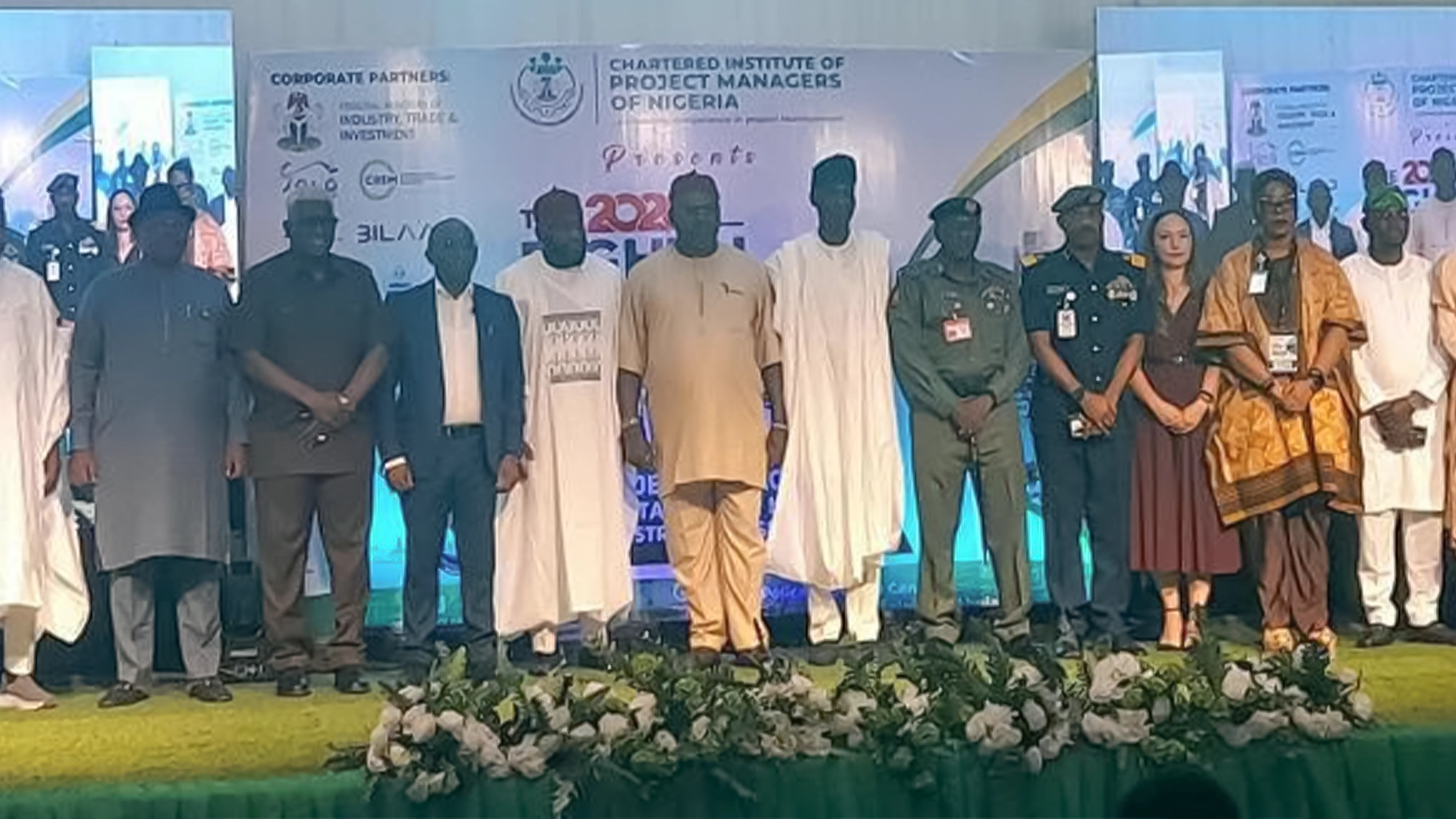
Enoh spoke on Thursday at the 2026 International Project Management Day and Induction Ceremony of the Chartered Institute of Project Managers of Nigeria (CIPMN) in Abuja.
Represented by the Deputy Director of ICT in the ministry, Engr. Chikezie Onwe, the minister described the event’s theme, “Project Management: A Catalyst for Nigeria’s Industrial Transformation,” as timely, stressing that professional project management must occupy a central position in the country’s development strategy.
He said the administration of President Bola Tinubu had set an ambitious target of growing Nigeria’s economy to $1 trillion by 2030, but achieving that objective would require disciplined implementation of policies, effective coordination and accountability in project delivery.
According to him, the Ministry of Industry, Trade and Investment is pursuing a four-pillar strategy centred on expanding global and regional demand, strengthening domestic production of exportable goods and services, improving investment coordination through policy coherence and execution, and deploying data, digital infrastructure and strategic communication.
Enoh said the government’s industrial priorities for 2026 include rebuilding the manufacturing sector, reducing dependence on crude oil exports and accelerating economic diversification.
He identified agro-processing, manufacturing, solid minerals, textiles and garments as priority sectors, adding that the government was working to transform more than $40 billion in investment commitments into functioning factories, industrial clusters and special economic zones.
The minister maintained that professional project managers would be essential to ensuring that investments deliver measurable results rather than remain on paper.
Also speaking, the Registrar-General and Chief Executive Officer of CIPMN, Mr Henry Mbadiwe, said the institute was still developing its institutional capacity, despite its establishment as the regulatory body for project management professionals in Nigeria.
Mbadiwe explained that the institute, which had been operational for barely three years, was simultaneously building its administrative structures, licensing practitioners and developing the knowledge framework required for professional training.
He said the institute’s responsibility extended beyond Abuja, with plans to establish a stronger presence across the country’s six geopolitical zones from next year.
Mbadiwe noted that building a credible professional regulatory framework would require sustained efforts to establish standards, develop training models and ensure that practitioners possess the necessary competencies.
In his remarks, the Permanent Secretary, Federal Ministry of Special Duties and Intergovernmental Affairs, Dr Onwusoro Ihemelendu, said standardisation and certification of project managers could help address Nigeria’s persistent problem of abandoned projects, waste of public resources and corruption.
He said effective project management would improve accountability, ensure value for money and contribute to national economic development.
Ihemelendu added that President Tinubu had approved the institute and empowered it to discharge its regulatory responsibilities.
Addressing the newly inducted members, he urged them to embrace integrity, professionalism and accountability, stressing that their responsibilities went beyond acquiring certificates.
He challenged them to promote a culture of delivering projects properly, on schedule and in the national interest.
The event highlighted the growing recognition that Nigeria’s development challenge is not merely a question of announcing ambitious projects or securing investment commitments, but ensuring that available resources are translated into completed infrastructure, productive industries and sustainable economic growth.








