 Follow Us on Google News
 Follow Us on Google Discover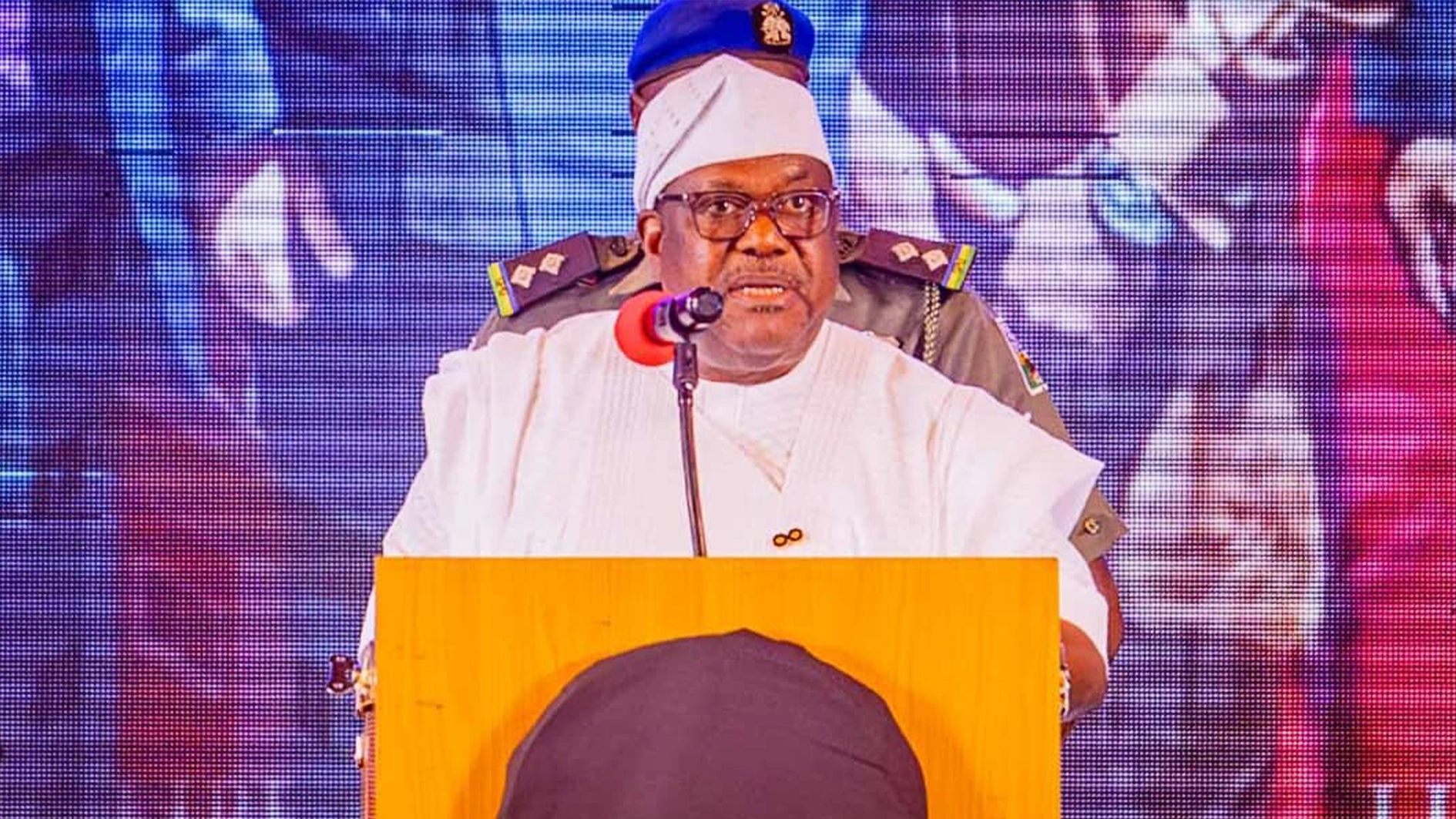
…Akume: We must turn reforms into opportunities for Nigerians
The Federal Government has announced a shift in its economic agenda from the implementation of major reforms to consolidating their gains and translating them into jobs, investment, increased production and improved living standards for Nigerians.
Secretary to the Government of the Federation (SGF), Senator George Akume, disclosed this Thursday in Abuja at a World Press Conference marking the commencement of activities for Nigeria’s 66th Independence Anniversary.
Akume, who is Chairman of the Inter-Ministerial Committee for the anniversary, said the theme of the celebration, “From Reforms to Stability: Consolidating Nigeria’s Renewed Hope for Shared Prosperity,” reflected the government’s determination to ensure that the sacrifices associated with its economic reforms ultimately produce measurable benefits for citizens.
He said the next phase of the administration’s economic programme would require sustained implementation, investment and institutional strengthening to convert the gains of reform into broader economic opportunities.
“The task before us today, as leaders and citizens, is consolidation. We must ensure that the gains from reform translate into better opportunities for ordinary Nigerians,” Akume said.

The SGF said the administration had, since 2023, undertaken structural reforms aimed at repositioning the economy, including the removal of the fuel subsidy regime, unification of the foreign exchange market and measures to strengthen fiscal and monetary management.
According to him, the reforms were necessary to restore fiscal balance, improve economic stability, attract investment and lay the foundation for sustainable growth.
He said government was now concentrating on mobilising more revenue, strengthening public finances, expanding non-oil revenue collection and attracting fresh investments to create the fiscal space needed to finance development.
Akume identified infrastructure as one of the major pillars of the consolidation strategy, citing ongoing investments in roads, railways, airports, seaports, electricity generation and transmission, as well as digital infrastructure.
He said the objective was not merely to expand physical infrastructure but to reduce the cost of doing business, connect farmers and producers to markets, facilitate industrial activity and unlock private-sector investment.
The SGF said agriculture would remain central to the government’s drive to expand production and create economic opportunities, with interventions covering improved seeds, fertiliser, irrigation, storage and processing.
He said initiatives such as the National Agricultural Development Fund were designed to strengthen agricultural production and accelerate the development of agro-industrial value chains.
On human capital, Akume said the government was expanding access to education while improving the quality of schools and teachers.
He specifically cited the Nigerian Education Loan Fund as an intervention designed to enable more young Nigerians to gain access to tertiary education and acquire skills needed for the changing economy.
The SGF also linked economic prosperity to improved security, saying government would continue to protect lives and property while intensifying the fight against terrorism, banditry, kidnapping, oil theft and other security threats.
He said security agencies were being supported with improved intelligence capabilities, equipment and stronger coordination among the military, police, other security agencies and local communities.
Akume said the government was also seeking to make the benefits of economic growth more visible at the grassroots through the Renewed Hope Ward Development Programme.
According to him, the programme provides support for small-scale projects in agriculture, trade, mining and other sectors, allowing communities to participate more directly in economic development.
He said the government’s medium-term priorities were encapsulated in the Renewed Hope National Development Plan 2026–2030, which places productivity, diversification, human capital development and resilience at the centre of Nigeria’s development strategy.
Akume acknowledged that, despite progress recorded since independence in areas including economic diversification, education and human capital development, the country still faced significant challenges, particularly poverty, insecurity, infrastructure deficits and gaps in healthcare and education.
He therefore called for sustained commitment from government and citizens to building stronger institutions, productive infrastructure and an economy capable of providing wider opportunities.
“From reforms, we have built stability. From stability, let us now deepen growth and opportunity. And from growth, let us extend shared prosperity to every corner of Nigeria,” he said.
Minister of Information and National Orientation, Mohammed Idris, said the country was moving from reform and stabilisation towards growth, production and shared prosperity.
Idris, who is Chairman of the Media and Publicity Sub-Committee for the anniversary, said recent developments in the economy, including stronger GDP growth, an improved external position, increased domestic refining capacity and renewed investment, provided a basis for the next phase of the government’s agenda.
He, however, said the ultimate test was whether these developments would translate into tangible improvements in the daily lives of Nigerians.
“The next phase is to translate these gains into tangible improvements in the lives of Nigerians: more jobs, higher incomes, greater access to education and credit, lower costs and wider economic opportunities,” he said.
The minister said the Renewed Hope Agenda was pursuing these objectives through investments in infrastructure, agriculture, education, consumer credit, digital skills, energy and enterprise.
He said student loans were widening access to tertiary education, consumer credit was expanding economic opportunities, while major highway projects were connecting communities and markets.
Idris added that reforms in agriculture, livestock, solid minerals, oil and gas were increasingly being directed towards production and local value addition.
He also announced the programme of activities for the 66th Independence Anniversary.
The celebrations will begin with a Juma’at Service on Friday, September 25, followed by a Church Service on Sunday, September 27.
An Independence Day Public Lecture is scheduled for Wednesday, September 30, while President Bola Tinubu is expected to deliver the nationwide Independence Day broadcast on Thursday, October 1, 2026.

