 Follow Us on Google News


 Follow Us on Google Discover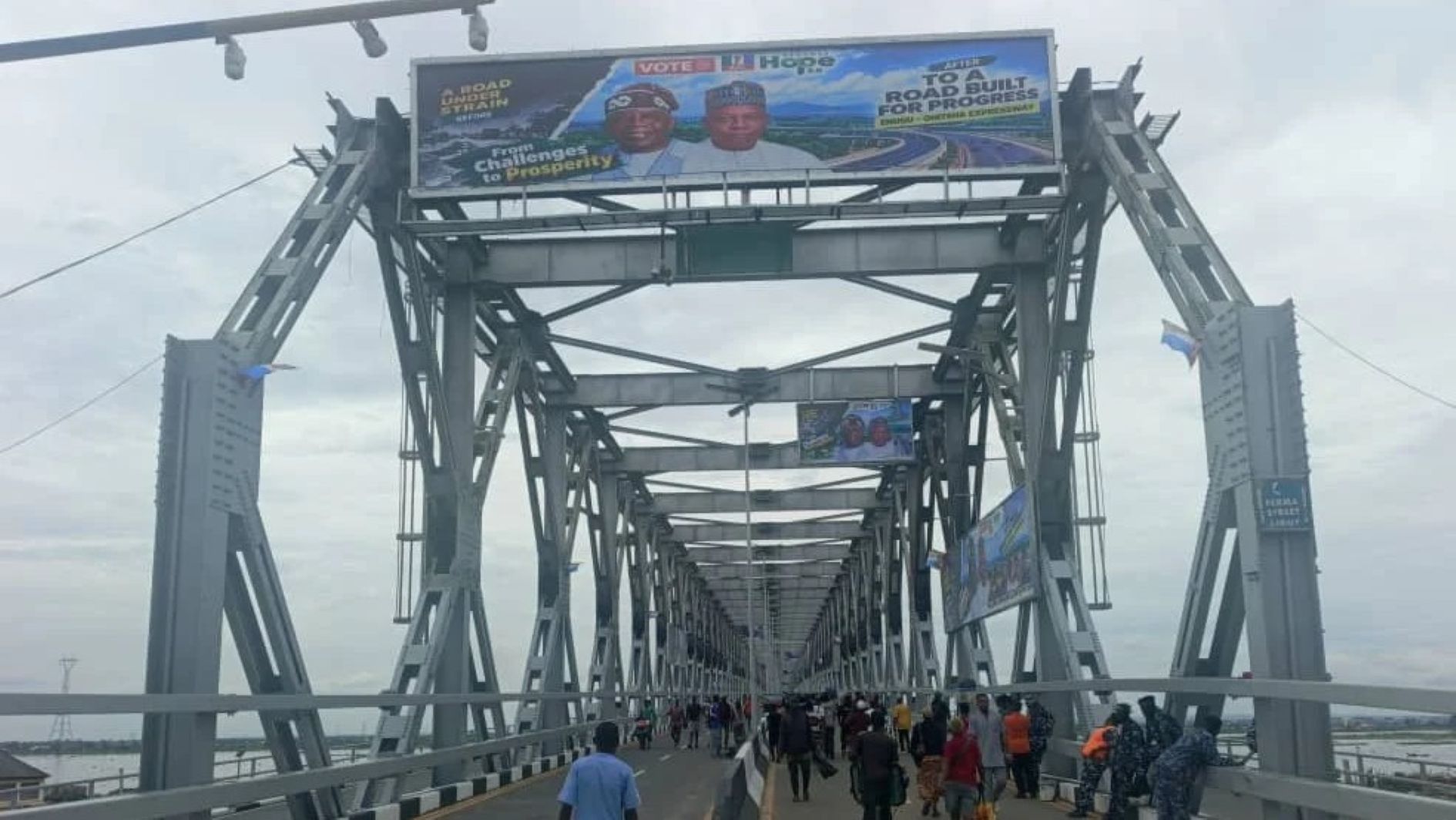
Warns against sand dredging around structure
The Federal Government has reopened the First Niger Bridge linking Asaba, Delta State, and Onitsha, Anambra State, following extensive rehabilitation works aimed at improving structural safety, strengthening security and restoring seamless vehicular movement between Nigeria’s South-South and South-East geopolitical zones.
The rehabilitation included the installation of solar-powered streetlights and Closed-Circuit Television (CCTV) cameras, improvements to the road surface, the installation of median barriers and the creation of three designated turnaround points to facilitate traffic management during emergencies and vehicle breakdowns.
The Minister of Works, David Umahi, who announced the reopening during a ceremony in Onitsha yesterday, said the intervention was part of President Bola Tinubu’s commitment to maintaining critical national infrastructure and improving transportation across the country.
Umahi explained that the rehabilitation became necessary following reports of structural concerns, including the alleged removal of bolts from the bridge’s steel components, inadequate maintenance and activities capable of undermining its structural integrity.
He stressed that the bridge, which serves as a critical transportation link between the South-South and South-East, required continuous maintenance and effective security measures to protect its structural integrity and extend its lifespan.

The minister disclosed that security observation centres were being established at both ends of the bridge to enable continuous monitoring of activities on and beneath the structure.
According to him, the measures would help authorities monitor activities around the bridge, prevent practices that could compromise its safety and ensure that motorists and other road users enjoy safer passage.
He noted that the age of the bridge made it particularly important to guard against excessive loading, traffic congestion and other activities capable of weakening its structural components.
Umahi also raised concerns over alleged indiscriminate sand dredging around the First Niger Bridge, warning that such activities could threaten the stability of the structure.
He reiterated that Federal Government regulations prohibit sand dredging within a 10-kilometre radius of federal bridges, stressing that strict compliance was necessary to protect the foundations of critical infrastructure.
The minister consequently directed relevant federal officials in Delta and Anambra states to ensure the immediate enforcement of the restriction. He warned that disciplinary measures would be taken against officials who failed to act on the directive, underscoring the need for stronger regulatory oversight to prevent activities that could endanger the bridge.
The directive comes amid renewed attention to the protection of major bridges and other public infrastructure, particularly those serving as vital economic corridors connecting different parts of the country.
In a related development, the Minister of Works disclosed that President Bola Tinubu has directed a comprehensive redesign of the Benin-Asaba Expressway ahead of its reconstruction, in response to the deteriorating condition of the highway and persistent complaints by motorists.
Umahi said the Federal Government had cancelled an ongoing remedial contract covering the first 11 kilometres of the Benin-Asaba road because of dissatisfaction with the quality of work.
He explained that the decision was intended to ensure that the proposed intervention addressed the underlying problems affecting the highway rather than provide temporary relief that might not endure.
He maintained that the Federal Government was committed to delivering durable road infrastructure capable of supporting economic activities and improving connectivity across the Niger Delta and other regions.
Umahi further announced plans to reconstruct approximately 400 kilometres of the East-West Road, describing the project as a major component of the Federal Government’s broader infrastructure development programme.

