
 Get Guardian on Google
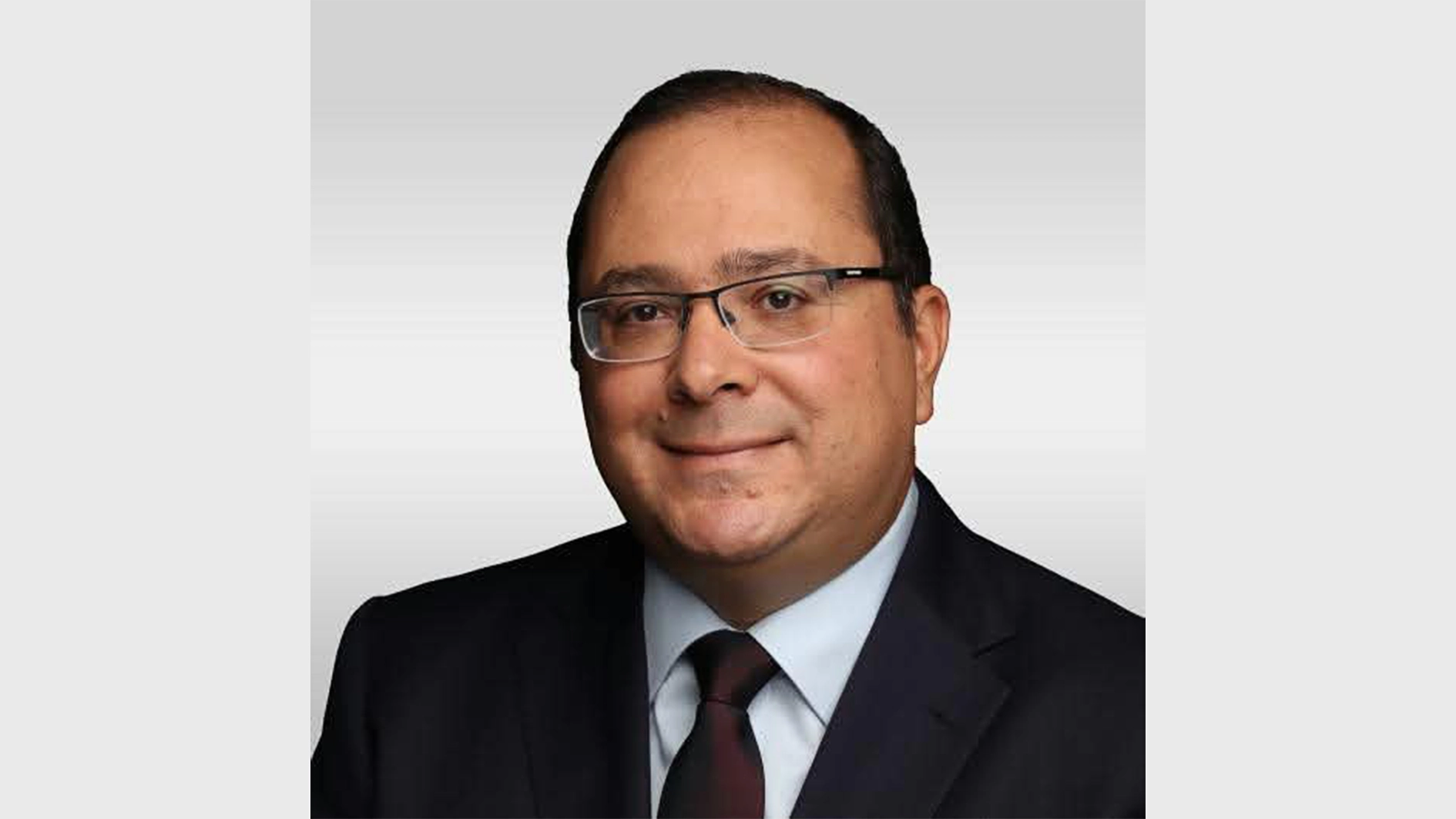
Nearly twenty years before Helmy Ghazi was appointed President of Africa Energy Bank, he was already confronting a question that would eventually become central to the institution’s existence: how should African countries finance the development of their own energy resources?
It was June 2007. Ghazi was Head of Oil and Gas at HSBC Bank Egypt, operating in an industry where access to capital could determine whether promising gas discoveries became producing fields, refineries advanced beyond the drawing board or critical infrastructure attracted the investment necessary for construction.
In an interview with Egypt Oil & Gas, he discussed the sophisticated financing arrangements supporting Egypt’s petroleum industry. HSBC had participated in financing liquefied natural gas facilities, fertiliser production and gas distribution infrastructure, while developing financing instruments that enabled companies to raise capital against future production and reserves.
The underlying principle was straightforward: possessing natural resources was not enough. Developing them required substantial capital, careful risk assessment, commercially viable projects and financing arrangements capable of accommodating long investment horizons.
Almost two decades later, that understanding has acquired continental significance.
On October 31, 2026, at the inaugural general meeting of Africa Energy Bank in Abuja, representatives of the African Export-Import Bank (Afreximbank) and the African Petroleum Producers’ Organisation (APPO) formally established the institution and appointed Ghazi its first president.

For the Egyptian banker, the appointment marked a significant professional transition. Having spent much of his career within one of the world’s major international banking groups, he now assumes responsibility for helping build an African institution dedicated to mobilising capital for the continent’s energy development.
His assignment extends beyond conventional bank management. He must establish institutional credibility, attract investors, develop financing partnerships and translate an ambitious continental vision into a functioning financial institution.
A Career Built Around Capital
Ghazi brings more than 25 years of corporate and investment banking experience, with substantial exposure to energy, infrastructure and industrial financing across Egypt and the wider Middle East and North Africa region.
Before his appointment, he served as Deputy Chief Executive Officer and Head of Global Banking at HSBC Egypt, overseeing relationships with major multinational corporations, domestic businesses, financial institutions and government-related clients.
He holds a Bachelor of Commerce degree in Foreign Trade and is a Chartered Financial Analyst (CFA) charterholder.
But the strongest evidence of his suitability lies in the transactions that shaped his professional career.
Energy financing is among banking’s most demanding disciplines. Large projects require enormous upfront investment, intricate contractual arrangements, comprehensive risk assessment and repayment periods extending over many years.
Financiers must evaluate not only the assets being developed but also the regulatory environment, commercial prospects, contractual obligations and financial strength of participating companies.
Ghazi’s experience spans these considerations.
In his 2007 interview, he described HSBC Egypt’s involvement across the hydrocarbon value chain, including exploration, production, refining, gas transportation, liquefied natural gas and petrochemicals.
Projects associated with the bank’s financing activities included Egyptian LNG facilities, the Egyptian Fertilizers Company, the Egypt Basic Industries Corporation and the Fayum natural gas distribution network. HSBC also provided advisory services for the Egyptian Methanex Methanol Company project at Damietta.
These transactions reflected the wider industrial possibilities of energy development. Natural gas could support fertiliser production, petrochemicals and manufacturing, provided investors could assemble suitable financing structures.
Ghazi also discussed pre-export finance and reserve-based lending, mechanisms through which lenders assess future production and anticipated revenues when structuring transactions.
Such expertise is particularly relevant to Africa Energy Bank.
Across the continent, commercially promising projects frequently struggle to obtain financing despite possessing significant resource potential or identifiable markets. Refineries, pipelines and gas-processing facilities can remain undeveloped because sponsors cannot assemble sufficient equity, long-term debt or acceptable risk-sharing arrangements.
Resolving these difficulties requires more than political commitment. It demands financial structuring, credible counterparties and disciplined execution.
During his HSBC career, Ghazi also originated and executed advisory and structured financing transactions, while contributing to the bank’s sustainability strategy in Egypt.
The combination of commercial banking, energy-sector knowledge and sustainability experience provides a useful foundation for his new responsibilities.
From International Banking to African Institution-Building
Africa Energy Bank emerged from growing concerns about the availability of international financing for African oil and gas projects.
As some global financial institutions reduced their exposure to fossil fuels, petroleum-producing countries became increasingly concerned about the consequences for investment, infrastructure and industrial development.
Afreximbank and APPO responded by developing a specialised African financial institution intended to support energy projects across exploration, production, transportation, processing, refining and distribution.
Following negotiations, the founding partners signed the bank’s Establishment Agreement and Charter in Cairo in June 2024. Nigeria subsequently secured the right to host its headquarters in Abuja.
The institution was formally established on October 31, 2026, with authorised capital of $5 billion.
That figure represents its approved capital framework, not an equivalent amount immediately available for lending. Mobilising paid-in capital and attracting additional investment will therefore be among the new management’s immediate priorities.
For Ghazi, the transition from HSBC is profound.
Within an established international bank, he operated with mature systems, extensive client relationships and recognised financial procedures.
At Africa Energy Bank, he must help develop those institutional foundations.
The bank requires governance structures, professional teams, credit procedures, risk-management systems and financing partnerships capable of satisfying shareholders and prospective investors.
It must also establish a reputation for commercial independence while pursuing the development objectives of its founding institutions.
Ghazi’s appointment provides relevant professional experience, but the institution’s credibility will ultimately depend on the quality of its decisions and the effectiveness of its operations.
The $200 Billion Challenge
The scale of Africa’s energy financing requirements places the new bank’s responsibilities in perspective.
The International Energy Agency has estimated that Africa requires more than $200 billion annually through 2030 to meet its energy and climate-related investment objectives.
Against those requirements, Africa Energy Bank’s $5 billion authorised capital appears modest.
Yet development-finance institutions are not necessarily expected to meet investment requirements entirely from their own balance sheets.
Their value can lie in mobilising additional capital, attracting co-investors, sharing project risks and helping commercially viable developments reach financial close.
For Ghazi, the challenge will be to make the institution’s resources work beyond their initial scale.
How can AEB attract international and African investors while retaining its continental development focus? How should it balance financing established producers with supporting emerging indigenous companies? And how can it promote African ownership without weakening the commercial standards necessary to protect shareholders’ capital?
These decisions will shape its early reputation.
The financial risks are considerable.
Many African energy projects depend on imported equipment and foreign-currency financing, while generating some revenues in local currencies. Exchange-rate volatility can undermine project economics.
Regulatory uncertainty, infrastructure deficiencies and political risks create further complications, particularly for investments crossing national boundaries.
Ghazi’s background in international banking could prove valuable in structuring transactions that address these challenges.
Nevertheless, experience alone cannot overcome inadequate capitalisation, weak governance or commercially unsustainable investments. Success will require competent management, independent credit decisions and sustained shareholder support.
Financing Development in a Changing Energy Market
The global energy transition introduces another challenge.
Africa Energy Bank was conceived partly in response to reduced international financing for fossil-fuel projects. Its founders argue that African economies cannot abandon resources central to government revenues, industrial development and energy security while millions of citizens remain without reliable electricity or modern cooking facilities.
Their position reflects an important development reality.
African countries have contributed relatively little to historical global greenhouse-gas emissions, yet many face severe energy poverty and substantial infrastructure deficits.
For these economies, natural gas and petroleum remain relevant to electricity generation, manufacturing, transportation and export earnings.
But continued investment in hydrocarbons carries risks.
Changing energy demand, tighter environmental standards, technological developments and climate-related liabilities could affect the long-term economics of new projects.
The challenge for AEB is therefore not simply to finance African energy resources, but to select investments capable of remaining commercially viable in an evolving global market.
Ghazi’s experience with HSBC Egypt’s sustainability strategy may offer a useful perspective.
The institution must balance energy security and economic development with financial discipline and environmental responsibility.
Decisions made during its early years could establish precedents that influence the bank’s credibility for decades.
Building Confidence Before Financing Projects
For a newly established financial institution, credibility may initially be as important as capital.
Africa Energy Bank must earn the confidence of several constituencies.
Governments must believe it can support legitimate development priorities. National oil companies and indigenous operators must regard it as a dependable financing partner. Private investors and other financial institutions must trust its governance, commercial judgment and risk-management capabilities.
Potential borrowers must also understand that access to capital depends on project viability rather than political influence.
Winning such confidence requires transparent procedures, credible financial reporting, strong technical expertise and demonstrated institutional independence.
A distinguished banking career provides an important starting point, but investors will ultimately judge AEB by its lending standards, financial performance and ability to support successful transactions.
For Ghazi, building that confidence will be central to establishing the institution as a serious participant in African and international financial markets.
The Measure of a Presidency
There is a striking symmetry in Helmy Ghazi’s professional journey.
In 2007, he was explaining how international banks could finance Egypt’s oil and gas industry.
In 2026, he has been entrusted with leading an African institution intended to expand that financing capability across the continent.
The geographical scale has changed, but the fundamental questions remain familiar.
Who provides the capital? Who assumes the risk? Who controls the assets? And who receives the economic benefits?
Africa Energy Bank cannot independently eliminate the continent’s financing constraints or replace the international capital markets on which many African projects depend.
But it could help change the terms on which investment is mobilised, supporting greater African participation in financing decisions and productive asset development.
The measure of Ghazi’s presidency will not be the prominence of his appointment or the declarations accompanying the bank’s establishment.
It will be found in viable projects that secure funding, infrastructure that enters operation, indigenous enterprises that expand and investment partnerships that endure.
For a banker who has spent nearly three decades working at the intersection of capital and enterprise, this is an opportunity to apply his experience on a continental scale.
Helmy Ghazi arrives at Africa Energy Bank with an established professional reputation.
His defining assignment is now to help build an institution whose achievements may ultimately matter more than the distinguished career he brings to it.
Onome Amawhe is a Nigerian journalist, writer and editorial consultant, and Founder/Lead Consultant of Africa Executive, a strategic editorial advisory and corporate publishing firm specialising in executive thought leadership, institutional storytelling, energy-sector analysis and strategic media engagement.