 Follow Us on Google News


 Follow Us on Google Discover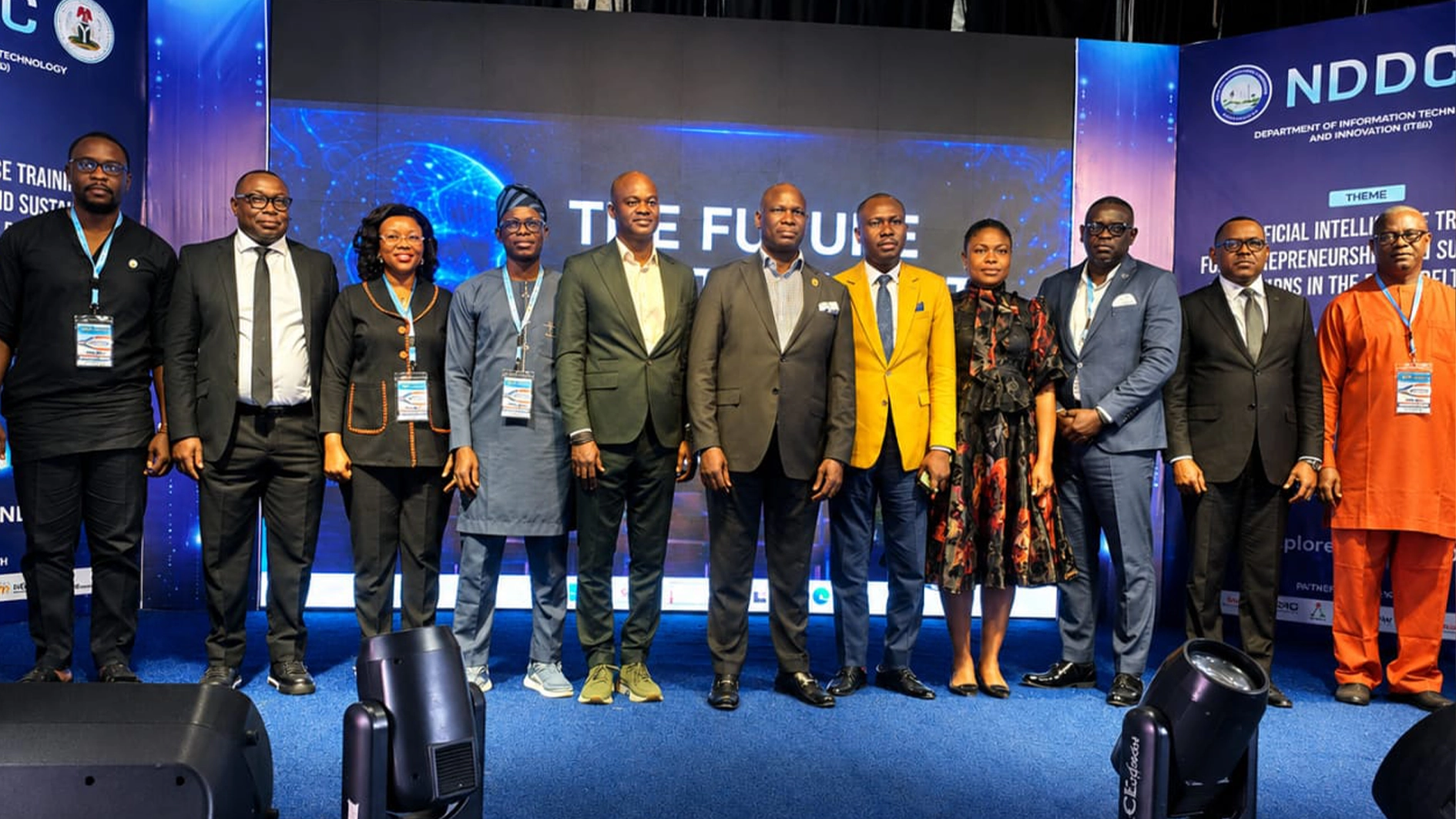
The Niger Delta Development Commission (NDDC) is looking beyond the region’s oil wealth, turning its attention to a resource it believes cannot be depleted: human intelligence.
The Commission has launched a four-day Artificial Intelligence training and capacity-building programme aimed at equipping young people across the Niger Delta with digital skills to innovate, build businesses and create sustainable sources of income.
Organised by the NDDC Department of Information Technology and Innovation, the programme, themed “Artificial Intelligence, Digital Skills and Innovative Entrepreneurship,” brings together youths, technology experts, academics, entrepreneurs and other stakeholders.
Declaring the programme open, NDDC Managing Director and Chief Executive Officer, Chief Samuel Ogbuku, represented by his Chief of Staff, Obegha Oworibo, said the initiative was designed to change the mindset of young people from job seekers to opportunity creators.
According to him, the rapid advancement of AI has opened unprecedented opportunities for individuals and small businesses, enabling young people to develop solutions, products, and services with relatively limited resources.
Ogbuku urged participants to look beyond certificates and focus on what they could build with the knowledge acquired.

He said, “Oil is extracted from the ground, but the value of AI is unlocked through knowledge, creativity and human intelligence. Oil can be depleted, but knowledge can multiply.”
He added that while previous generations depended on crude oil, the current generation had an opportunity to build wealth from ideas and technology.
The NDDC boss said AI could be deployed to tackle challenges in agriculture, healthcare, education, environmental protection, finance and the creative industry, stressing that the impact of the programme should be measured by the businesses created, incomes generated, problems solved, and opportunities provided to others.
The Director of Information Technology and Innovation, Engr. Emeka Ani, described the programme as a strategic investment in the region’s human capital.
Ani said the training would expose participants to practical applications of AI, digital innovation, data analytics, content creation and entrepreneurship, while helping them identify opportunities in the emerging digital economy.
He said the Commission’s objective was to produce young people capable of using technology to solve problems, create value and generate employment rather than waiting for jobs.
Delivering the keynote address, Professor Oyenuga Adedeji of the University of Lagos said AI could help the Niger Delta break away from its traditional resource-extraction economy and embrace knowledge-driven development.
Speaking on “Deploying Artificial Intelligence for Innovation, Entrepreneurship, and Sustainable Livelihoods in the Niger Delta Region,” Adedeji identified agriculture, environmental management, logistics, entrepreneurship and community resilience as areas where AI could deliver significant impact.
He said AI could support precision agriculture and aquaculture, monitor oil spills and coastal erosion, predict floods and improve business operations.
Adedeji also called for the establishment of AI innovation hubs across the region, supported by reliable connectivity, computing resources, incubation programmes and digital skills training.
For the Niger Delta, the emerging message from the NDDC programme is clear: the region’s next major economic resource may not come from beneath the soil, but from the ideas of its young people.

