 Follow Us on Google News
 Follow Us on Google Discover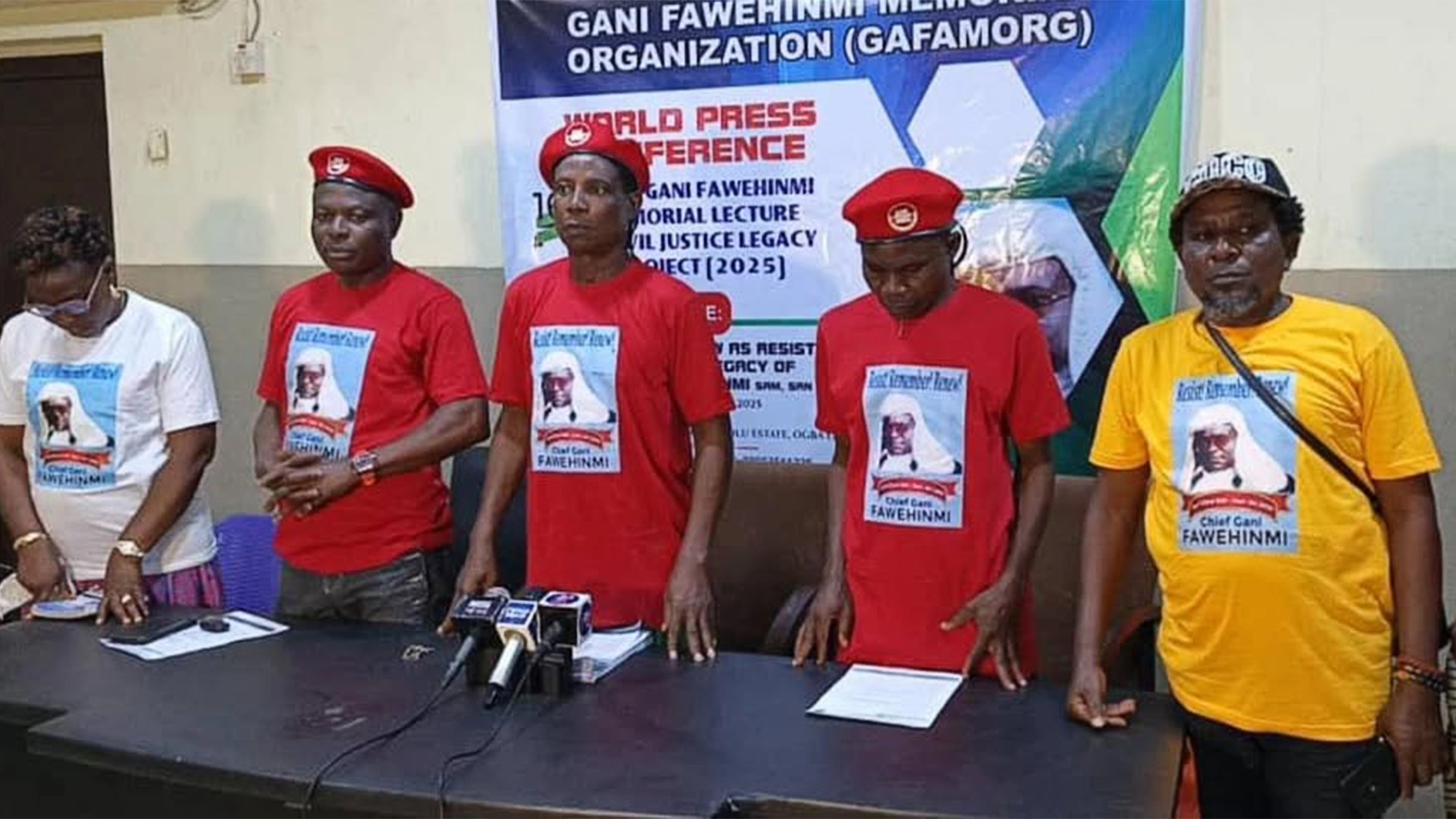
The Gani Fawehinmi Memorial Organisation (GAFAMORG) has urged the Federal Government to demonstrate the purchasing power of any new national minimum wage it may announce, saying a higher figure on workers’ payslips does not automatically translate into improved living standards.
The organisation, through its Civil Justice Legacy Project, yesterday launched its “October 1 Wage Watch 2026”, a public-interest initiative designed to assess any new minimum wage against workers’ cost of living, purchasing power and human dignity.
GAFAMORG, however, clarified that it was not claiming that the Federal Government would announce a new minimum wage on October 1, nor was it alleging that the government had any such intention.
It said Nigerians should nevertheless begin asking questions about the basis, methodology and adequacy of any proposed wage before an announcement is made.
According to the organisation, the national conversation should not be reduced to the size of a wage announcement, but should focus on what the proposed income can actually buy.
“The announcement must not become the argument,” it said.
GAFAMORG noted that the current national minimum wage of N70,000 was established in 2024, while subsequent economic developments and statements by organised labour and other stakeholders had renewed concerns about workers’ purchasing power and the need for another review.
It said various figures had already entered public discourse, making it important for Nigerians to examine the real value of whichever figure is eventually proposed.
“A larger figure on a payslip does not automatically mean a living wage,” the organisation said.
“Food, transportation, rent, energy, healthcare and other essential costs determine the real value of wages. If those costs continue to rise faster than wages, a nominal wage increase can quickly lose its purchasing power.”
GAFAMORG said its Living-Wage Test would examine several issues, including how any proposed figure was calculated, the economic data and cost-of-living assumptions used, and what the wage could actually purchase after essential expenses such as food, transportation, housing and energy.
It also wants Nigerians to know what mechanism would protect workers against future increases in inflation and essential costs, who participated in determining the figure and how transparent the process was.

The organisation further called for clarity on when the next minimum wage review would take place and whether there would be a credible mechanism for regular review or indexation to relevant cost-of-living indicators.
GAFAMORG urged the Federal Government to publish the methodology and economic assumptions behind any proposed wage.
“Show Nigerians the calculation. Do not merely announce the conclusion,” it said.
The organisation also called on organised labour to ensure that workers were active participants in negotiations over their wages and economic wellbeing.
“The central question should not be merely how much government can afford to give. It must also be what a Nigerian worker needs to live with dignity,” GAFAMORG said.
It also appealed to Nigerians not to allow the minimum wage debate to become another partisan political contest.
It said regardless of whether the eventual figure was N100,000, N150,000, N200,000, N300,000 or any other amount, citizens should subject it to the same basic question: What can it buy?
“Do not judge the wage merely by the size of the announcement. Judge it by its purchasing power, its capacity to protect human dignity, its sustainability and the transparency of the process that produced it,” the organisation said.
GAFAMORG said the October 1 Wage Watch 2026 would monitor developments, examine publicly available evidence and present Nigerians with an independent Living-Wage Test for any new minimum wage announcement.
“We are not against a wage increase. We are against the idea that the size of an announcement should end the national conversation,” it said.
The organisation, chaired by Comrade Babatunde Agunbiade, concluded: “The government may announce the wage. Nigerians must examine whether it is a living wage.”
It added: “A higher number is not automatically a higher standard of living.”

