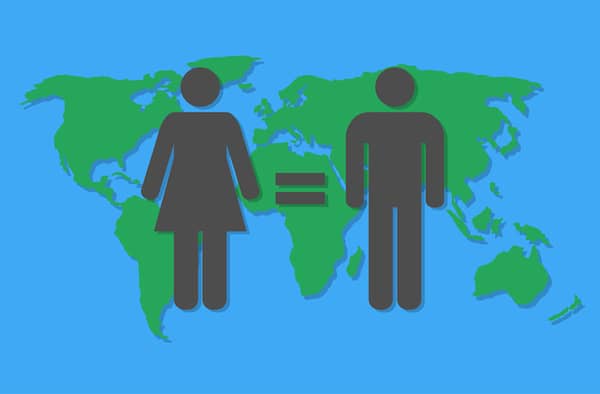
Thirty years after governments pledged to transform women’s participation in the media under the Beijing Platform for Action, women still account for just 26 per cent of the people seen, heard or spoken about in global print and broadcast news, according to the 2025 Global Media Monitoring Project (GMMP) report.
The findings, unveiled at the launch of the 7th edition of the GMMP Global Report, show that progress toward gender equality in the news media has plateaued after modest early gains, raising concerns that decades of commitments have failed to translate into sustained structural change.
Convenor of the GMMP Expert Group, Sarah Macharia, said that after an initial slow but steady rise in women’s visibility, advancement has largely stalled. While women represent half of the world’s population, their share of news visibility rises only marginally online, where they make up 29 per cent of subjects on dedicated news websites.
The GMMP, the world’s longest-running and largest study on gender in the media, has tracked trends since 1995. Over 80 per cent of countries, representing 97 per cent of the global population, have participated in at least one of the seven studies.
Macharia reported that data from the special 2025 edition show only a nine-point increase in women’s presence in the news over three decades, with most of the gains recorded in the first 15 years after the Beijing conference. Progress since then has been minimal.
“The four media types have converged and flat lined at a level far short of parity,” Macharia said, noting that once a baseline of visibility was reached, momentum for deeper institutional reform appeared to fade. The situation is worse for minority women, who account for less than one in 10 women featured in the news.
Chief of the Ending Violence against Women and Girls Section at UN Women and a GMMP partner since 2010, Kalliopi Mingeirou described the findings as evidence of unfulfilled promises.
“Since 1995, the GMMP has given us the most consistent evidence we have on gender in the news. Three decades on, the 2025 report shows how unfinished Beijing’s promise remains,” she said.
The report reveals that the male voice continues to dominate positions of authority in news coverage, particularly as experts and spokespersons while women are more frequently featured in stories based on personal experience or popular opinion, they remain underrepresented in roles that confer credibility and power.
The report shows some improvement in the proportion of women reporters, especially in print and broadcast media, where the gap has narrowed since tracking began. However, progress has levelled off since 2005. In digital news, women have consistently made up just 42 to 43 per cent of reporters since monitoring began in 2015.
GMMP West and Central Africa coordinator and national coordinator for the GMMP in Senegal, Amie Joof-Cole said the refocusing of efforts to advance gender equality in and through the media must confront structural and institutional barriers starting with those in newsrooms.
From Latin America, Cirenia Celestino Ortega warned that violence against women journalists is escalating. She described the year of the 7th GMMP as one of the most dangerous for exercising free expression, especially for women reporters.
Ortega urged the renewal of Beijing commitments, proposing an additional strategic action focused specifically on eradicating violence against women journalists.
Chair of the Global Alliance on Gender and Media (GAMAG), Aimee Vega Montiel said the depoliticization of women’s rights intensified during the COVID-19 pandemic has shifted attention away from fundamental human rights toward development and profit.
GMMP regional coordinator for the Caribbean, Hilary Nicholson argued that media conglomerates prioritize profit over equality. For meaningful progress, she said, entrenched power hierarchies must be dismantled and journalism’s core principles of fairness, accuracy and non-bias restored.