 Follow Us on Google News



 Follow Us on Google Discover
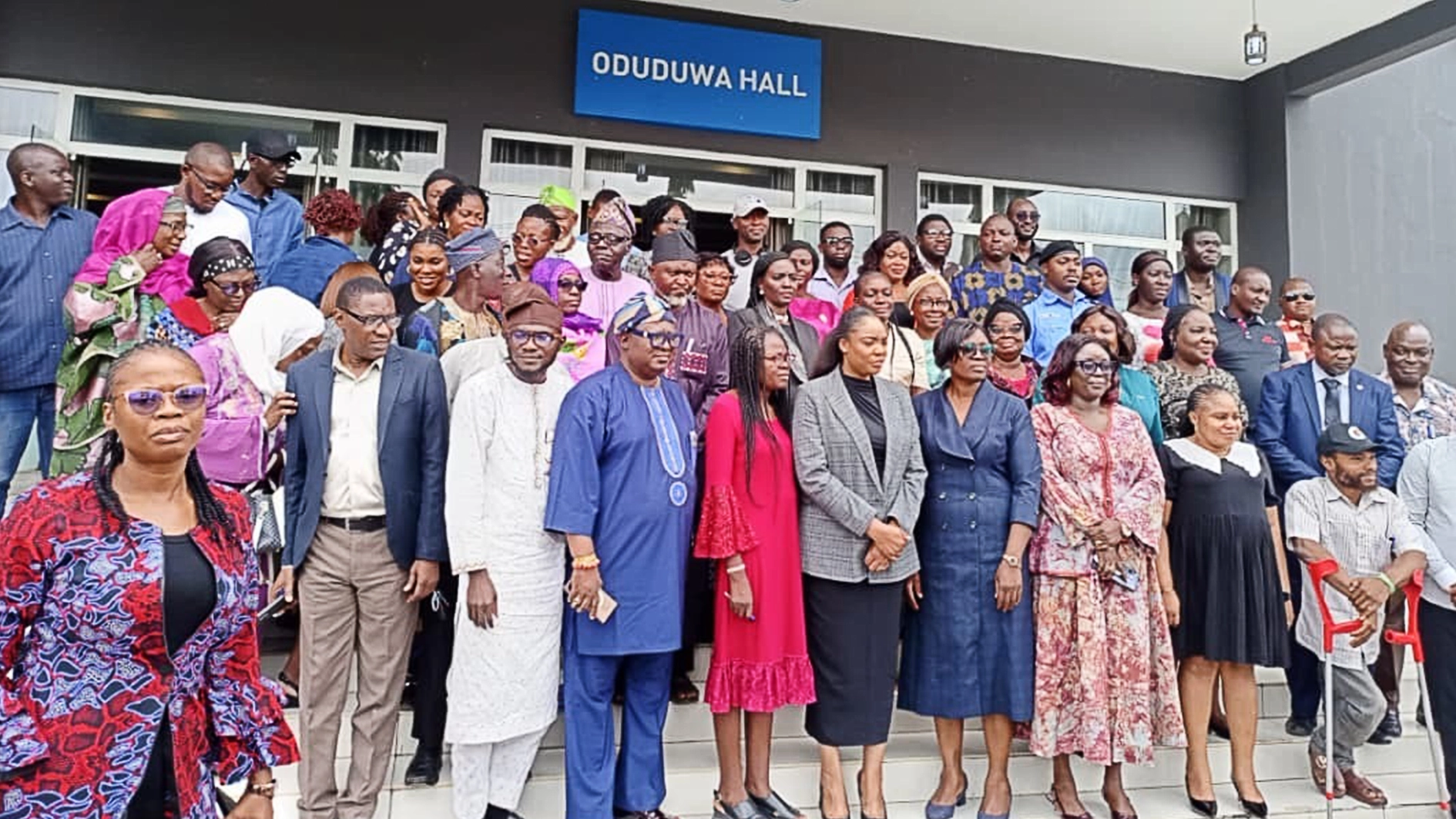
The International Institute for Democracy and Electoral Assistance (International IDEA), in collaboration with the Oyo State Government and other stakeholders, has strengthened efforts to combat school-related sexual and gender-based violence (SGBV) with the formal adoption of a Standard Operating Procedure (SOP) to improve the reporting, investigation, and prosecution of perpetrators.
The framework is expected to establish clear guidelines for preventing school-related SGBV, reporting incidents, referring cases to appropriate institutions and ensuring coordinated, survivor-centred responses, particularly in cases involving children.
The initiative is being implemented under the European Union-supported Support to End Sexual and Gender-Based Violence in Nigeria (ESGBV) Programme, with International IDEA serving as the implementing organisation.
The SOP was formally adopted at a stakeholder validation workshop on the Draft Oyo State SOP for the Prosecution of Perpetrators of School-Related Gender-Based Violence held on Wednesday in Ibadan.
The workshop brought together representatives of government ministries, departments and agencies, justice and law enforcement institutions, social workers, the media and other child protection stakeholders to review and validate the proposed framework.
Speaking at the event, Melissa Omene, GBV Policy and Strategy Development Officer under the ESGBV Programme at International IDEA, said the initiative was part of broader efforts to strengthen the legal, policy and institutional frameworks for preventing and responding to violence against women, girls and other vulnerable groups. She said International IDEA had partnered with the state Ministries of Justice, Education, Science and Technology, and Women Affairs and Social Development to develop the proposed SOP.

Omene stressed that schools should be safe environments where children could learn, grow and realise their full potential, lamenting that different forms of violence continued to threaten learners within and around educational institutions.
She listed such violations to include sexual harassment, sexual abuse, exploitation, bullying, harmful disciplinary practices and online abuse.
Citing available evidence, Omene said an estimated 44 per cent of female students and 35 per cent of male students in Nigeria had experienced physical or sexual violence perpetrated by teachers or classmates, while one in four girls in the country experienced sexual violence before the age of 18.
She warned that school-related violence could undermine children’s rights and wellbeing, disrupt school attendance and academic performance, and limit their future opportunities.
According to her, children who experienced violence were more likely to be out of school or drop out, while sexual violence had been associated with poorer mental health outcomes and an increased risk of early marriage.
Omene explained that the SOP was designed to establish clear procedures for identifying, reporting, referring, and managing school-related SGBV cases while ensuring that affected children received timely, appropriate, and survivor-centred support.
She said the document would guide education authorities, school administrators, teachers, counsellors, social welfare officers, law enforcement agencies, healthcare providers and other relevant institutions in responding to reported incidents.
The framework, she added, would also strengthen the prosecution of perpetrators through improved coordination among institutions responsible for handling such cases.
She described the process as a government-led, multi-stakeholder initiative, noting that a Technical Working Group comprising relevant institutions had been established under the leadership of the state Ministries of Justice, Education, Science and Technology, and Women Affairs and Social Development.
Omene said the validation workshop provided an opportunity for stakeholders to identify gaps, make recommendations and ensure that the final document was technically sound and suitable for implementation.
Earlier, the Head of the SGBV Response Unit, Federal Ministry of Justice, Yewande Gbola-Awopetu, emphasised the Federal Government’s commitment to tackling gender-based violence and strengthening the protection of children and other vulnerable persons.
Gbola-Awopetu said the ministry would continue to support the implementation of the Violence Against Persons (Prohibition) Act, the Child Rights Act and other relevant legislation aimed at preventing violence and ensuring justice for survivors.
She added that the ministry would collaborate with state governments to promote the domestication of relevant laws and coordinate the implementation of the SOP on school-related SGBV.
In his keynote address, the Oyo State Attorney-General and Commissioner for Justice, Abiodun Aikomo, restated the state government’s commitment to the initiative, describing the SOP as an intervention the state was determined to sustain.
Aikomo, who was represented by the ministry’s SGBV Coordinator, Kashifa Oloso-Olayinwola, pledged that the Ministry of Justice would work towards ensuring effective implementation of the framework.
He lauded International IDEA, the European Union, civil society organisations and members of the technical teams for their contributions to developing the document.
The Attorney-General said school-related SGBV remained a serious concern because of its implications for children’s safety, dignity, educational development and fundamental rights.
He stressed that addressing the menace required more than the existence of laws and policies, noting that effective implementation, clearly defined institutional responsibilities, timely reporting, appropriate investigation and competent prosecution were equally important.
According to him, the SOP would provide a common operational reference for institutions responsible for receiving complaints, making referrals, investigating allegations, providing legal advice, prosecuting offenders and supporting affected learners throughout the justice process.
He said the framework would promote consistency in case management, improve inter-agency coordination, reduce avoidable delays and establish a clearer pathway from the reporting of incidents to appropriate legal action.
Aikomo, however, cautioned that the success of the document would depend on its practical applicability, institutional acceptance and consistent implementation.
He urged stakeholders to pay particular attention to clearly defined institutional mandates, timely referrals, preservation and handling of evidence, protection of confidential information and measures to prevent the retraumatisation of children during investigations and prosecutions.
He emphasised that the best interests of the child must remain a primary consideration in decisions affecting child survivors, alongside the need to protect their privacy, dignity and safety without compromising investigations or the requirements of a fair trial.
The Attorney-General also called for clear reporting and referral pathways, effective coordination between education authorities and law enforcement and justice institutions, appropriate procedures for cases involving children, and mechanisms for monitoring compliance with the SOP.
In a separate address delivered on behalf of the Commissioner for Education, Science and Technology, the ministry’s representative commended International IDEA, the European Union and other stakeholders for their contributions to developing the framework.
The representative said the SOP would provide a coordinated approach to preventing, reporting and responding to school-related gender-based violence, urging relevant institutions to support its effective implementation.
The validation process culminated in the formal endorsement and adoption of the SOP by the Oyo State Ministry of Justice, providing a common reference framework for institutions involved in preventing and responding to school-related SGBV.

