
 Get Guardian on Google
Today, when conversations around women in African visual art take center stage, the spotlight often defaults to established figures who have dominated the market for decades.
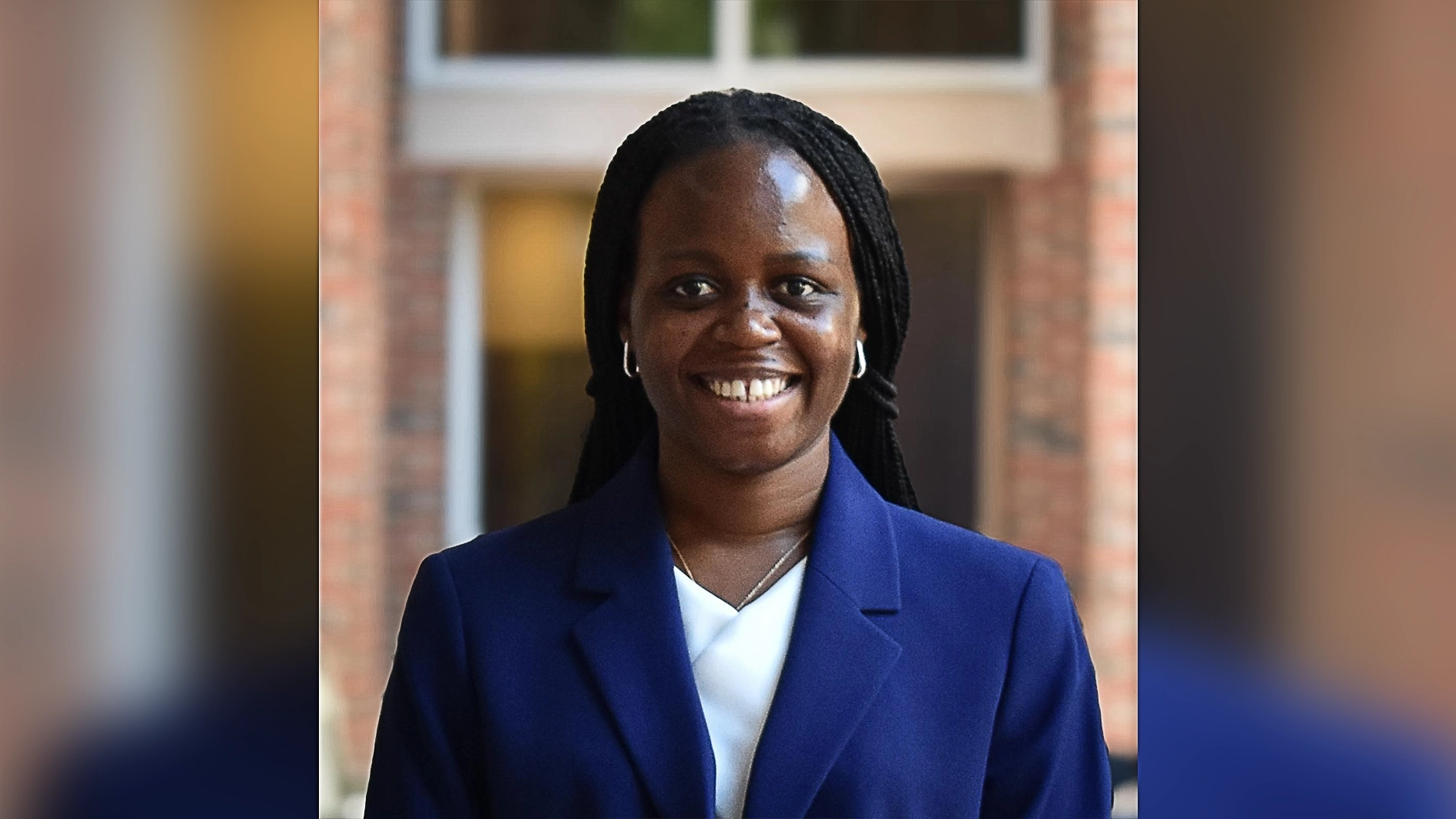
Stella-Maris Onwuama is decisively altering that narrative. Operating at the intersection of hyperrealism, ancestral memory, and scientific rigor, the Nigerian-born visual artist now practicing in the United States has emerged as a commanding voice whose work redefines the boundaries of contemporary portraiture.
In a visual culture increasingly defined by rapid consumption and surface-level engagement, Onwuama’s practice demands that the viewer slow down, stay present, and truly see. Hers is a practice where precision is not merely a technical preference or stylistic flair; it is a language, a survival mechanism, and a quiet political act against human erasure.
What sets Onwuama apart within the global art ecosystem is her extraordinary cross-disciplinary formation. She established her professional studio practice in 2018. She also holds a Bachelor of Science in Biochemistry, for which she received the Best Graduating Student Award and Dean’s List honours, and a Master of Science in Biotechnology, also earned with Dean’s List honours. She is currently a Forté Foundation Fellow in the MBA program at the University of North Carolina’s Kenan-Flagler Business School (Class of 2027).
This convergence of scientific, technological, and business training informs the anatomical precision, compositional rigor, and structural intelligence that define her canvases. Where a casual observer sees skin and shadow, Onwuama applies a scientific eye to decode the geometry of light across bone, the micro-tensions of muscle beneath skin, and the physical architecture of survival.
‘My academic formation trained me to see the world as a system of structures where precision determines meaning,’ Onwuama reflects. ‘I read what lives beneath surfaces… The scientific eye does not diminish the emotional. It deepens it.’

This clinical exactness is paired with an unexpected, deeply tactile medium: bead-based conceptual composition. In many African traditions, beads carry the weight of memory: worn in mourning, exchanged in reverence, and passed down as physical proof of existence. By manually placing thousands of individual beads onto her hyperrealistic pencil compositions, Onwuama slows down the viewer’s gaze.
The pencil captures the human face with scientific fidelity; the accumulated beads demand patience. Together, they form an unyielding argument against forgetting, particularly for subjects from marginalized communities whose interior lives and grief are rarely offered this quality of sustained visual attention.
The emotional core of Onwuama’s practice was forged in a crucible of personal tragedy: the loss of both of her parents within three months of each other. Following nine months of complete creative silence under the weight of uncontainable grief, her return to the page was marked by a discipline that refused accident or ambiguity.
Precision became her structural anchor in a world that had momentarily collapsed. In hyperrealism, a line either follows the form or it does not; a shadow falls correctly, or it fails. That uncompromising certainty gave her a framework to endure.
Today, that origin fuels her commitment to rendering human beings with emotional authority, especially those carrying quiet, invisible pain, insisting publicly that every face rendered in full detail is deserving of witness.
Since establishing her professional practice, Onwuama has built a body of work that has drawn the attention of curators and collectors in the nation’s contemporary art scene, including a presentation at ArtX Lagos.