 Follow Us on Google News
 Follow Us on Google Discover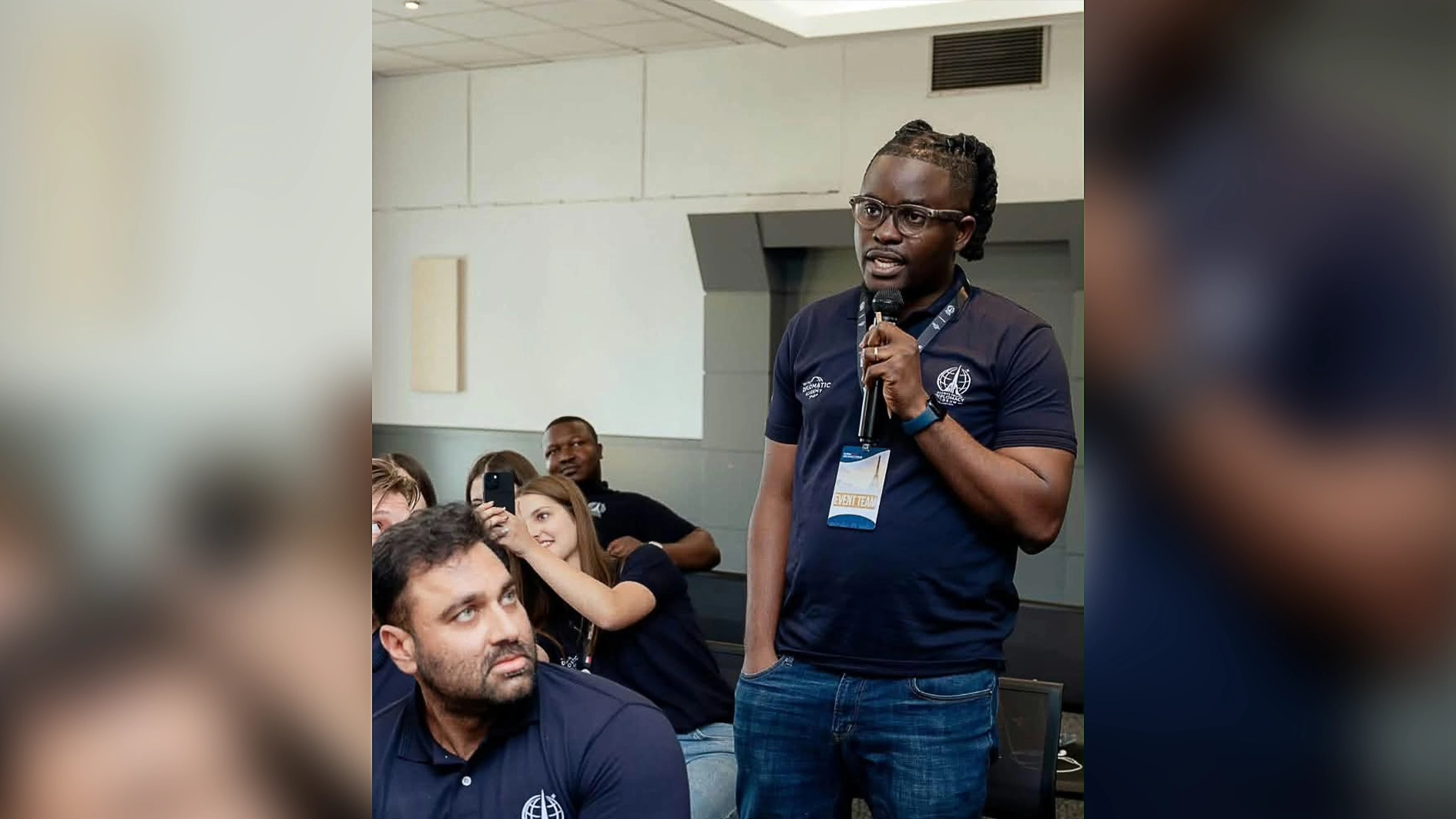
A young Nigerian American, Kelechi Iwuagwu, has called for greater participation of young people in global decision-making, following his participation in the Global Youth Diplomacy Forum – Paris Edition 2026, held at the French Senate in Paris.
Iwuagwu, who has been involved in United Nations advocacy in the United States through the United Nations Association of the USA, joined young delegates from more than 80 countries at the September 25 to 27 forum, which focused on diplomacy, peacebuilding, global governance and international relations.
The main proceedings on September 26 took place at the historic Palais du Luxembourg, home of the French Senate, where Iwuagwu participated in a debate on the effectiveness of modern diplomacy in preserving international peace and stability.
Speaking in opposition to the motion, “This House Questions Whether Modern Diplomacy Remains Effective in Preserving International Peace and Stability,” he argued that diplomacy remained necessary despite the limitations of its institutions and methods.
According to him, the shortcomings of diplomacy should provide grounds for strengthening it rather than abandoning it.
The opposition secured 55 votes against 14, with two abstentions.

The debate examined diplomacy’s role amid wars, geopolitical tensions, humanitarian crises and declining trust in international institutions.
Iwuagwu argued that diplomatic engagement provides countries with channels of communication despite disagreements, creates opportunities to prevent conflicts from escalating and facilitates negotiations on humanitarian issues and other challenges requiring international cooperation.
The debate was moderated by Estonia’s Ambassador, Jüri Seilenthal; Muhammad Ahmad, chief executive officer and founder of the Youth Diplomatic Academy; and Fatima Zohra Besnouci, according to the programme provided to delegates.
Iwuagwu said the experience reinforced his belief that diplomacy was not merely about winning arguments but creating opportunities for dialogue and understanding among people with different perspectives.
The forum also featured discussions on how states are adapting their foreign policy practices and the professional pathways available to people seeking careers in diplomacy and international service.
The first high-level panel, titled “Modern Diplomacy and Foreign Policy: How States Are Adapting Their International Relations Practices,” featured Thailand’s Ambassador to France, Nikorndej Balankura; Lithuania’s Ambassador to France, Arnoldas Pranckevičius; President of the Guillaume-Hofnung Institute for Mediation, Michèle Guillaume-Hofnung; and the Netherlands’ Ambassador to France, Thijs van der Plas.
Discussions covered digital and public diplomacy, multilateral cooperation, strategic communication and youth engagement.
Another panel, “Pathways into Diplomacy: Diplomatic Careers, International Service and Professional Perspectives,” featured Pakistan’s Ambassador to France, Mumtaz Zahra Baloch; Deputy Head of Mission at the Belgian Embassy in Paris, Anke Van Lancker; Bulgaria’s Ambassador to France, Radka Balabanova-Ruleva; and the United Kingdom’s Ambassador and Permanent Delegate to UNESCO, Anna L. Nsubuga.
Former President of Georgia, Salome Zourabichvili, also delivered a keynote address at the forum.
For Iwuagwu, whose background is in mathematics and data analytics, the gathering highlighted the need to broaden participation in international affairs beyond traditional diplomatic careers.
He said young people, researchers, data analysts, advocates, entrepreneurs and members of the diaspora could contribute to building international relationships and shaping discussions on global challenges.
He also stressed the importance of evidence-based engagement as the world grapples with artificial intelligence, misinformation, climate data, migration statistics and rapidly changing digital communication.
According to him, the future of diplomacy will require not only skilled negotiators but also people capable of interpreting complex information, examining evidence and communicating it clearly.
He said Nigeria’s large youth population and global diaspora presented an opportunity for the country to strengthen its participation in international decision-making by preparing and encouraging young people to contribute to global institutions and policy discussions.
Reflecting on his journey from United Nations advocacy in New York to the forum in Paris, Iwuagwu said young Nigerians did not need to hold official diplomatic positions before contributing to the country’s international image.
He said Nigerians entering global spaces with competence, integrity and purpose could represent the country through their contributions and engagement.
The Global Youth Diplomacy Forum – Paris Edition 2026 was held from September 25 to 27, with the Youth Diplomatic Academy identifying diplomacy, international relations, global governance, youth participation and policy dialogue as key areas of its programme.

