 Follow Us on Google News


 Follow Us on Google Discover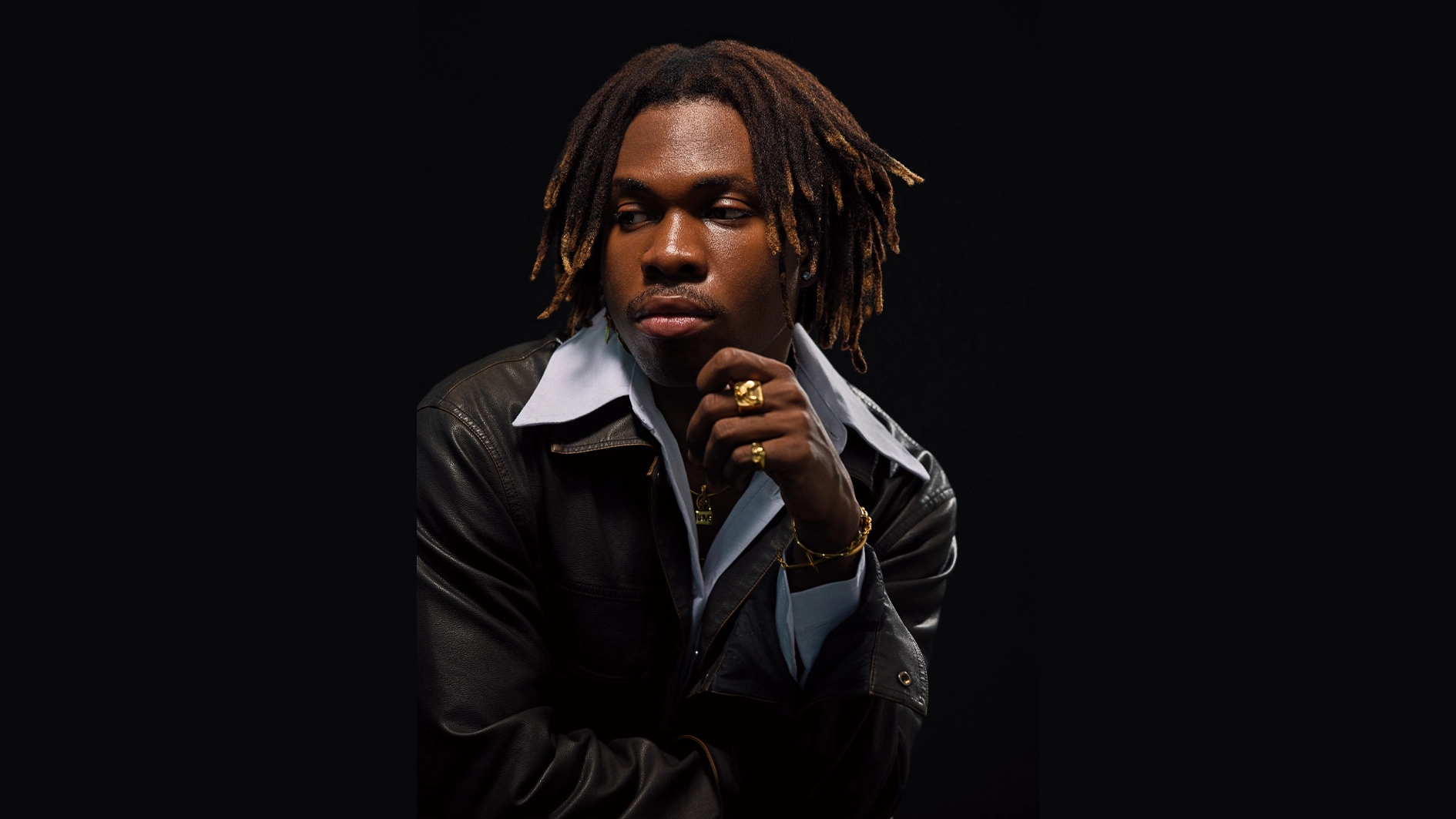
Ever since Kemuel, born Kemuel Emmanuel, broke out in 2022 with Champagne Girl, Nigerians have been introduced to his conceptual pop soundscape. Bridging lounge pop, soul and Afropop, the Port Harcourt-bred troubadour has since crooned his way into a distinct style, with his melodic songwriting and intimate storytelling keeping him within the broader Afrobeats conversation.
His latest EP, Borokiri Boy, captures his South-South identity, dwelling on memories and experiences from his beloved Garden City. Across the eight-track project, which features DJ Tunez on the opener “Seki,” Kemuel develops his songwriting, blending familiar PH lingo and references with catchy melodies and exciting storytelling.
From a humble church musical background, Kemuel has morphed into an inspiring artiste, always carrying pieces of Borokiri within his masterpieces themselves. A versatile bard, he’s snowballed through different phases of neo-soul, RnB, house, Afropop and other melodies. At the core of his artistic growth, he remains hesitant to box himself into a fixed genre.
Catching up with Guardian Music, Kemuel discusses growing up in Borokiri, learning music through instruments, the making of Borokiri Boy, his evolving sound, the artists he hopes to work with and the global future he imagines for his artistry.
Your new project is titled Borokiri Boy. What does that title mean personally to you?
I mean, that’s who I am. I am a Borokiri boy. I grew up in Borokiri, and I’m a product of where I grew up.
For people who have never been to that part of Nigeria, what was it like growing up there as a young creative person?
I would say it’s a very testing environment. It will test your resilience. It will test your faith in God, your spirituality, your confidence, everything. It will test your faith in your safety also, because it’s a place that romanticises gun violence and all of that. But I was mostly inside. I was barely outside. Even though I grew up in the belly of the ghetto, I knew all the slang and everything, but I preferred reading the dictionary. I preferred watching cartoons when my friends would go out and play football or do regular boy things.

I soaked in a lot of things from movies, cartoons and books. I was mostly reading comic books. I didn’t really have access to these things on a daily basis, so sometimes I had to outsource them from very random places. The place is also really surrounded by talent. You can see somebody who is straight-up involved in gang shit and he’s a very talented drummer. It’s crazy. It’s a colourful place.
When did music enter the picture for you?
Music kind of came in after I started getting a hang of instruments in church. There was a time my dad wanted me to get into it, so I started learning.
While I was learning the keyboard, I developed an interest in other instruments. I played the keyboard for about three or four years, then I got into bass guitar during the lockdown. I kind of mastered the basics of the bass guitar during lockdown, and in 2021 I started playing bass in church. But I started singing mostly because of the bass guitar. Most of the time when I was rehearsing the bass, there wasn’t really power supply. Sometimes we could go three months with zero light.
That resulted in me having to sing the notes. Since I already knew the notes from playing keys, I would rehearse the bass by literally singing the notes out. I know all the notes by heart. That got me more confident with melodies. I started writing more songs with the bass. Then from the bass, I migrated back to the piano and started writing songs with the piano.
I think what actually grew my confidence with writing was freestyling. I originally wanted to be a rapper because I really enjoyed listening to Kanye. He was very expressive. I listened to a lot of Kanye, Drake and Bryson Tiller. I listened to a lot of raps – Tupac and J. Cole too. But when I started learning instruments, I leaned more towards R&B. I went back to pop, Michael Jackson, and older music from the ’70s, ’80s and ’90s. I listened to a lot of Mary J. Blige and Erykah Badu.
I just had to listen to a wide range of music because it helped me grow my confidence with the instruments I was playing. I would play along to them, and I guess those things stayed with me.
At what point did you decide you wanted to take music professionally and build a career from it?
I didn’t really see it becoming a career at first. I think it started becoming a career around 2022 or 2023 for me. It was always something I used to express myself because I’m not a very expressive person. If you go through my socials, you’ll probably just see me doing music stuff. You barely see me doing anything else, and you barely find information about me or about how I feel about certain things.
I’m not really heavy on expressing myself with words. But with music, there are melodies, so it’s more enjoyable. If I’m listening to myself talk about an experience and it’s guided by melodies, it doesn’t feel like I’m naked as much as when I’m just saying my mind straight up. It started becoming a career for me in 2022 or 2023 when I moved to Lagos. When I was in PH, I was just pushing it. It was something I enjoyed doing. I don’t want to call it a hobby because it was more than a hobby for me. I really put my life into it, but I didn’t see it as something I was going to make money from. I was more concerned about the expression. I just wanted to create good stuff, good music.
You started with rap, and now your music moves through RnB, Afropop and other sounds. What was it about this style of music that made you want to stick with it?
It’s tricky because I didn’t really think I had a style. I was just trying to express myself the best way I could. I knew I enjoyed really detailed and quiet sounds. I didn’t really like overdoing stuff. I liked creating moments in music because most of my favourite songs had very unique moments.
You can be listening to a song and there’s a moment in the first 53 seconds that never comes again. Then by one minute, 20 seconds, there’s another moment there. That keeps you alive while listening to the song. That’s something I try my best to translate into my own music.
I can’t even tell you what my style is because at some point it used to be neo-soul, then it became R&B, then I had a whole house phase. Now I’m having an Afrobeats phase, an Afropop phase, and I can literally feel myself going back to my R&B phase again. I’m like a chameleon when it comes to the music. I’m like a vessel. I don’t really believe that the music is coming from me, like I’m the one doing the music. I just feel like I’ve humbled myself to a point where music likes passing through me.
I can’t say I have a style. I am making. The only things I would say are unique or distinct to me are my voice, my enunciation, the way I pronounce things and maybe my own story. But we all kind of go through the same things, and that’s what makes music relatable.
On Borokiri Boy, which song took the most out of you creatively?
I don’t think any of them were really a hassle, but the one that was the most complicated to make, where the process was really long, would be “Osi Baby.”
What is “Osei Baby” about?
I wouldn’t say it’s a direct person. Osi is just a traditional name from where I’m from, Kalabari, and it’s a famous name back home in Borokiri. You can stumble on multiple Osei’s. I was trying to maintain a theme for the project very subtly.
Why did that song take so long to make?
First of all, I was trying to create something that felt familiar but that I hadn’t heard before. That was where the tug of war began. I wanted it to be groovy, but I still wanted it to be something you could chill and listen to. So, there was a war between choosing the tempo and deciding how fast it was going to be. I made the beat one day and didn’t get a single vibe that day. The next day, I got the first verse melody. Once I got the verse melody, I got the hook melody.
It took me about a month before I got the chorus melody. It took me about three months before I got verse two. Then after I got verse two, it took me another three months to realise that I hated verse two, so I changed it. That was the song that just kept morphing until it got to the final version. I’ve been making all these songs for a while, but most of them I made in a day and I was confident in them. Osei Baby took some time because I really wanted to maintain that energy. I wanted the record to be compelling. Sometimes songs take long to get to that point where they have replay value.
Who are some artists you would like to work with?
Justin Bieber is on my radar, definitely. I’m always thinking globally first. I love my artists back home, but I kind of grew up listening to more global music than Nigerian music, even though I was surrounded by Nigerian music. There was just something about the way those artists expressed themselves sonically. It wasn’t so much about what they were saying or how they said it. It was how they were able to play with sonics and sounds. That was very interesting to me.
Within Nigeria, I would definitely love to make a record with Tems. I’d like to make more records with Yarden. I’d also like to have a song with Wiz, definitely. When I think about these things, I’m always thinking about being in the studio with them and what the energy would be like. There are other people I’d like to create with too, including KaeStyle, who is an artist from PH. There are just so many people I would like to work with. If we wanted to go global, the list would actually be quite heavy.
Outside music, what does a normal day look like for you? What do you do when you’re not creating?
If I’m not making music, I’m most likely drawing. Maybe I’m sketching in my book or I’m trying to read. But music has really become more of an escape for me, less of a career thing. It’s a form of escape for me, so I always need to create because being in Nigeria is so tiring sometimes. Being a young man, you look good and you’re being flagged as either a fraudster or something. You can’t actually win. So, I constantly need that escape.
Where do you see yourself in the next couple of years? What is the bigger vision for Kemuel?
I hope in the next couple of years I’ll be able to start touring and taking the music to other places and cultures. I want to make barrierless sounds, music that doesn’t have any boundaries or borders. Borderless music.
I hope the music actually helps people feel better because there’s no other point for music really than to make people feel something. I hope in the next couple of years the music starts touching people globally on a wider scale and I can start touring. I want to be remembered for how I make people feel, not so much for what I accomplished, but for how I left people feeling. That’s where I see myself in a couple of years.

