
 Get Guardian on Google
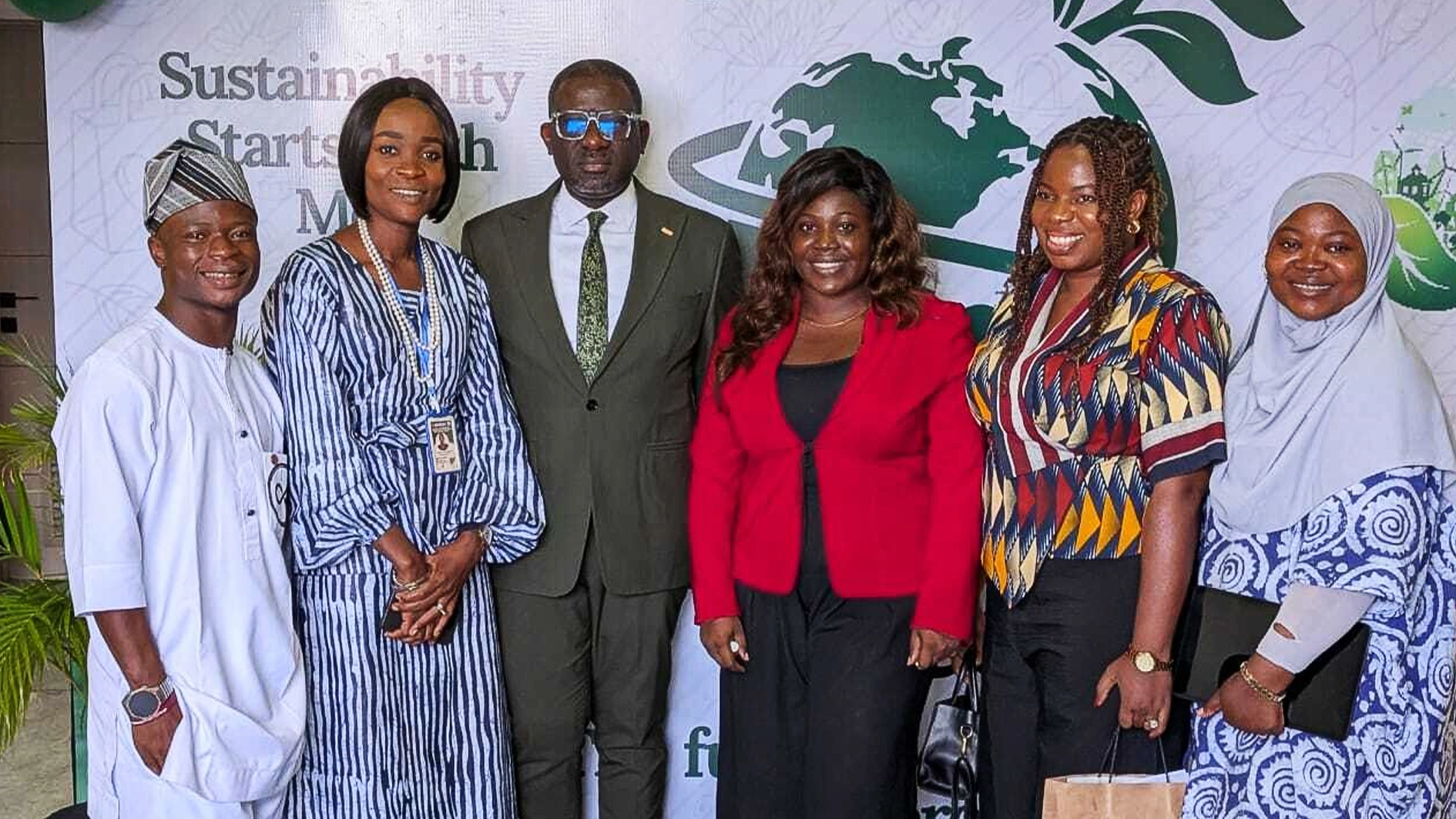
As part of efforts aimed at building an inclusive and supportive workplace, LAPO Microfinance Bank (LAPO MfB) recently provided free eye screening and corrective glasses to staff in commemoration of its 2026 Sustainability Week.
The initiative reinforces the Bank’s belief that sustainability begins with people and that every employee, regardless of role or level, deserves access to opportunities and support that promote good health, wellbeing and productivity.
The week-long event coincides with World Sustainability Day, observed annually on October 28. With the focus theme, “Citizen of Change: Local Roots, Global Impact,” the activities—including a school sensitisation visit to Ayedere Ajibola Senior High School, Ketu, Lagos to enlighten the students on environmental sustainability, free eye screening and provision of corrective glasses for staff, and the first-of-its-kind Circularity Expo within the microfinance banking subsector—highlight the Bank’s sustainability initiatives and its commitment to advancing the United Nations Sustainable Development Goals (SDGs).
Through these initiatives, LAPO MfB is strengthening its contributions to SDGs 3, 7, 8, 12, 13 and 17, which focus on good health and wellbeing, affordable and clean energy, decent work and economic growth, responsible consumption and production, climate action, and partnerships for sustainable development.
A major highlight was the Circularity Expo 2026, which brought attention to innovative solutions, partnerships and business practices that promote resource efficiency, recycling, reuse and responsible consumption. The expo underscored the role of financial institutions in enabling businesses and communities to adopt circular economy practices and build more resilient livelihoods.
Speaking on the Bank’s sustainability commitment, the Head of Sustainability, LAPO MfB, Ngozi Nwaichi, said:“Sustainability is not just about protecting the environment; it is also about improving lives, creating opportunities and ensuring that people and communities can thrive. Our theme reflects our belief that every responsible action, whether within our workplace or in the communities we serve, contributes to a much larger global objective.”

Beyond its workplace initiatives, LAPO MfB continues to advance sustainable finance through its Green Clean Lending programme, which has supported the financing of over 768,000 clean energy products, with more than ₦21.72 billion disbursed for solar home systems, solar-powered appliances, refrigerators, freezers and clean cookstoves. These interventions are expanding access to cleaner energy alternatives while supporting livelihoods and reducing dependence on traditional energy sources.
Through its partnership with the International Institute of Tropical Agriculture (IITA), the Bank has also supported the planting of 3,000 trees, while its collaboration with Water.org, backed by a $200,000 commitment, is working towards improved access to water and sanitation for 12,000 households and 500 small businesses in Kano and Jigawa States by December 2027.
These initiatives reflect LAPO MfB’s contribution to key Sustainable Development Goals, including Good Health and Wellbeing (SDG 3), Affordable and Clean Energy (SDG 7), Decent Work and Economic Growth (SDG 8), Responsible Consumption and Production (SDG 12), Climate Action (SDG 13) and Partnerships for the Goals (SDG 17).
As the Bank continues to deepen its sustainability agenda, its focus remains on embedding inclusion, responsible business practices and environmental stewardship across its operations, financing activities and community engagements—demonstrating how local action can contribute to lasting global impact.