 Follow Us on Google News


 Follow Us on Google Discover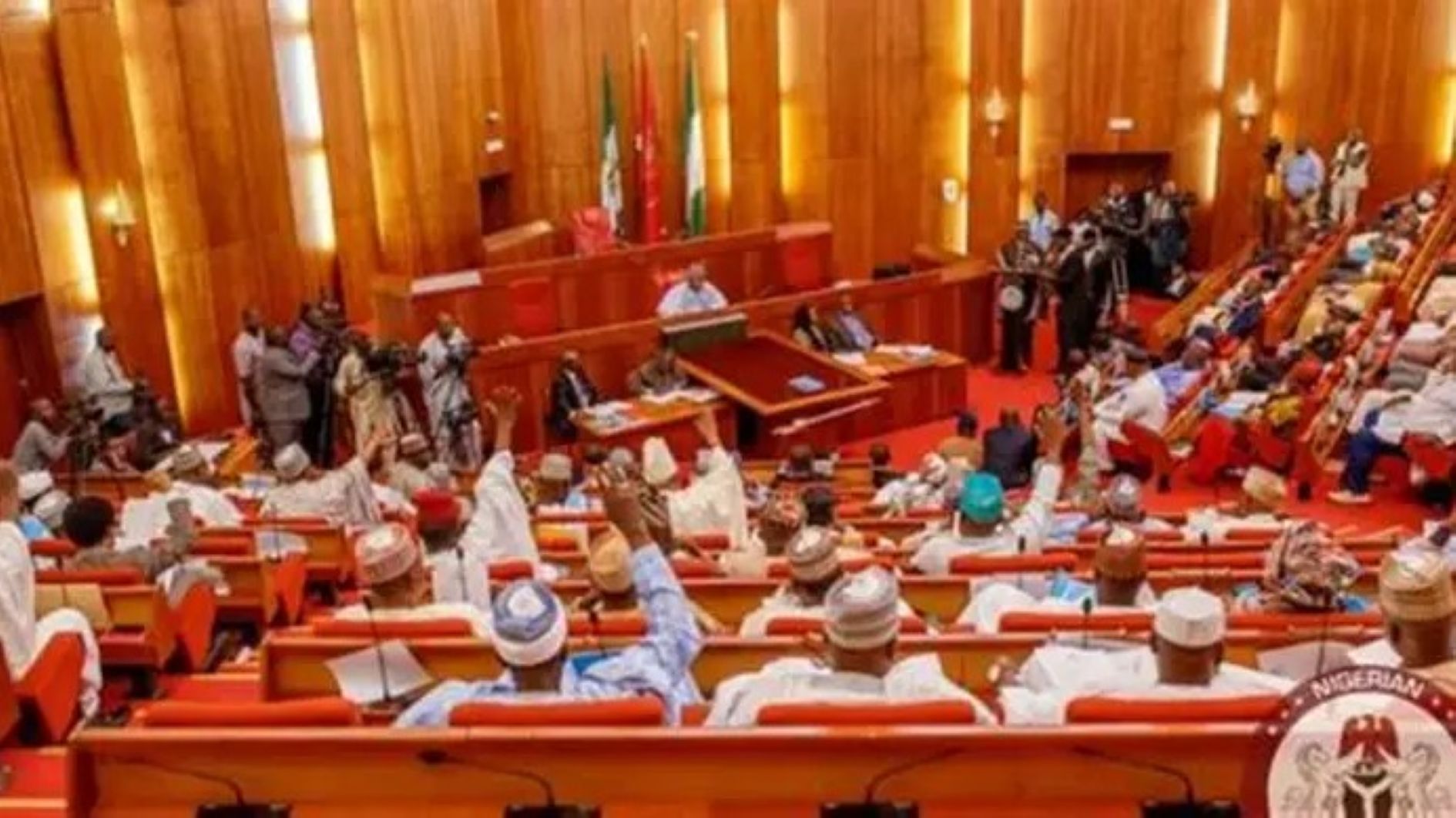
…As Monguno pushes arrest warrants for defiant MDAs
Barely 24 hours after drawing a constitutional battle line against the Central Bank of Nigeria (CBN), the Nigerian National Petroleum Company Limited (NNPCL) and about 40 other Ministries, Departments and Agencies (MDAs) over their refusal to account for public funds, the Senate on Wednesday dramatically escalated the confrontation, with lawmakers urging the immediate deployment of constitutional powers—including arrest warrants—to compel compliance.
What began on Wednesday as a warning over agencies’ refusal to honour legislative summons turned into a full-scale defence of Parliament’s constitutional authority, as senators declared that continued disregard for oversight amounted to an attack on Nigeria’s democracy and the doctrine of separation of powers.
The renewed offensive followed a substantive motion sponsored by Chairman of the Senate Committee on Finance, Senator Sani Musa, who argued that repeated non-compliance by several government agencies had become a direct affront to the constitutional authority of the National Assembly.
Musa maintained that the Finance Committee’s investigations into internally generated revenue, operating surpluses, statutory remittances to the Consolidated Revenue Fund and compliance with the Fiscal Responsibility Act were firmly rooted in Sections 88 and 89 of the Constitution.
He warned that agencies’ refusal to appear before the committee had gone beyond administrative indifference.

“This persistent non-compliance constitutes a direct affront to the constitutional authority of the Senate, undermines the doctrine of separation of powers and checks and balances, weakens legislative oversight and erodes transparency and accountability in the management of public resources.”
He cautioned that allowing such conduct to continue would encourage institutional impunity, weaken democratic accountability and frustrate Parliament’s constitutional oversight mandate.
However, the debate took a more dramatic turn when Senator representing Borno North, Mohammed Tahir Monguno, argued that the Senate had already been armed by the Constitution with sufficient powers to compel attendance and should stop treating the issue as a matter for negotiation.
Reading directly from Section 89(1)(d) of the Constitution, Monguno reminded lawmakers that Parliament could issue warrants compelling anyone who refused to honour legislative summons.
“The Senate has been conferred with clear powers to issue a warrant to compel the attendance of any person who, after having been summoned, refuses or neglects to do so and does not excuse such refusal to the satisfaction of the House or committee concerned.”
He advised that while the Clerk of the National Assembly should first notify the defaulting agencies, the Senate should immediately invoke its constitutional enforcement powers against those that continued to ignore invitations.
“We are representing our various senatorial districts. We are representing the entire nation. These constitutional powers exist for a reason,” Monguno declared.
His intervention appeared to reshape the direction of the debate.
Responding immediately, Senate President Godswill Akpabio said Monguno had effectively reminded senators that the Constitution already provided all the authority required to deal with defiant public officials.
“We cannot continue lamenting. The Constitution has already provided the Senate with the authority to act.”
Akpabio revealed that some Senate committees had even been told by agency heads that they had ministerial approval to ignore invitations from the legislature.
“Some agencies even tell committees they have ministerial approval to ignore Senate invitations. That is mind-boggling.”
He declared that if committee reports established continued defiance, the Senate would summon the officials before the entire chamber and invoke every constitutional power available to compel compliance.
“Rather than merely discussing the issue, we should identify the agencies that consistently refuse to honour invitations and invoke the powers already vested in us by the Constitution.”
The hardline position drew broad support across party lines.
Former Senate Chief Whip Orji Uzor Kalu insisted lawmakers should stop looking to the Presidency whenever agencies ignored parliamentary invitations.
“We do not need to run back to the Executive. We are properly constituted to carry out our constitutional responsibilities.”
Kalu argued that if the Minister of Finance and the Governor of the Central Bank could honour Senate invitations, no other public official should consider themselves beyond parliamentary scrutiny.
“If they refuse to come, we should invoke our constitutional powers.”
He added:
“Mr. President is the President of the Federal Republic. We are legislators. We should do our work and leave the President out of it.”
Senator Adams Oshiomhole similarly urged colleagues not to personalise the dispute by blaming President Bola Tinubu, saying there was no evidence that the President had instructed any agency to boycott Senate hearings.
Instead, he described legislative oversight as one of Parliament’s strongest tools for uncovering waste and violations of financial laws.
“Through oversight, we have seen agencies breaching the Fiscal Responsibility Act. We have seen excessive spending on invisible training programmes, unnecessary travel and welfare.”
He warned that many agencies had continued violating statutory revenue-remittance provisions while expanding recurrent expenditure at the expense of capital projects.
“MDAs must recognise that they are accountable not only to the President but also to Parliament.”
Another dramatic intervention came from Senator Mohammed Onawo, who argued that the Senate itself had contributed to the growing culture of impunity by failing to enforce its powers in previous cases.
He recalled that lawmakers had previously considered issuing warrants against defaulting agencies but ultimately failed to follow through.
“These agencies have become emboldened because they believe the leadership will ultimately protect them.”
He urged the Senate to first restore discipline within its own processes before expecting compliance from the Executive.
“We must first put our own house in order before expecting others to respect the Senate.”
Despite the strong rhetoric, Akpabio cautioned senators against abandoning due process.
He reminded lawmakers that committees could not independently issue arrest warrants, as that authority resided with the Senate sitting in plenary.
He also urged members to avoid prejudging public officials before investigations were concluded.
“Where they fail in their responsibilities, the Senate will act, but every step we take must be lawful.”
At the end of the debate, the Senate unanimously reaffirmed its oversight powers under Sections 88 and 89 of the Constitution, directed all MDAs to honour invitations from the National Assembly, ordered the Clerk to communicate the resolutions to all affected agencies, and approved an additional requirement compelling MDAs to regularly submit their audited accounts to the relevant Senate committees.

