The National Economic Council (NEC) has resolved to deepen engagement with critical stakeholders to accelerate non-oil revenue mobilisation, in line with the economic blueprint of President Bola Ahmed Tinubu’s administration.
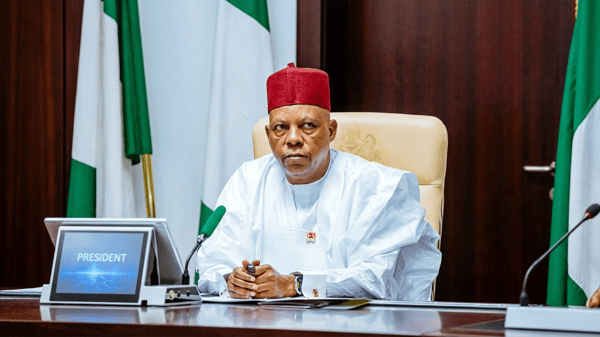
The Council, chaired by Vice President Kashim Shettima, stressed the need for a faster transition from oil dependence to a diversified, non-oil economy anchored on competitive manufacturing, export diversification and sustained private-sector investment.
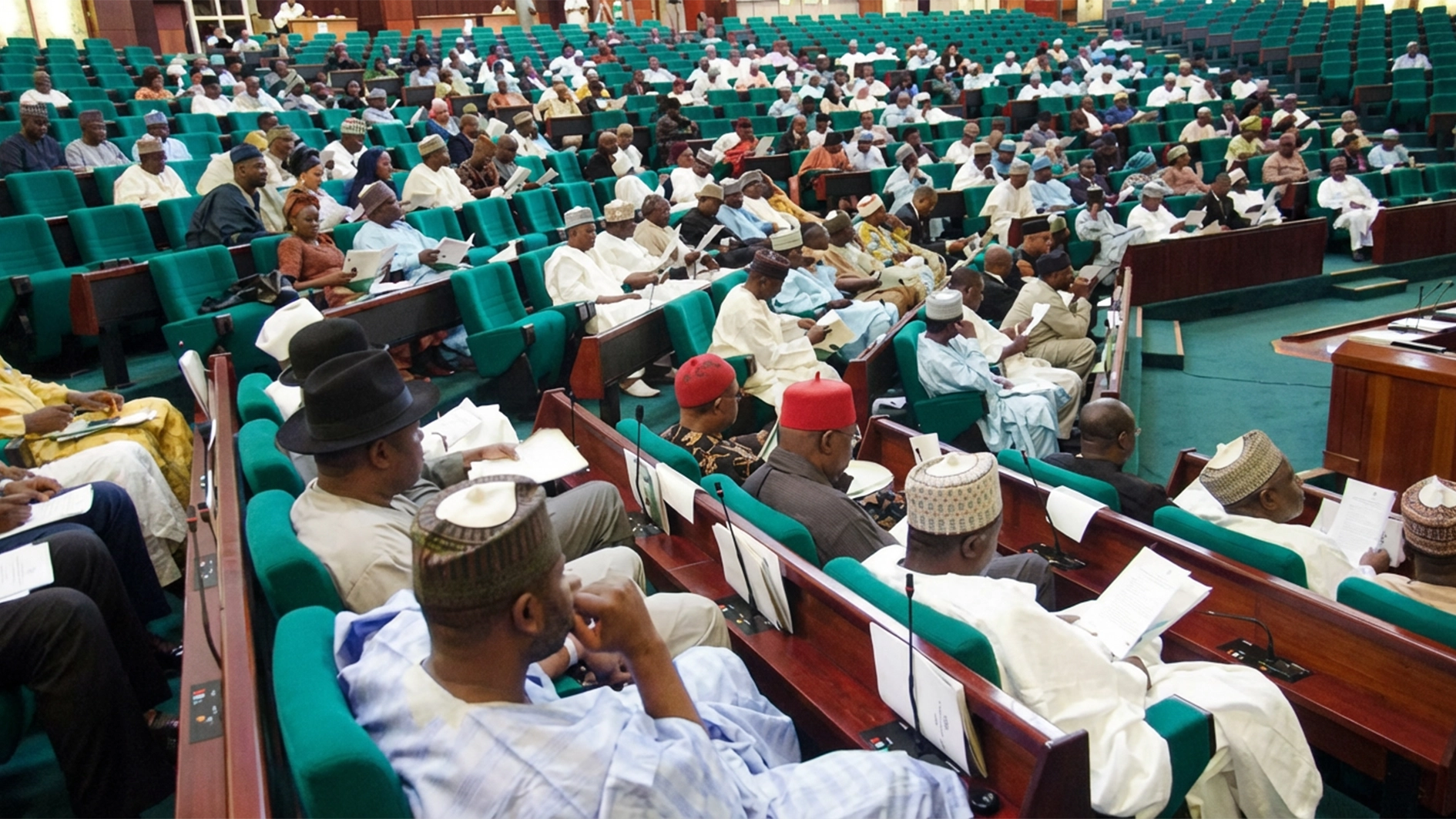
At its 156th meeting, the first for 2026, held virtually on Thursday, NEC approved the constitution of a bipartisan committee to implement the President’s directive on the actualisation of key legacy projects.
The committee will be chaired by the Governor of Cross River State, with one governor from each geo-political zone as members: Sokoto (North-West), Gombe (North-East), Niger (North-Central), Abia (South-East) and Lagos (South-West).
The Permanent Secretary of the Ministry of Budget and Economic Planning, Deborah Odoh, will serve as secretary to the committee, alongside the Ministers of Works and Transportation as members.
The Council’s resolutions followed a presentation on Nigeria’s 2026 economic priorities by the Minister of Finance and Coordinating Minister of the Economy, Wale Edun, who outlined reforms already implemented by the Tinubu administration.
The presentation highlighted targeted programmes that have removed systemic distortions, stabilised the economy and placed the country on a path of sustained recovery and prosperity.
Edun also noted growing global recognition of Nigeria’s reform efforts, which he said is boosting investor confidence in an economy projected to grow by 4.68 per cent in 2026.
Key priorities identified include strengthening economic competitiveness through sound governance, improving food availability and affordability, advancing human-capital development, expanding social protection, and ensuring timely payment of debt service, salaries and pensions.
In its resolutions, NEC commended Federal Government plans to unlock rapid, job-rich growth, expand entrepreneurship opportunities and create high-quality employment. The Council also agreed to dedicate a special session to address pressing issues in the nation’s food-security drive, particularly challenges affecting agricultural productivity.
“Services, agriculture and other non-oil sectors are increasingly carrying the weight of the economy. More importantly, non-oil revenues now contribute nearly three-quarters of total government collections,” he said. “This marks a significant, if gradual, departure from our historic dependence on volatile oil receipts. The task before us is to deepen this transition through competitive manufacturing, export diversification and private-sector investment.”
“This moment calls for perspective, not triumphalism or despair. The Nigerian economy has travelled a difficult road, but it has not done so without progress,” he said.
“Quarter by quarter, growth strengthened from 3.13 per cent in the first quarter to 4.23 per cent in the second, before moderating to 3.98 per cent in the third. These outcomes reflect hard decisions taken under difficult circumstances,” he said.
“With population growth at about 2.6 per cent annually, our ambition must be higher if we are to absorb inflationary pressures and external shocks,” he added.
NEC noted that heightened geopolitical tensions and volatile commodity markets, reflected in fluctuating oil prices, exchange rates and capital flows, continue to test Nigeria’s policy framework, underscoring the urgency of fiscal risk management and the need to further reduce exposure to oil revenues.
Other deliberations and resolutions included a review of account balances as of January 14, 2026: the Excess Crude Account stood at $535,823.39, the Stabilisation Account at N64.65 billion, and the Natural Resources Account at N97.37 billion.
The Council received updates on the implementation of the President’s directives on the Lagos-Calabar and Sokoto-Badagry Super Highways, noting that the process is being overseen by the Office of the Secretary to the Government of the Federation.
NEC also took note of the relocation of the Office of the Surveyor-General of the Federation to the Presidency.
The World Bank Group briefed the Council on its proposed framework, which emphasises national programmes implemented at the state level, results-based financing, early childhood development and investments in human capital as pathways to long-term growth. NEC pledged institutional support for the framework in alignment with the Renewed Hope Agenda.
Council also received an update on Nigeria’s tax reform laws aimed at addressing inequity, simplifying the fragmented tax system and promoting shared prosperity.
It directed the Presidential Fiscal Policy and Tax Reforms Committee to present a comprehensive brief at its forthcoming conference in February to prepare states for effective implementation.
NEC further resolved to intensify engagement with states on the new tax regime, including support for tax harmonisation laws, adoption of presumptive taxation for the informal sector, strengthening state internal revenue services and approval of a National Fiscal Policy.