 Get Guardian on Google
The National Human Rights Commission (NHRC) and the United Nations Information Centre (UNIC) have warned journalists against spreading misinformation, hate speech and politically motivated narratives ahead of the 2027 general elections, urging them to uphold accuracy and credible reporting to protect public trust and electoral peace.
The NHRC also announced plans to launch a Safety Handbook for Journalists and Media Practitioners on November 26, to guide reporters on protecting themselves while covering elections and other high-risk assignments.
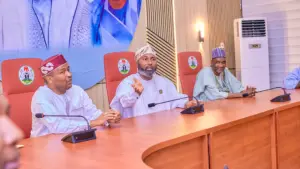
The Executive Secretary of the NHRC, Chief Tony Ojukwu, SAN, gave the warning at the Commission’s 2026 Annual Media Parley in Abuja, where stakeholders examined the role of ethical journalism in promoting peaceful elections.
Ojukwu said the media’s power to shape public opinion, inform voters and scrutinise political actors came with a duty to uphold accuracy, fairness, verification and respect for human dignity.
He said the Commission chose the theme, “Ethical Journalism and the 2027 General Elections: Promoting Professionalism, Peace and Accountability,” because elections were not merely political contests but fundamental human rights processes.
According to him, elections involve citizens’ rights to freedom of expression, access to information, peaceful assembly, political participation and the freedom to choose their leaders.
“The media must not become a vehicle for electoral division; it must remain an instrument for democratic accountability, peaceful participation and national cohesion,” he said.
Ojukwu identified voter intimidation, political violence, discrimination, attacks on journalists and restrictions on civic participation as critical human rights concerns requiring closer media scrutiny during the electoral process.
He urged journalists to give particular attention to the rights of women, children, persons with disabilities and other vulnerable groups, while ensuring that election coverage did not expose them to further harm.
The NHRC boss stressed that ethical journalism could not thrive without protecting media practitioners from intimidation, harassment and unlawful interference.
He said the Commission remained committed to safeguarding journalists’ rights and promoting an environment where independent and responsible media practice could flourish.
Ojukwu thanked media organisations for reporting the Commission’s activities, amplifying the voices of victims of human rights violations and bringing critical rights issues to public attention.
He said the annual parley was designed to strengthen the partnership between the Commission and the media, while reinforcing their shared responsibility for justice, accountability and democratic values.
In his keynote address, the Director of the United Nations Information Centre (UNIC), Nigeria, Mr Ronald Kayanja, said the rapid expansion of digital platforms had made ethical journalism more critical as Nigeria approaches another election cycle.
Kayanja said Article 19 of the Universal Declaration of Human Rights provided the foundation for journalists’ work through its guarantee of freedom of expression and access to information.
He commended the NHRC for sustaining an annual platform to discuss not only human rights issues but also the rights and safety of journalists.
Kayanja said social media had transformed the information landscape, enabling citizens to share information instantly and hold institutions accountable, but had also created serious challenges for professional journalism.
He identified misinformation, disinformation, hate speech and artificial intelligence-generated content as growing threats to public understanding and democratic stability.
According to him, false narratives about candidates, political parties, electoral processes and results could influence voter behaviour, erode trust in democratic institutions and threaten peace.
He said the challenge was no longer simply access to information, but ensuring that citizens received accurate, reliable, diverse and trustworthy information.
Kayanja noted that despite the speed of social media, the public continued to rely on established media organisations for credible accounts of events.
He urged journalists to resist the pressure to sacrifice accuracy for speed, stressing that verification and public trust remained the profession’s strongest assets.